PHM letter to Lancet on arm trade activities of Reed Elsevier

2 years ago your Editorial staff and International Advisory Board took the courageous and correct step to criticise the practices of your parent company, Reed Elsevier, in the hosting of arms trade fairs.(1)

The arms trade industry as it stands has little good to say for itself. It encourages transgressions of the various Geneva Conventions on the conduct of war, wastes public money, catalyses confl ict and war, institutionalises corruption, glorifi es violence, sustains oppressive and genocidal regimes, and excuses the conduct of torture.

Reed Elsevier is undoubtedly associated with these reprehensible aspects of the arms industry, and by association, so is The Lancet. Your request to Reed Elsevier to “divest itself of all business interests that threaten human, and especially civilian, health and wellbeing” has clearly been ignored.

We therefore write to express our support of your position on this issue and to say that we will be asking Reed Elsevier directly to get out of this sordid industry and instead align itself to the values and principles espoused by The Lancet.

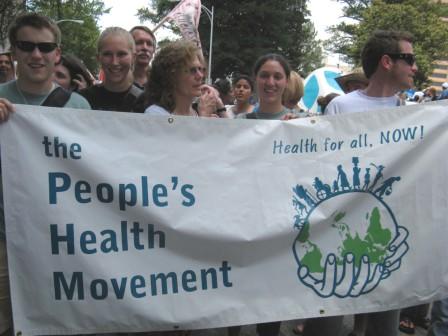
Arturo Quizphe, Alexis Benos, Bridget Lloyd, Ravi Narayan, Claudio Schuftan, *David McCoy, Delen de la Paz, David Legge, Jihad Mashal, Lanny Smith, Maija Kagis, Ghassan Issa, Fran Baum, Alaa Shukrallah, Hani Serag, Prem John, Zafrullah Chowdury, David Sanders, Sarah Shannon, Khor Kok Peng, on behalf of the People’s Health Movement d.mccoy@ucl.ac.uk People’s Health Movement, C/O AHED, # 17, Beirut St Apt 3/501, Heliopolis, Cairo, Egypt

1 The Lancet and The Lancet Editorial Advisory Board. Reed Elsevier and the arms trade. Lancet 2005; 366: 868.

The Lancet Vol 369 March 24, 2007

Medico International looking for a coordinator in Ramallah

medico international e.V. a Frankfurt-based German Non-Governmental Organization, provides emergency relief and supports human rights and development projects to secure access to health care for those in need.

For the implementation of the envisaged ECHO-funded project “meeting the health needs of communities in the Ramallah district by sustaining and improving the health care services” in the Occupied Palestinian Territories we are looking for a full-time Expatriate Project Coordinator

Duration: 14 months, August 2007 to September 2008
Location: Ramallah, Westbank, Occupied Palestinian Territories


Responsibilities

Under the supervision of the director of medico’s regional office, the Project Coordinator will be responsible for the following duties and functions:

  • Preparation and implementation of all project activities in a timely and effective manner.
  • Overall coordination with our local partners Ministry of Health (MoH), Palestinian Medical Relief Society (PMRS) and Health Work Committees (HWC).
  • Ensure that all activities are compliant with donor regulations (ECHO).
  • Ensure monitoring and supervision of all activities.
  • Preparation, coordination and supervision of all project staff.
  • Drafting of interim and final reports for ECHO.
  • Reporting to HQ.
  • Ensuring proper use of funds according to the agreed budget for the project, with particular consideration of financial reports.
  • Implementing and supervising all tendering and decision-making procedures regarding supply, service and works contracts, follow-up of delivery of supplies and their distribution, stocks and contracted works and services.

Requirements:

  • At least 3 years professional and practical experience in project management, implementation and administration, including procurement & logistics, monitoring & evaluation.
  • Experience in projects addressing primary health care will be an asset.
  • Familiarity with donor requirements, especially ECHO regulations a plus.
  • Knowledge of the social, political and associative context of Palestine or the Middle East will be appreciated.
  • Strong negotiation, communication and interpersonal skills, cultural and political sensitivity.
  • Strong analytical and organisational skills as well as accuracy.
  • Ability to work well under unstable security environments, and administrative as well as programmatic pressures.
  • Ability to work independently while being a strong team player.
  • English fluency (written and spoken).
  • Arabic an asset.
  • Ability to travel to and inside Israel and the West Bank.
  • Excellent computer skills.
  • Good health.
  • Driving License.

Please send a letter of motivation and your CV, including references, to Karin Urschel, urschel@medico.de, no later than 5 May 2007. Further information about medico & our projects can be found on our website: www.medico.de Frankfurt, 12 April 2007 medico international e.V. Karin Urschel Burgstrasse 106, D-60389 Frankfurt / Main Germany

FIINSA – 2006, Havana, Cuba

III NATIONAL FORUM OF HEALTH RESEARCH & INNOVATION
“III Foro Nacional de Investigación e Innovación en Salud”,
Hotel Nacional de Cuba, City of Havana, on November 27 – December 2, 2006.

The high development of the Cuban Public Health has had among one of its most solid pillars the full integration of the Science and the Innovation Technology to its daily chore, so that this event constitutes an opportunity to enter in contact with a wide inventory of new knowledge, technologies, services and productions of high added value, developed in Cuba for scientific and technicians that work in the most diverse areas in the institutions of the National Health System and other Excellency Centress.

FIINSA – 2006 will show results that had impacted in a very positive way the Cuban population’s health and also will offer you information about other projects in development at the moment. It will be an opportunity so that you can evaluate the possibilities to access to those Health achievementses and contributions of the Cuban Science and Technology, participation in projects of Research – Development and Technological Innovation in execution, to exchange experiences with Cuban scientists and to promote contacts, actions and agreements with our Institutions of Scientific Excellency and Medical Universities for the development of combined projects that can contribute to obtain more health, more well-being with equity and quality of life and a higher human development. go to FIINSA webpage

XXV Jornadas de Debate sobre Sanidad Pública, 2006

20 años de la Ley General de de Sanidad
25 años de la FADSP

Santiago de Compostela
23, 24 y 25 de Noviembre del 2006
Asociacion Galega para a Defensa da Sanidade Pública
Federacion de Asociaciones para la Defensa de la Sanidad Pública

Facultad de Medicina Rua San Francisco s/n Facultad de Ciencias de la Comunicación Rua Castelao s/n Campus Norte

Vicente Navarro, Que esta ocurriendo en la OMS

¿QUÉ ESTÁ OCURRIENDO EN LA ORGANIZACIÓN MUNDIAL DE LA SALUD?*
La próxima elección del director general de la OMS

VICENTE NAVARRO


Catedrático de Políticas Públicas y Gestión Sanitaria, Escuela de Salud Pública en la Universidad John Hopkins; Director del Programa en Políticas Públicas y Sociales en la Universidad Pompeu Fabra-John Hopkins; Fundador y pasado Presidente de la Asociación Internacional de Políticas de Salud; y Editor jefe del Internacional Journal of Health Services

* TRADUCCIÓN DEL ORIGINAL EN INGLÉS REALIZADA POR BLANCA ARAGONCILLO CASCÓN Y BARBARA CRUZ OLIVA

La creciente influencia del neoliberalismo en la OMS


Desde la Segunda Guerra Mundial hasta principios de los años 80, la Organización Mundial de la Salud era un punto de referencia importante para aquellos integrantes de la comunidad internacional comprometidos con la salud y el bienestar de la población. Durante la posguerra, la OMS se sumó al consenso dominante en la comunidad internacional, según el cual el gobierno y el sector público eran los encargados de guiar las actividades económicas y sociales y de corregir las desigualdades sociales creadas por unas tendencias de mercado descontroladas. Este papel activo del sector público dio lugar al establecimiento de los estados de bienestar en los países desarrollados, además de plantar las semillas para acabar con el subdesarrollo en los países en vías de desarrollo. Como consecuencia de estas políticas públicas, la población de los países desarrollados y en vías de desarrollo experimentó mejoras significativas en sus condiciones sanitarias y sociales. El momento cumbre de la OMS de aquellos años tuvo lugar cuando la Asamblea Mundial de la Salud aprobó la declaración de Alma-Ata

  • (1) en la que se proclamaba que la salud exigía un enfoque de salud pública que fuera mucho más allá de las intervenciones médicas. A esta declaración le siguieron muchas propuestas específicas que subrayaron los factores sociales, económicos y políticos que resultaban determinantes para la salud. Huelga decir que algunas de estas propuestas tuvieron sus problemas, pero la aprobación de la declaración de Alma-Ata fue un gran paso adelante hacia la redefinición de las intervenciones sanitarias que son necesarias para mejorar las condiciones sanitarias y sociales de la población. Y en muchos países, aquellas mejoras sí que tuvieron lugar
  • (2) En los años 80, el clima político mundial cambió con la llegada de la “revolución” neoliberal. Este cambio tuvo sus comienzos a finales de la década de los 70, con el gobierno del presidente Carter (descrito por el New York Times como el presidente más conservador de todos los presidentes demócratas), y se afianzó bajo el mandato del presidente Reagan en los EE UU y de la primera ministra Thatcher en el Reino Unido, luego con los presidentes Bush padre, Clinton, Bush hijo y los primeros ministros Major y Blair. Esta “revolución” trajo consigo un debilitamiento del sector público y una consolidación de las fuerzas privadas que, siguiendo los dictados del mercado, dio forma a la naturaleza de nuestras sociedades de acuerdo con los deseos de aquellos cuyo poder arrollador predominaba por encima de todo en las esferas económicas y sociales. Las mejoras en salud y bienestar social que habían comenzado en los años de posguerra se retrasaron considerablemente, e incluso dieron marcha atrás en muchos países. La prueba de esto es irrefutable
  • (3) La revolución neoliberal en el sector sanitario ha llevado a reducir el gasto público y social, liberalizar los mercados laboral y financiero (banca y seguros), privatizar los servicios sanitarios, desmantelar los servicios sanitarios financiados y sostenidos con fondos públicos y priorizar los seguros médicos. Éstos son los nuevos instrumentos para responder a las necesidades de la población. Los pacientes se convierten en “clientes” y la prestación de servicios se remplaza por la competencia privada y el mercado. La revolución neoliberal también trajo consigo el abandono del enfoque social y salubrista, exceptuando las medidas de salud pública que se concentran en el cambio del comportamiento del individuo. Estas prácticas neoliberales han sido promovidas enérgicamente por los gobiernos de EE UU y el Reino Unido (que generaron el Consenso de Washington) y por las agencias internacionales sobre las que estos gobiernos tienen una enorme influencia: el Fondo Monetario Internacional, el Banco Mundial, la Organización Mundial de Comercio y, claro está, la Organización Mundial de la Salud.
  • (4) La máxima expresión de la revolución ideológica que ha teni
  • (5) do lugar en la OMS queda patente en el informe de la OMS del año 2000 Health Systems Performance, dirigido por Julio Frenk y Christopher Murray y que establece la narrativa neoliberal como política oficial de la OMS. Este informe, en el que los países están clasificados según el funcionamiento de sus sistemas de asistencia sanitaria, está basado en criterios muy cuestionables, claramente enraizados en una línea neoliberal. Por ejemplo, Colombia, que había introducido los seguros médicos (como aconsejó Frenk en calidad de asesor del gobierno colombiano), ocupaba el primer puesto en la clasificación, mientras que Cuba (pese a contar con indicadores de salud y sistemas asistenciales de gran calidad, según la mayoría de los expertos) y otros países con servicios nacionales de sanidad se situaban al final de la lista. En este esquema, se abogaba por los seguros médicos, y no por los servicios nacionales de sanidad. Para favorecer la posición ideológica de la que partieron, Frenk y Murray se esforzaron mucho en manipular los datos, alcanzando nuevas cotas en el arte de la distorsión y la contabilidad creativa, práctica que algunos de nosotros denunciamos en The Lancet.
  • (6, 7,8) Estas cotas de manipulación excedieron realmente lo éticamente aceptable y el catedrático Philip Musgrove, director técnico del estudio supervisado y dirigido por Frenk y Murray, protestó y denunció públicamente la manipulación estadística del informe, declaración publicada también en The Lancet.
  • (9) Desafortunadamente, la integridad que Musgrove mostró al denunciar las actuaciones poco éticas en el seno de la OMS, no es una práctica común entre los cargos de la Organización. Los gobiernos poderosos (especialmente los de Bush y Blair) y los grupos de presión económica (que van desde empresas farmacéuticas hasta la industria alimenticia) ejercen presión política y económica sobre la OMS. En consecuencia, la Organización ya no ofrece liderazgo en salud pública. Cuando existe tal liderazgo, suele venir de otra parte, y la OMS lo sigue, de mala gana y bastante por detrás de sus pasos. Un ejemplo reciente de esta timidez por parte de la OMS fue su apoyo tardío al uso de medicamentos genéricos para tratar a los pacientes de sida en los países en vías de desarrollo, debido a la oposición a los genéricos por parte de la industria farmacéutica. Que la Organización se haya acogido al dogma y las prácticas neoliberales ha afectado su importancia en la sociedad. Se ha convertido más en una parte del problema que en una parte de la solución. Por supuesto que la OMS continúa haciendo un buen trabajo en muchas áreas, como al establecer la Comisión sobre Determinantes Sociales de la Salud
  • (10) Pero incluso en eso, la Comisión parece reacia a tomar posiciones controvertidas y evita o ignora investigaciones (y autores), instituciones y posiciones que puedan ser consideradas demasiado polémicas.
  • (11) En algunos casos, el grado en el que la OMS se rinde a la tendencia neoliberal es impresionante. La Comisión sobre Macroeconomía y Salud, establecida por la pasada directora general Gro Brundtland y presidida por Jeffrey Sachs, es un ejemplo de ello. Sachs es el economista del Reino Unido que luchó por la liberalización de la economía rusa de acuerdo con las indicaciones neoliberales después de la caída de la Unión Soviética, cambios que fueron responsables de la muerte de medio millón de personas en dos años. La elección de Sachs como presidente de la Comisión sobre Macroeconomía y Salud es un clarísimo ejemplo de la influencia neoliberal en la OMS.
  • (12, 13) La elección del nuevo director general A principios de noviembre de 2006, se elegirá al nuevo director general de la OMS. Esta es la oportunidad de seleccionar a un director general que ayude a invertir la tendencia neoliberal de la organización, que haga frente a gobiernos y grupos de presión poderosos, ofreciendo el liderazgo moral y científico para defender los principios de la Constitución de la OMS. Según lo esperado, el gobierno de Bush y otros gobiernos neoliberales apuestan por Julio Frenk como candidato perfecto para el puesto. Si esta movilización tiene éxito, las fuerzas neoliberales obtendrán un gran triunfo: Julio Frenk, conocido neoliberal, a cargo de la Organización Mundial de la Salud. Después de dejar la OMS, Frenk se convirtió en ministro de Salud del gobierno derechista de Méjico dirigido por el presidente Fox, cuyas políticas públicas han sido claramente neoliberales. El gobierno de Fox lleva a cabo políticas de ajuste estructural recomendadas por el Fondo Monetario Internacional y el Banco Mundial, que incluyen el recorte del gasto público, la reducción de los impuestos para los sectores más ricos de la población (una propuesta que ha sido finalmente rechazada en Méjico por la presión de las movilizaciones populares) y la liberalización del mercado laboral. Durante la presidencia de Fox, las desigualdades en Méjico, que ya eran pronunciadas, aumentaron considerablemente. Méjico presenta una de las mayores desigualdades en lo que a renta se refiere de toda América Latina. La renta del decil superior de la población de Méjico es mayor que la totalidad de la renta del setenta por ciento restante de la población. El coeficiente de concentración de Gini, que mide las desigualdades de la población, muestra el mayor aumento en las desigualdades entre 2002 y 2005, durante el gobierno de Fox. De hecho, la acentuación de las desigualdades podría ser incluso mayor de lo que sugieren las cifras del Instituto Nacional de Estadística, dado que el nivel de ingresos de las personas con las rentas más altas se ha infravalorado considerablemente. Según el Banco Mundial, del 20 al 30% de los mejicanos vive en extrema pobreza (con dos dólares al día) y el 60% es pobre (vive con menos de cinco dólares al día). Durante el gobierno de Fox, el número de personas que vivía en extrema pobreza aumentó en un millón. Mientras que, el decil superior, y particularmente el 1% con mayores ingresos, se ha beneficiado de unos aumentos en sus rentas sin precedentes.
  • (14) Julio Frenk ha sido parte de ese gobierno y es por tanto también responsable de las políticas que han incrementado las desigualdades y la pobreza en Méjico. A Frenk, también se le conoce en Méjico como el “privatizador”. Como es de esperar, sus reformas han incluido la introducción de mercados y la competencia en el sector de la sanidad, mediante bonos e instrumentos similares que han tenido poca relevancia para resolver el gran problema de falta de cobertura sanitaria de los más necesitados. Tras la retórica de mercado, se esconde el claro propósito de Frenk: introducir seguros médicos, contratar para la prestación de servicios sanitarios a profesionales e instituciones que, en teoría, competirán por los “clientes”. En realidad, como indicaba la profesora Cristina Laurell de la Universidad de Méjico, una de las más respetadas investigadoras en el campo de la salud pública de America Latina, este sistema basado en seguros ha incrementado las desigualdades regionales y sociales en Méjico, sin resolver los enormes problemas de falta de cobertura sanitaria. Existía en Méjico una alternativa a este programa neoliberal: un servicio sanitario nacional para todos financiado con fondos públicos y costeado con impuestos progresivos. Esta alternativa nunca se consideró ya que a ella se opusieron fuerzas muy poderosas (incluida la industria aseguradora y la clase médica) que apoyaron a Fox. Fox y Frenk son representantes del modelo neoliberal en América Latina. Ahora bien, que Julio Frenk sea considerado el candidato con más posibilidades para director general de la OMS es un claro indicador del poder de las tendencias neoliberales. Imaginen la fortísima oposición si el ministro de Salud de Cuba o de Venezuela, por ejemplo, hubiera sido un candidato para el cargo de director general de la OMS. Habríamos sido testigos de una movilización masiva e inmediata por parte de los gobiernos de EE UU y del Reino Unido en contra de dichos candidatos al considerarlos “demasiado izquierdistas”, “fuera de la corriente dominante en la comunidad internacional”; a pesar de que Cuba haya realizado un gran trabajo en el sector sanitario y mostrado a la asistencia sanitaria internacional una entrega encomiable; y a pesar de que las reformas del sector sanitario de Venezuela estén favoreciendo de manera espectacular la asistencia sanitaria de la población más vulnerable del país.
  • (15, 16) Las reformas instauradas en ambos países son mucho más apropiadas para los países en vías de desarrollo de lo que son las reformas de Frenk en Méjico. ¿Por qué iban a ser los ministros de Salud de Cuba o Venezuela considerados “demasiado izquierdistas” para ser elegidos y, en cambio, se considera un buen candidato al ministro de Salud de Méjico, que se encuentra en el extremo opuesto del espectro político? Para los trabajadores de la salud pública familiarizados con los problemas de los países en vías de desarrollo, Méjico y sus reformas neoliberales no pueden considerarse un modelo para los países “pobres”. Todo lo contrario. Méjico ha mostrado cómo no deben reformarse los sistemas sanitarios. El sorprendente apoyo a la candidatura de Julio Frenk por parte de la revista The Lancet: Para sorpresa de muchas de las personas que trabajan en el campo de la salud pública y de la asistencia sanitaria, The Lancet ha apoyado enérgicamente la candidatura de Frenk a director general de la OMS. La revista ha publicado recientemente un artículo escrito por Frenk que promociona sus reformas neoliberales en Méjico
  • (17, 18, 19) y que ha apoyado y respaldado explícitamente la candidatura de Frenk en un número reciente de la revista. Antes de esta muestra de apoyo, el editor jefe de The Lancet participó en una conferencia en Méjico organizada por Julio Frenk, básicamente para promocionar su candidatura. El apoyo de The Lancet a Julio Frenk es inesperado y decepcionante por tres razones. Primero, The Lancet es el foro en el que se hicieron públicas las prácticas poco éticas de Frenk cuando preparaba el informe Health Systems Performance. Así pues, la revista tiene plena consciencia de las prácticas de Frenk, pero las está ignorando. Segundo, The Lancet tiene una antigua tradición progresista, que para muchos profesionales significa un soplo de aire fresco, una alternativa a las revistas médicas extremadamente conservadoras, sobre todo en EE UU. De hecho, muchos profesionales de la salud, tanto en Norte América como en América Latina, promocionan The Lancet y la consideran una alternativa progresista al New England Journal of Medicine, que ha eliminado de sus páginas prácticamente todas las voces progresistas. Esta tradición es la causa por la que el apoyo de The Lancet a Julio Frenk (ministro de uno de los gobiernos más partidarios de Bush y cuyo cometido es difundir el Consenso de Washington por todo el mundo) se percibe como un gran alejamiento de la corriente progresista de la revista. Y finalmente, los argumentos que The Lancet ha presentado para justificar su apoyo a la candidatura de Julio Frenk prescinden de las cualidades más importantes que requiere cualquier director general de la OMS. The Lancet expone sus argumentos en dos grandes bloques: “técnico y administrativo”. Entre las competencias técnicas, se incluyen a) experiencia en investigación y desarrollo en el campo de la salud mundial, b) capacidad para traducir pruebas científicas en políticas y c) experiencia en la gestión de sistemas sanitarios (entendiéndose por ello sistemas de asistencia médica) en países con niveles de renta media o baja. Estas tres cualidades técnicas subrayan la experiencia en la creación y gestión de políticas. A estos tres argumentos técnicos la revista suma tres cualidades administrativas, que una vez más se reducen a la experiencia: a) práctica en la creación de políticas a seguir, b) capacidad para dirigir organismos complejos y c) amplias habilidades comunicativas e iniciativa propia. Todas estas características tienen, por lo tanto, un carácter técnico y de gestión. Aunque estas habilidades son importantes, es un hecho que son requisitos insuficientes para un director general de la OMS. Es mucho más importante qué tipo de experiencia posee el candidato y en qué tipo de servicio sanitario; y qué tipo de iniciativa ha mostrado el candidato y para qué tipo de políticas sanitarias. Llama la atención que The Lancet, la revista médica más progresista del mundo angloparlante, no se pronuncie para nada sobre estos temas. Julio Frenk puede poseer mucha experiencia en la gestión de un sistema de seguros médicos voluntarios y ser muy hábil (aunque en cierto modo poco ético) a la hora de abogar por sistemas y políticas sanitarias basadas en seguros; pero dichos sistemas políticos han demostrado ser perjudiciales tanto en países desarrollados como en aquellos en vías de desarrollo. Asimismo, la salud no depende solo, o no principalmente, de la asistencia médica, sino de las intervenciones políticas, económicas y sociales. Las pruebas son claras, sólidas y aplastantes, de modo que sería apropiado evaluar si el candidato es consciente de esta realidad. De nuevo, el gobierno de Frenk (el gobierno de Fox) ha desarrollado intervenciones públicas económicas, políticas y sociales que han aumentado considerablemente las desigualdades sociales y sanitarias en Méjico. Además, según ha revelado el respetado Instituto de Políticas Económicas de Washington D.C.,
  • (20) el apoyo activo de Fox a las políticas de TLCAN (Tratado de Libre Comercio de América del Norte) ha influido negativamente en las condiciones laborales de los trabajadores mejicanos. La mayoría de los nuevos empleos creados durante la presidencia de Fox no incluyen cobertura sanitaria. Y Julio Frenk apoyó estas políticas. Las pruebas del impacto de las desigualdades económicas y sociales en la salud y calidad de vida de las personas están muy bien documentadas.
  • (21) También existen pruebas de que las fuerzas políticas comprometidas con la redistribución de los recursos son más eficaces a la hora de mejorar la salud de la población que aquellas que no se ocupan en primer término de la redistribución.
  • (22, 23) A los gobiernos de derecha, como es el caso del gobierno liberal de Fox, no se les conoce precisamente por preocuparse de redistribuir los recursos sino por todo lo contrario. Frenk y Fox se sitúan en uno de los extremos del espectro político de América Latina, y del mundo. Si un extremo se excluye por ser demasiado izquierdista, ¿cómo puede aceptarse que una persona cuya ideología comulga con el extremo opuesto sea un candidato “razonable” y favorito para convertirse en director general de la OMS? El nombramiento de Frenk como líder de la OMS seguiría el modelo de Rodrigo Rato (ministro de Economía español durante el gobierno de derecha de Jose María Aznar, amigo íntimo de Bush) nombrado director del FMI y el de Paul Wolfowitz (asesor de Bush) elegido director del Banco Mundial. Este nombramiento no tendría sentido.
  1. Organización Mundial de la Salud. Primary Health Care: Report of the International Conference on Primary Health Care. Alma-Ata, URSS, 6-12, septiembre 1978. OMS, Ginebra.
  2. Navarro, V. A Critique of the Ideological and Political Positions of the Willy Brandt Report and the WHO Alma Ata Declaration. Social Science and Medicine 18:467, 1984.
  3. Weisbrot, M., Baker, D. y Rosnick, D. The Scorecard on Development: 25 Years of Diminishing Progress. International Journal of Health Services 36(2):211-234, 2006.
  4. Navarro, V. The World Situation and WHO. Lancet 363:1321-1323, 2004.
  5. Murray, C. y Frenk, J.Informe sobre la salud en el mundo 2000: mejorar el desempeño de los sistemas de salud. OMS, Ginebra, 2000.
  6. Navarro, V. Assessment of the World Health Report 2000. Lancet 356:1598-1601, 2000.
  7. Murray, C. y Frenk, J. World Health Report 2000: A Step Towards Evidence Based Health Policy. Lancet 357:1698-1700, 2001.
  8. Navarro, V. World Health Report 2000: Responses to Murray and Frenk. Lancet 357:1701-1702, 2001.
  9. Musgrove, P. Judging Health Systems: Reflections on WHO’s Methods. Lancet 361:1817-1820, 2003.
  10. Comisión sobre los determinantes sociales de la salud de la OMS. Towards a Conceptual Framework for Analysis and Action on Social Determinants of Health. WHO, Geneva, 2005.
  11. Banerji, D. Serious Crisis in the Practices of International Health by the World Health Organization: The Commission on Social Determinants of Health. International Journal of Health Services 36(4):637-650, 2006.
  12. Katz, A. The Sachs Report: Investing in Health for Economic Development – Or Increasing the Size of the Crumbs from the Rich Man’s Table? Parts I and II. International Journal of Health Services 34(4):751-773, 2004; 35(1):171-188, 2005.
  13. Banerji, D. Report of the WHO Commission on Macroeconomics and Health. International Journal of Health Services 32(4):733-754, 2002.
  14. Weisbrot, M. y Sandoval, L. Mexico’s Presidential Election: Background on Economic Issues. Center on Economic and Policy Research, Washington, DC, 2006.
  15. Spiegel, J. M. Commentary: Daring to Learn from a Good Example and Break “the Cuba Taboo.” International Journal of Epidemiology 35:825-826, 2006.
  16. Muntaner, C. et al. Venezuela’s Barrio Adentro: An Alternative to Neoliberalism in Health Care. International Journal of Health Services 36(4):803-811, 2006.
  17. Frenk, J. Bridging the Divide: Global Lessons from Evidence Based Health Policy in Mexico. Lancet 368:954-961, 2006.
  18. Horton, R. The Next Director General of WHO. Lancet 368:1213, 2006.
  19. Navarro, V. y Muntaner, C. (eds.). The Political and Economic Determinants of Population Health and Well-Being: Controversies and Developments. Baywood, Amityville, NY, 2004.
  20. Workers Suffer Continent-wide Under NAFTA. Economic Policy Institute, Washington, DC, 2006.
  21. Navarro, V. The Political Economy of Social Inequalities: Consequences for Health and Quality of Life. Baywood, Amityville, NY, 2001.
  22. Navarro, V. et al. Politics and Health Outcomes. Lancet 368:1033-1037, 2006.
  23. Navarro, V. Who is Rodrigo Rato? Counterpunch, June 16, 2004.

What is happening at the World Health Organisation?

WHAT IS HAPPENING AT THE WORLD HEALTH ORGANIZATION?
The Coming Election of the WHO Director-General

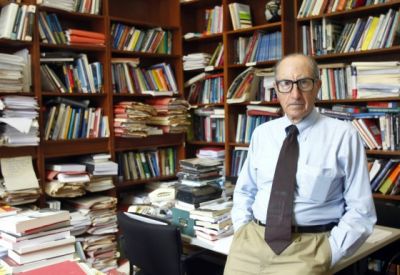
by VICENTE NAVARRO

Professor of Health and Public Policy, School of Public Health, The Johns Hopkins University; Director of the Public and Social Policy Program, Pompeu Fabra University – The Johns Hopkins University; Founder and Past President of the International Association of Health Policy; and Editor-in-Chief of the International Journal of Health Services

The Increasing Influence of Neoliberalism at the WHO (traducion en espanol)

From World War II until the early 1980s, the World Health Organization was an important point of reference for those in the international community who were concerned with the health and well-being of populations. During the postwar period, the WHO subscribed to the dominant consensus in the international community that government and the public sector were responsible for guiding economic and social activities and correcting the social inequalities created by unrestrained market forces. This active role of the public sector led to establishment of the welfare states in the developed countries and to the planting of seeds for breaking with underdevelopment in the countries of the developing world. As a consequence of these public policies, the populations of both developing and developed countries experienced significant improvements in health and social conditions. The high point of the WHO of those years was the approval by the World Health Assembly of the Alma-Ata Declaration, which stated that health required a public health approach, much broader than medical care interventions. This declaration was followed by many specific proposals that emphasized the social, economic, and political determinants of health. Needless to say, some of these proposals had their problems, but the approval of the Alma-Ata Declaration was a major step toward redefining the health interventions that are needed to improve the health and social conditions of populations. And in many countries, those improvements did indeed occur.

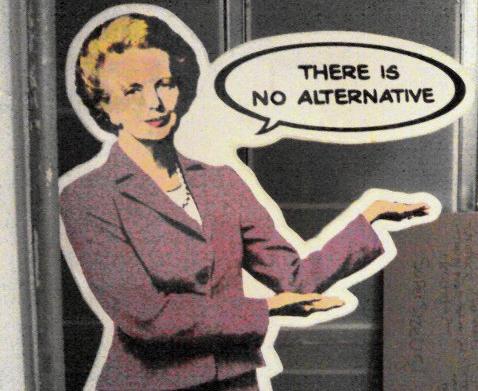
In the 1980s the world’s political climate changed, with the coming of the neoliberal “revolution.” This change had its beginnings in the late 1970s, with the administration of President Carter – described by the New York Times as the most conservative of all Democratic presidents – and strengthened under President Reagan in the U.S. and Prime Minister Thatcher in the U.K., then under Presidents Bush Sr., Clinton, and Bush Jr., and Prime Ministers Major and Blair. This “revolution” brought a weakening of the public sector and a strengthening of private forces that, following the dictates of the market, shape the nature of our societies according to the wishes of those whose consuming power reigns supreme in the economic and social spheres. The improvements in health and social well-being that had begun in the postwar years were considerably slowed down, and even reversed in many countries. The evidence for this is overwhelming.

The neoliberal revolution in the health sector has meant reduced public and social expenditures, deregulated labor and financial (banking and insurance) markets, privatized health services, a dismantling of publicly funded and publicly provided health services, and the preeminence of health insurance; these are the new instruments for responding to people’s health needs. Patients become “clients”; public provision of services is replaced by private competition and the market. The neoliberal revolution also brought abandonment of the public health approach, except for public health measures that focus on individual behavioral change. These neoliberal practices have been actively promoted by the governments of the U.S. and the U.K. (which generated the Washington Consensus) and by the international agencies over which these governments have enormous influence – the International Monetary Fund, the World Bank, the World Trade Organization, and, indeed, the World Health Organization.

The maximum expression of the ideological revolution taking place at the WHO is evident in the 2000 report Health Systems: Improving Performance, prepared under the direction of WHO official Julio Frenk and WHO consultant Christopher Murray. This report established the neoliberal narrative as official WHO policy. In the Health Systems report, countries are ranked according to the performance of their medical care systems, based on highly questionable criteria, clearly rooted in a neoliberal agenda. For example, in Latin America, Colombia, which had introduced health insurance (at the advice of Frenk as a paid consultant to the Colombian government), was ranked first in performance, while Cuba – despite having health indicators and health systems performance recognized as outstanding by most experts – and other countries with national health services were placed at the bottom of the list. In this scheme, health insurance was in; national health services were out.

To satisfy the ideological position from which they started, Frenk and Murray went to great lengths to manipulate the data, achieving new highs in the art of distortion and creative accounting – a practice that some of us denounced in the Lancet. These highs of manipulation, in fact, exceeded the ethically acceptable, and Professor Philip Musgrove, technical director of the study supervised and directed by Frenk and Murray, resigned in protest and publicly denounced the statistical manipulation in the report, a statement that was also published in the Lancet. It is unfortunate that integrity such as that shown by Musgrove, in denouncing unethical practices at the WHO, is uncommon among WHO officials. Political and economic pressure are exerted on the WHO by powerful governments (especially the Bush and Blair administrations) and economic lobbies (ranging from pharmaceutical companies to the food industry). As a consequence, the WHO no longer provides much leadership in public health. When there is leadership, it usually comes from elsewhere, and the WHO follows, reluctantly and quite late. A recent example of this timidity on the part of the WHO was its very late support for the use of generic drugs to treat AIDS patients in developing countries, due to opposition to generics by the pharmaceutical industry. The WHO’s accommodation to neoliberal dogma and practice has damaged its social relevance. It has become more a part of the problem than part of the solution.

Of course, the WHO continues to do good work in many areas, such as establishing the Commission on Social Determinants of Health. But even there, the commission seems reluctant to take controversial positions, and it avoids or ignores research (and authors), institutions, and positions that may be seen as too controversial. In some cases, the degree to which the WHO caves in to the neoliberal establishment is breathtaking. The Commission on Macroeconomics and Health, set up by past WHO Director-General Gro Brundtland and presided over by Jeffrey Sachs, is one such example. Sachs is the U.S. economist who pushed for deregulation of the Russian economy along neoliberal lines after the collapse of the Soviet Union – changes that were responsible for half a million deaths in two years. The choice of Sachs as chair of the Commission on Macroeconomics and Health is a vivid example of neoliberal influence at the WHO.

Election of the New Director-General

In early November 2006, a new Director-General of the WHO will be elected. This is an opportunity to select a Director-General who will help to reverse the organization’s trend toward neoliberalism in the health arena, one who will stand up to powerful governments and powerful lobbies, providing the moral and scientific leadership to defend the principles of the WHO Constitution.

As expected, the Bush administration and other neoliberal governments are rallying around Julio Frenk as favorite candidate for that position. If this mobilization is successful, neoliberal forces will achieve quite a triumph: a well-known neoliberal, Julio Frenk, in charge of the World Health Organization. After leaving the WHO, Frenk became Minister of Health in Mexico’s right-wing government, under President Vicente Fox. The Fox government’s public policies have been pure neoliberalism. They follow the “structural adjustment policies” advocated by the International Monetary Fund and the World Bank, which include reducing public expenditures, reducing taxes for the richest sectors of the economy (a proposal eventually rejected in Mexico under pressure from popular mobilizations), and deregulating the labor market. During Fox’s tenure, inequalities in Mexico, already high, increased remarkably. Mexico has some of the highest income inequalities in Latin America. The top income decile of the population has more income than seventy percent of Mexico’s population. The Gini coefficient, a measure of inequalities, shows the further increases in inequality in 2002-2005, under the Fox government. In fact, the growth of inequalities is most likely even larger than suggested by the figures published by the National Institute of Statistics, given the significant underreporting of income among the top income brackets. According to the World Bank, 20% to 30% of Mexicans live in extreme poverty (on $2 a day), and 60% are poor (living on less than $5 a day). During the Fox administration, the number of people living in extreme poverty increased by one million. Meanwhile, the top decile, and particularly the top 1%, of income holders have enjoyed unprecedented increases in income.

Julio Frenk has been part of that government and therefore shares responsibility for the policies that have increased inequalities and poverty in Mexico. Frenk is also known in Mexico as the “privatizer.” As one would expect, his reforms have included the introduction of markets and competition in the health sector, with the use of vouchers and similar instruments that have been discredited as ways of assisting people most in need of health benefits coverage. Behind the market rhetoric, Frenk’s clear purpose has been to introduce health insurance, contracting out health service provision to professionals and institutions that, in theory, will compete for “clients.” Actually, as indicated by Professor Cristina Laurell of the University of Mexico, one of the most respected public health researchers in Latin America, such insurance-based system have increased regional and social class inequalities in Mexico, without resolving the huge problems of lack of health benefits coverage.

There was an alternative to this neoliberal program for Mexico: a universal, publicly financed national health service, funded by progressive taxation. This alternative was never considered because it would be opposed by very powerful forces (including the insurance industry and the medical establishment) that supported Fox’s election. Fox and Frenk are representatives of the “neoliberal model” in Latin America.

And now, it is an indication of the power of the neoliberal establishment that Julio Frenk is considered the leading candidate for Director-General of the WHO. Imagine the enormous opposition if the Minister of Health of Cuba or of Venezuela, for example, had been a candidate for the position of WHO Director-General. We would have seen an immediate and massive mobilization by the U.S. and U.K. governments against such candidates, as being “too far left,” “outside the mainstream of the international community”– even though Cuba has done a remarkable job in its health sector and has shown a commendable commitment to international health assistance, and even though Venezuela’s health sector reforms are producing spectacular improvements in health for the country’s most vulnerable populations. The reforms instituted in both of these countries are far more relevant to developing countries than are Frenk’s reforms in Mexico. Why would the Ministers of Health of Cuba and Venezuela be seen as “too far left” to be elected, while the Minister of Health of Mexico, at the opposite extreme of the political spectrum, is seen as a good, “reasonable” candidate? For public health workers familiar with the problems of developing countries, Mexico and its neoliberal reforms cannot be considered a model for other “poor” countries. To the contrary. Mexico has shown how not to reform health systems.

The Surprising Support of the Lancet for Julio Frenk’s Candidacy

To the surprise of many who work in the field of public health and health care, Julio Frenk’s candidacy for WHO Director-General has been actively supported by the Lancet. The journal has recently published a self-serving article by Frenk that promotes his neoliberal reforms in Mexico, and it has explicitly supported and endorsed Frenk’s candidacy in a recent editorial. Before that endorsement, the senior editor of the Lancet participated in a conference in Mexico organized by Julio Frenk, basically to promote his candidacy.

Lancet’s support for Julio Frenk is surprising and disappointing for three reasons. First, the Lancet is the forum where Frenk’s unethical practices in preparing the WHO report Health Systems: Improving Performance were made public. Thus the Lancet is fully aware of Frenk’s practices, but is ignoring them.

Second, the Lancet has a longstanding progressive tradition, which for many professionals is a breath of fresh air, a refreshing alternative to the profoundly conservative medical journals, especially in the U.S. Indeed, many health professionals in both North America and Latin America promote the Lancet as a progressive alternative to the New England Journal of Medicine, which has practically eliminated all progressive voices from its pages. It is because of this tradition that the Lancet’s support for Julio Frenk – a minister in one of the most pro-Bush governments, with a commitment to spreading the Washington Consensus worldwide – is widely perceived as a major departure from the journal’s progressive tradition.

And finally, the criteria presented by the Lancet to justify its support for the candidacy of Julio Frenk exclude major qualities required of any WHO Director-General. The Lancet presents its criteria in two broad categories, “technical and administrative.” Among technical competencies, it includes (a) experience of global health practice and/or research, (b) ability to translate scientific evidence into policy, and (c) experience in managing health systems (meaning, in fact, medical care systems) in low- or middle-income countries. These three “technical” qualities emphasize experience in policymaking and management. To these three technical criteria, the Lancet adds three administrative skills, which, again, boil down to experience: (a) strong policymaking political experience, (b) ability to run complex organizations, and (c) strong communication and advocacy skills.

All of these characteristics, then, are technical-managerial. While such skills are important, they are dramatically insufficient as requirements for a WHO Director-General. Far more important is what type of experience does the candidate have, with what type of health services? And what type of advocacy has the candidate shown, for what type of health policies? It is surprising that the Lancet, the most progressive medical journal in the English-speaking world, does not touch on these issues at all. Julio Frenk may indeed be very experienced in managing a voluntary health insurance system, and very skillful (if somewhat unethical) in advocating insurance-based managed care systems and policies; but such systems and policies have proved harmful in both developed and developing countries. Moreover, health depends not only, and not primarily, on medical care but on political, economic, and social interventions. The evidence for this is well established, robust, and overwhelming, so it would be appropriate to evaluate a candidate’s awareness of this reality. Again, Frenk’s government (the Fox administration) has developed economic, political, and social public interventions that have significantly increased social and health inequalities in Mexico. Furthermore, as the highly respected Economic Policy Institute in Washington, D.C., has shown, Fox’s active support for NAFTA (North American Free Trade Agreement) policies has adversely affected the working conditions of Mexican workers. Most new jobs created during Fox’s tenure do not include health benefits coverage. And Julio Frenk supported these policies.

Evidence of the impact of economic and social inequalities on people’s health and quality of life is extremely well documented. And there is also evidence that political forces committed to a redistribution of resources are more successful in improving the health of populations than political forces not primarily concerned with redistribution. Right-wing governments such as Fox’s liberal government are not known for their concern about redistribution of resources. Quite to the contrary. Frenk and Fox are at one extreme of the political spectrum in Latin America, and in the world. If one extreme is excluded because it is too far left, how can it be acceptable that a person at the far right is the “reasonable” and leading candidate for WHO Director-General?

The appointment of Frenk to the leadership of the WHO would follow the pattern of appointing Rodrigo Rato – Spain’s Minister of Economy in the right-wing government of Jose Aznar, close friend of Bush – as head of the IMF, and appointing Paul Wolfowitz – close advisor to Bush – as director of the World Bank. This appointment would be wrong.

  1. World Health Organization. Primary Health Care: Report of the International Conference on Primary Health Care, Alma-Ata, USSR, Sept 6-12, 1978. WHO, Geneva.
  2. Navarro, V. A Critique of the Ideological and Political Positions of the Willy Brandt Report and the WHO Alma Ata Declaration. Social Science and Medicine 18:467, 1984.
  3. Weisbrot, M., Baker, D., and Rosnick, D. The Scorecard on Development: 25 Years of Diminishing Progress. International Journal of Health Services 36(2):211-234, 2006.
  4. Navarro, V. The World Situation and WHO. Lancet 363:1321-1323, 2004.
  5. 5. Murray, C., and Frenk, J. World Health Report 2000: Health Systems: Improving Performance. WHO, Geneva, 2000
  6. Navarro, V. Assessment of the World Health Report 2000. Lancet 356:1598-1601, 2000
  7. Murray, C., and Frenk, J. World Health Report 2000: A Step Towards Evidence Based Health Policy. Lancet 357:1698-1700, 2001
  8. Navarro, V. World Health Report 2000: Responses to Murray and Frenk. Lancet 357:1701-1702, 2001.
  9. Musgrove, P. Judging Health Systems: Reflections on WHO’s Methods. Lancet 361:1817-1820, 2003
  10. WHO Commission on Social Determinants of Health. Towards a Conceptual Framework for Analysis and Action on Social Determinants of Health. WHO, Geneva, 2005.
  11. Banerji, D. Serious Crisis in the Practices of International Health by the World Health Organization: The Commission on Social Determinants of Health. International Journal of Health Services 36(4):637-650, 2006.
  12. Katz, A. The Sachs Report: Investing in Health for Economic Development – Or Increasing the Size of the Crumbs from the Rich Man’s Table? Parts I and II. International Journal of Health Services 34(4):751-773, 2004; 35(1):171-188, 2005.
  13. Banerji, D. Report of the WHO Commission on Macroeconomics and Health. International Journal of Health Services 32(4):733-754, 2002.
  14. Weisbrot, M., and Sandoval, L. Mexico’s Presidential Election: Background on Economic Issues. Center on Economic and Policy Research, Washington, DC, 2006.
  15. Spiegel, J. M. Commentary: Daring to Learn from a Good Example and Break “the Cuba Taboo.” International Journal of Epidemiology 35:825-826, 2006.
  16. Muntaner, C., et al. Venezuela’s Barrio Adentro: An Alternative to Neoliberalism in Health Care. International Journal of Health Services 36(4):803-811, 2006.
  17. Frenk, J. Bridging the Divide: Global Lessons from Evidence Based Health Policy in Mexico. Lancet 368:954-961, 2006
  18. Horton, R. The Next Director General of WHO. Lancet 368:1213, 2006.
  19. Navarro, V., and Muntaner, C. (eds.). The Political and Economic Determinants of Population Health and Well-Being: Controversies and Developments. Baywood, Amityville, NY, 2004.
  20. Workers Suffer Continent-wide Under NAFTA. Economic Policy Institute, Washington, DC, 2006.
  21. Navarro, V. The Political Economy of Social Inequalities: Consequences for Health and Quality of Life. Baywood, Amityville, NY, 2001.
  22. Navarro, V., et al. Politics and Health Outcomes. Lancet 368:1033-1037, 2006.
  23. Navarro, V. Who is Rodrigo Rato? Counterpunch, June 16, 2004.

PHM call against the Israeli offensive

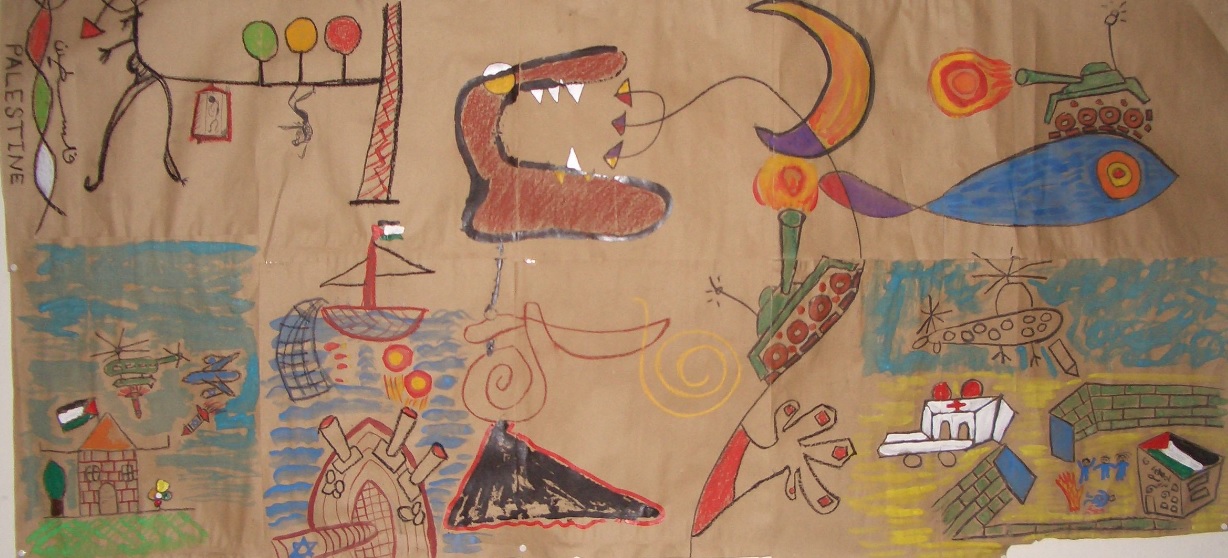
People’s Health Movement calls for Immediate Cessation of Israeli Offensive in Palestine and Lebanon and for UN Intervention

Ramalla (Palestine), 17th July, 2006: The Israeli offensive in Lebanon and Palestine is collective retribution against civilians in breach of the Fourth Geneva Convention and carries a high risk of all out war.

The People’s Health Movement (PHM) calls for an immediate withdrawal of Israel from Gaza, immediate cessation of the attacks on Palestine and Lebanon, immediate lifting of the blockade of Gaza and for the establishment of a strong UN Peacekeeping Mission in the Middle East.

The PHM is an international network of grass roots health organisations in over 90 countries including Asia, Latin America, Africa, Europe, United States and the Middle East. In PHM’s view social, economic and political factors, including conflict and war, undermine the health of the world’s people, especially the poor, the majority of whom live in developing countries. The deaths, injuries and loss of livelihood in both Israel and Palestine are tragic but the burden has been carried disproportionately by the Palestinians. In the first 48 hours after the incident of the 5th July, 35 Palestinians including children were killed by Israeli forces and 150 injured. In Lebanon, five straight days of Israeli attacks have killed 181 people, including children, and injured over 500. Another 350,000 displaced people, most of them women and children, are seeking refuge in schools and other public places. Food, water and medications are in short supply. For a small country like Lebanon (area:10,452 m2, population: 3,500,000), its infrastructure like airport, harbours, bridges, roads, border check points, power stations, fuel tanks etc, is almost completely destroyed. PHM calls upon humanitarian organisations to step up aid efforts to respond to the humanitarian crises. The civilian population of Gaza has taken the full force of the Israeli attacks with indiscriminate shelling and bombing; disruption of power, water supply and sanitation; destruction of houses and bulldozing of farms; and low level supersonic ‘buzzing’ of civilian populations. The civilian population of Lebanon has more recently been targeted through the destruction of transport and communications infrastructure and arbitrary bombing. PHM is concerned for the immediate suffering and loss of life and calls for wider affirmation that human life is precious of whatever nationality or religion and that the lives of Palestinians are not to be somehow discounted against the lives of Israelis. The targeting of civilians and deliberate creation of terror is terrorism. PHM is also deeply concerned about the increased risk of all out warfare in the region and perhaps beyond. It seems that the border incidents, involving the capture of Israeli soldiers, are serving as mere pretexts for a major onslaught by Israel on the aspirations and the morale of the Palestinian people and for the establishment of a greater Israel. On behalf of the millions of ordinary civilians in the region who would suffer and die in the case of war PHM calls for an immediate cessation of the Israeli offensive, withdrawal from Gaza and lifting of the blockade and for immediate UN intervention in the conflict. The health situation in the Gaza Strip has been seriously undermined as a result of external funding cuts to the Palestinian Authority (PA), together with Israel’s refusal to transfer tax monies collected on behalf of the PA, and the freezing of PA accounts by commercial banks. The PA employs 57 percent of all health workers, and runs 45 percent of primary health care centres in the Gaza Strip. Its inability to maintain service provision is having devastating impacts on access to healthcare, and is placing an unsustainable burden on non-governmental health organisations to fill the gap in services. PHM calls on health activists in Israel and in the US and Britain (Israel’s principal allies) and everywhere to generate pressure on Israel to cease its offensive and to take part in meaningful talks directed to a just and lasting solution of the problems of the Middle East.

Dr. Jihad Mashal, Director General, Palestinian Medical Relief Society, Palestine Mobile: +970 (599) 55 77 55
Dr. Ghassan Issa, Arab Resource Collective: Ph: +96 11 742075

Dr Hani Serag, secretariat@phmovement.org

The People’s Health Movement for the new WHO DG

A new Director General for the World Health Organisation – an opportunity for bold and inspirational leadership

published in The Lancet

1. Introduction
The sudden and sad death of Dr Lee Jong-wook, the former Director-General (DG) of the World Health Organisation (WHO), has already prompted several articles in this journal about WHO. But further discussion is needed over the next two months in the run up to the election of a new DG.

What will be the challenges facing WHO and its new DG? And how can individuals and institutions strengthen WHO’s capacity to respond effectively to the world’s health challenges? These are not idle questions, for all is not well at WHO. And for millions of people, the prospect of a basic level of health security remains a distant hope. Furthermore, as global and supra-national determinants of health become increasingly important, the performance of global public health institutions becomes ever more important.

In this article, the People’s Health Movement (PHM), a worldwide network of individuals and civil society organisations committed to the vision and principles of the 1978 Alma Ata Declaration, identifies three sets of global health challenges and the kind of response it would want from WHO. It also discusses the constraints and barriers faced by WHO itself, and suggests actions that must be taken by WHO and its new DG, as well as by governments and civil society.

2. Key global health challenges. Poverty and the global political economy

Poverty remains the world’s biggest health epidemic, underlying the HIV/AIDS crisis, the high mortality attributed to TB and malaria, and the 30,000 child deaths every day from preventable and treatable causes. It also results in governments being unable to foster socio-economic development and invest in effective health, welfare and education systems.

Frequent references are made to the World Bank calculation that a smaller number and proportion of people live in poverty on less than $1 / day. However, less is said about the methodology used to make this calculation, and its systematic under-estimation of the full extent of human impoverishment.

Furthermore, when a more appropriate $2 / day threshold of income poverty is used, even by the World Bank’s calculations, the number of people living in poverty increased between 1981 and 2001 to about 2.7 billion people.

This growth in poverty has been accompanied by a growth in wealth. While the number of people living in poverty in sub-Saharan Africa (SSA) increased from 289 million to 514 million between 1981 and 2001, world GDP increased by $18,691billion. Forty percent of the world’s poorest people account for 5% of global income, while the richest 10%, mostly in high-income countries, account for 54%.

Wealth generation is supposed to lead to ‘trickle down’ poverty alleviation, but in reality, it has disproportionately benefited a minority of the world’s population whilst impoverishing others. According to the World Commission on the Social Dimensions of Globalisation, the governance of the global economy is “prejudicial to the interests of most developing countries, especially the poor within them”. The deregulation of finance, the global property rights regime and a ‘winner takes all’ liberalization of trade are different aspects of a form of globalization that traps many countries and households in poverty. In spite of slowly increasing levels of development assistance and some debt cancellation, net resource flows from poor to rich countries still work against global health challenges.

Although some would argue that issues such as trade and global financial markets fall outside the remit of WHO, PHM believes that WHO must play a role in advocating for changes to the macro-economic and political determinants of ill health if we are to reduce child and maternal mortality, achieve universal access to antiretroviral treatment and allow all countries to pay their health care workforce an adequate living wage. While there are interventions that can be implemented by Ministries of Health to tackle the health worker crisis, it is as clear as daylight, that ultimate solutions for many countries will require changes to macro-economic policies in order to increase health sector spending.

WHO could advocate for global, regional and bilateral trade-agreements to be subject to comprehensive health and health systems impact assessments, and develop a well-resourced unit to carry out such work. As it becomes evident that the growth-led paradigm of poverty eradication is failing and untenable without an explicit redistribution strategy, WHO must demand further discussion on the establishment of new, stable and sustainable sources of global public financing for health such as the airline levy introduced by France, which is estimated to be capable of raising about 200 million euros a year for health. Others have suggested focussing attention on the development of an international system to reduce the tax evasion which results in an estimated $350 billion being lost from public accounts.

The launch of a Commission on the Social Determinants of Health in March 2005 offers the hope that WHO will play a more active role in assessing the health impact of the structures and rules of the global political economy. However, WHO’s new DG must push the Commission to go beyond assessment and recommend what WHO can do to engage with economic and social policy.

It will also be important for the new DG to make human rights a pillar of WHO’s work, by for example, giving visible and tangible support towards the work of the UN’s Special Rapporteur on the Right to Health. However, WHO will need to elaborate its human rights principles to stress the trans-national obligations and duties of rich country governments, international finance institutions, individuals and private corporations towards citizens of developing countries, and highlight the human rights transgressions that result from global rules and systems that cause or perpetuate poverty.

The development and restitution of national health care systems

The past few decades have seen many health care systems become weak to the point of collapse, disintegrated, more inequitable and increasingly commercialised. Under Dr. Lee, WHO began to reassert its commitment to the principles of the Alma Ata Declaration. It now needs to commit to health systems development policies that are consonant with the Alma Ata Declaration.

This should incorporate an evidence-based challenge to prevailing neoliberal reforms of the health sector, coupled with a coherent agenda to strengthen the capacity of Ministries of Health and public health care systems. The former would require WHO to assist countries to introduce reforms aimed at integrating fragmented pools of public and private health care finance, reversing commercialisation and shaping the private sector to meet social health objectives. The latter would require WHO to strengthen its own health systems departments and develop the public management expertise required to provide effective support to Ministries of Health.

In addition, WHO must help to bring order to the chaotic proliferation of global health initiatives (GHIs), many of which are characterised by selective, vertical health programmes within countries. Not only has this undermined WHO, it has also undermined Ministries of Health and coherent health systems planning by multiplying the number of donor-related conditionalities, increasing the transaction costs associated with having to liaise with multiple stakeholders and accentuating the fragmentation of health care systems. WHO could help facilitate the establishment of a cross-cutting health systems development strategy to which selective GHIs can commit.

Another practical step would be to resurrect the 2000 World Health Report initiative to measure and collate health care systems indicators country by country. Although there were serious conceptual and methodological weaknesses with WHR 2000, the underlying concept remains applicable and would enable better monitoring of progressive health care financing, equitable health care expenditure and determine whether governments are investing an adequate proportion of government revenue to health.

Protecting people from the hazard merchants

WHO’s role in responding to SARS, coordinating preparations for an avian flu epidemic and establishing a set of international health regulations to assist the control of disease outbreaks demonstrates its importance as a global public health agency. WHO’s role in helping to formulate evidence-based guidelines, norms and standards on various aspects of clinical and public health practice demonstrates another valuable function. The new DG must continue to strengthen these core functions of WHO.

What must also be stressed is the challenge of protecting people from non-biological hazards, including various forms of commercial activity. The International Code of Marketing of Breastmilk Substitutes and the Framework Convention on Tobacco Control represent partially positive outcomes of struggles between public health and powerful commercial, corporate actors.

The inter-connections between commercially-generated hazards, their merchants and ill-health involve both direct and indirect pathways. For example, although oil extraction can have direct negative health impacts on surrounding communities as a result of environmental pollution, it is also part of a global industry that has undermined the science of climate change and retarded action to the detriment of health. The automobile industry is an influential commercial sector that has successfully lobbied against sensible action to reduce the direct and indirect negative health impacts of current transport and travel patterns.

Pharmaceutical corporations are not often referred to as hazard merchants. However, the Agreement on Trade-Related Aspects of Intellectual Property Rights (TRIPS), which was conceptualised and brokered largely by Big Pharma working through the official delegations of the United States, Japan and European Union at the World Trade Organisation, has reduced the affordability and availability of many medicines and entrenched an intellectual property (IP) regime that is inefficient at encouraging pharmaceutical research and development, unconducive to safe and ethical practice and incapable of addressing the needs of poor patients. Regional and bilateral trade agreements are further expanding the cope for unsafe and unethical practice by reducing the capacity to regulate the marketing and sale of medicines.

Relations between governments, the corporate sector and citizens have become increasingly unequal over recent decades, accentuated by globalisation and the abridgement of national sovereignty and democratic accountability that accompanies it. The relative weakness of public health institutions is illustrated by the 2004 Global Strategy on Diet, Physical Activity and Health which was watered down because of opposition from the food and beverages industry (whose financial resources far exceed those of WHO and whose interests were strongly represented by US representatives at WHO). One of WHO’s challenges will be to help correct the current imbalance between the liberal, pro-market economic dimension of globalisation with a public safety and social dimension.

2. Barriers to a more effective WHO

One of WHO’s key priorities is an organisational development strategy for itself. Several challenges stand out. One is the need to strengthen WHO’s regional and country offices, particularly in Sub-Saharan Africa (SSA), a region that demands the best that WHO can offer. Under Lee, there was a shift of resources from Geneva to the periphery, but as this journal pointed out, many WHO regional and country offices lack the capacity to put greater resources to good use.

This is a particularly acute problem in weak countries and regions where there is a ‘spaghetti bowl’ of multiple actors from the UN, donor community, NGO sector and research community, competing with each other for scarce resources and the ear of the Ministry. Rather than providing a focal point for improved coordination and integrated leadership, WHO offices in Africa can appear as small-time players in the field.

To rectify this, WHO needs to define more clearly the strategic functions and activities that its regional and country offices can play, based on the local health policy landscape and then recruit (without eroding the skills base of local public and non-government organisations) and retain staff with the appropriate experience and competencies. At the same time, it should initiate public discussions of its regional and country plans as a mechanism to strengthen public support and public monitoring of its performance.

Another comment made by this journal is that too many of WHO’s programmes are inadequately appraised and allowed to perform sub-optimally. However, WHO does not stand alone in this criticism. In relative terms, many of WHO’s outputs and impacts have been cost-effective and impressive. However, the Lancet hits the nail on the head by calling for WHO “to act systematically as an accountability instrument for the work of other institutions” including the World Bank, the Global Fund to fight AIDS, TB and Malaria and the US president’s Emergency Plan for AIDS Relief.

Perhaps WHO can raise the bar for improving the transparency and independent monitoring of key international agencies involved in promoting health by funding and encouraging academic and non-government organisations to act as ‘critical friends’, capable of simultaneously monitoring and supporting the performance of WHO in a transparent manner.

WHO must also address the various documented examples of internal management and administrative weaknesses such as the lack of coordination between its different departments and programmes; the over-abundance of doctors relative to nurses, social scientists, economists, lawyers and political scientists; the tolerance of non-performing senior executives; arcane bureaucratic procedures; and poor personnel management practices that have resulted in considerable staff demoralisation.

An equally challenging set of barriers relate to WHO’s operating environment. One is its funding arrangements. WHO’s core funding has remained static for many years and is currently inadequate, amounting to a tiny fraction of the health spending of high-income member states. Furthermore, over two thirds of WHO expenditure arises from conditional, extra-budgetary funds that are earmarked for specific projects by contributing countries and other donors. Thus governments and other donors sustain a funding system that makes it difficult for WHO to plan and fund a coherent programme of work, whilst forcing WHO departments and divisions to compete with each other (and other organizations) and be susceptible to fragmented, donor-driven agendas.

As government contributions stagnate, WHO has been forced to be increasingly reliant upon private sources of financing and ‘public-private partnerships’. This however has resulted in a subtle erosion of public accountability and public health principles to accommodate the interests and orientation of new donors. For example, one outcome has been a further over-emphasis on the development of new medical technologies relative to strengthening the capacity to deliver existing technologies and the more integrated socio-developmental approach of the Primary Health Care philosophy.

Budgetary control is one mechanism by which some actors constrain the performance of WHO. But there is also direct political pressure on WHO. For example, some member country delegations have warned WHO to steer clear of “macroeconomics” and “trade issues” and avoid reference to terminology such as “the right to health”. As a result, WHO has taken a weak position on important economic issues. Its guide to the health implications of multilateral trade agreements was watered down following pressure from some governments and the World Trade Organization. And as reported in this journal, the US forced WHO to sanction and recall a WHO professional from Thailand for drawing attention to a negative aspect of the Free Trade Agreement between the USA and Thailand.3

Another barrier is the multitude of GHIs and agencies with various funding and governance arrangements, contributing to a chaotic operating environment for WHO. The time has come for a significant rationalisation of the global health landscape. At the very least, developing country member states should lobby to capacitate WHO with the mandate and resources to play a stewardship role in coordinating the work of official donor agencies and GHIs.

Finally, no discussion about the future of WHO would be credible without a comment on the current state of global governance and the United Nations in general. According to the World Commission on the Social Dimensions of Globalisation, there are “serious problems with the current structure and processes of global governance”. The propensity of some nation states to flout international law and undermine the UN makes the task of any new DG for WHO harder. But it also makes the election of a new DG vital because of the potential for WHO to act as a conduit towards a more effective and just system of global governance. The global health community, with its knowledge and understanding of the borderless nature of health threats, can play a vanguard role.

3. The right Director General for the right manifesto


WHO already has a positive manifesto, embodied in its constitution and the Alma Ata Declaration – one that reflects fairness, global solidarity, effective health care for all, public accountability and a strong socio-developmental orientation. In recent decades this manifesto has been subverted.

The aspiration of ‘health for all’ has been replaced by a tacit acceptance of growing health inequalities and the timid aspiration to provide a minimum package for the poor. Strong global health leadership capable of acting as a ‘health conscience’ for the world has been replaced by a fragmented landscape of selective global health initiatives designed to mitigate the underlying determinants of health rather than to challenge them head on. The social dimensions of health systems that stand out in the Alma Ata Declaration and District Health Systems model have weakened in the face of a narrow, neoliberal conceptualisation of cost-effectiveness and an uncritical faith in market-based incentives.

In order to adopt a bolder, broader and more progressive public health agenda, WHO will need charismatic, wise and courageous leadership. The hundreds of millions of people with the least access to health care deserve a DG capable of providing decisive intellectual leadership and withstanding political pressure aimed at constraining the ability of WHO to implement its positive manifesto.

A shortlist of thirteen candidates has just been announced with little or no public discussion amongst the health community. To encourage a more transparent and democratic process for the final selection of the DG, PHM has asked all candidates to respond to a set of questions (Box 1) which it will then publish for all to see. PHM will also be compiling profiles of the candidates to facilitate a more public examination of the strengths and weaknesses of each candidate.

However, the final selection of the DG will be the result of opaque, behind-the scenes power-brokerage involving 34 members of the Executive Board. Behind completely closed doors, they will interview and then select from amongst a shortlist of candidates. Structured criteria to assess the relative strengths and weaknesses of the candidates and how each individual scored against them, will not be made public. The untransparent process is entirely unacceptable.

After the election, PHM will lobby to reform this process for future DG appointments. There are also other actions that civil society organisations could undertake to make WHO an organization of the people as well as of governments. Civil society organisations could develop a joint initiative to monitor the discussions, debates and decisions taken at WHO Executive Board meetings. A stronger civil society presence at the meetings, coupled with a facility to report on proceedings, would improve transparency and the scrutiny of policy development as well as create a counterweight to the propensity of certain member states and other actors to bully WHO. The civil society initiative established under Brundtland could be revived to allow a wider range of voices to be heard and heeded, particularly those of marginalized and impoverished communities.

Civil society could and should also prevail upon governments and donors to improve the quantity and quality of funding to WHO. The formula for determining the level of contributions should be reviewed and a report card generated to rank countries according to the amount of funding as well as the proportion of funding that is un-tied. Civil society should also demand that the amount, nature and conditionalities of any private sources of financing be fully disclosed to the public.

The forthcoming election of a new DG marks a crucial opportunity for WHO and a critical juncture for an examination of global health governance more broadly. The PHM hopes that the new DG will position WHO as an organisation capable of catalysing a radical and progressive public health agenda fundamental to improving the health of the world’s poor.

Box 1: Inquiries from the People’s Health Movement to the candidates for the position of WHO’s Director General.

  1. What will be your top priorities for WHO over the next five years?
  2. Will the development of a global strategy to strength Primary Health Care be a priority for you? If so what will you propose to strengthen CPHC?
  3. Where do you stand on the need to repair the damage to public health care systems caused by the inefficiencies and inequities brought about by the privatisation of such systems?
  4. There has been a rapid proliferation of Global Health Initiatives and disease-specific initiatives. How will you seek WHO oversight and control of this situation?
  5. How will you ensure that WHO’s plays a more assertive role in protecting public health interests in the face of trade agreements (e.g. TRIPS) that would appear to be harmful?
  6. Given the pressures from various corporate interests and their allies for WHO to endorse health promoting practices what steps would you take to ensure that WHO is able to resist these pressures?
  7. How will you counter balance the disproportionate influence of the rich country governments, particularly the United States, on policy development within WHO?
  8. What do you propose to increase the voice and influence of civil society groups in WHO?
  9. WHO has been criticized for many years for being dominated by doctors, and lacking professionals from the social sciences, legal, economic and non-medical disciplines. What is your view on this and what will you do to rectify the imbalance in disciplines and expertise within WHO?
  10. The phrase “Staff are our most important resource” is commonly stated by leaders when they take office. How will you maximise this most important resource in terms of WHO’s work and in relation to staff representation in dealing with management
  11. Many argue that there is a particular need to build the capacity of the WHO Regional Office in Africa? Do you agree and if so, how would you go about this?
  12. How will you support and promote the work of the Commission on the Social Determinants of Health from now until it reports in May 2008 and then ensure its recommendations are implemented?

Authors

David McCoy, Ravi Narayan, Fran Baum, David Sanders, Hani Serag, Jane Salvage, Mike Rowson, Ted Schrecker, David Woodward, Ron Labonte, Amit Sengupta, Arturo Qizphe, Claudio Schuftan, Dev Ray
Authors’ contributions and conflict of interest statement All authors contributed to the text of this article. Each of us declare that we have seen and approved the final version. There are no conflicts of interest involved in this article. No external source of funding contributed to the writing of this article.

References


Horton R. WHO: strengthening the road to renewal. Lancet 2006; 367: 1993-5.
Editorial. Remembering Dr Lee. Lancet 2006; 367:1704. Benkimoun P. How Lee Jong-wook changed the WHO. Lancet; 367:1806-1808.
Reddy S and Pogge T. 2006. How not to count the poor. http://www.columbia.edu/~sr793/count.pdf
Chen S and Ravallion M. How have the world’s poorest fared since the early 1980s? World Bank Research Observer; 19: 141-69. Washington: World Bank.
Woodward D and Simms A. Growth isn’t working: the unbalanced distribution of benefits and costs from economic growth. London: New Economics Foundation, 2006.
http://www.neweconomics.org/gen/z_sys_publicationdetail.aspx?pid=219 United Nations Development Programme. Human Development Report 2005. Geneva: United Nations Development Programme, 2005, pp. 4.
World Commission on the Social Dimensions of Globalisation. A fair globalisation: Creating opportunities for all. Geneva: International Labour Organization, 2004.
United Nations. World Economic and Social Survey 2005: Financing for Development, E/2005/51/Rev.1, ST/ESA/298. New York: United Nations Department of Economic and Social Affairs; 2005.
Ministry of Economics, Finance and Industry and Ministry of Foreign Affairs, Government of France. Innovative development financing mechanisms: building a consensus. Available fromhttp://www.diplomatie.gouv.fr/en/IMG/pdf/avionbis_a4_en.pdf#search=%22airline%20levy%20france%20health%22
Murphy R, Christensen J and Kimmis J. Tax us if you can: the true story of a global failure. London: Tax Justice Network, 2005.
Peoples Health Movement, Medact and Global Equity Gauge Alliance. Health care systems and approaches to health care. In Global Health Watch 2005-06. London: Zed books, 2005.
Buse, K & Harmer A. “Power to the Partners? The Politics of Public-Private Health Partnerships” Development. 2004; 47(2): 43-48.
Drahos P and Braithwaite J. Who owns the knowledge economy: political organizing behinds TRIPS. Corner House briefing 32, 2004.
http://www.thecornerhouse.org.uk/item.shtml?x=85821. Accessed March 6 2005.
Baker D and Chatani N. Promoting good ideas on drugs: are patents the best way? Briefing paper. Washington DC, Center For Economic And Policy Research, 2002.
Drahos P and Henry D. The free trade agreement between Australia and the United States. British Medical Journal, 328:1271-2, 2004.
Cannon G. Why the Bush administration and the global sugar industry are determined to demolish the 2004 WHO global strategy on diet, physical activity and health Public Health Nutrition, 7: 369-80, 2004.
Editorial. WHO’s African regional office must evolve or die. Lancet, 364:475-6, 2004.
World Health Organisation. Proposed Programme Budget 2006/07. Geneva, WHO, 2006.
http://www.who.int/gb/e/e_pb2006.html Peoples Health Movement, Medact and Global Equity Gauge Alliance. World Health Organisation. In Global Health Watch 2005-06. London: Zed books, 2005.
Department for International Development. Working in partnership with the World Health Organization. Institutional Strategy Paper. London: DFID, 2002.
Jawara F and Kwa A. Behind the Scenes at the WTO: the real world of international trade negotiations. London: Zed Books, 2004, pp. 211-5.

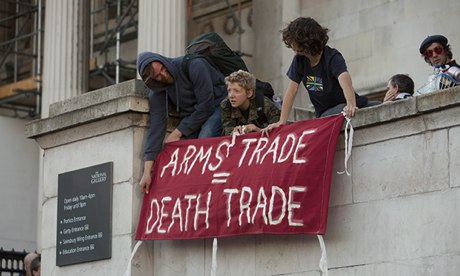
Saluco: Mujeres de mediana edad

Ateneo Juan César García, Sociedad Cubana de Salud Pública
Capítulo Cubano de la Red de Género y Salud Colectiva de la Asociación Latinoamericana de Medicina Social (ALAMES)
Coordinadora: Leticia Artiles
Vicecoordinadoras: Ada AlfonsCelia Sarduyo
Contenido:


  1. Editorial.
  2. Globalización, THR; y determinantes sociales del síndrome climatérico. Por Leticia Artiles Visbal.
  3. Fortalezas y debilidades de la Terapia hormonal de reemplazo. Análisis global. Por Daysi Navarro Despaigne.
  4. Papel de los estrógenos en el ciclo de la vida de las mujeres. Por Consuelo Prado Martínez y Angel Reyes

Felicidades Yoly
8 de marzo de 2006
Mensaje de la Unión de Ciudadanas de Colombia
Yolanda Arango Panesso
Yolitas, es una de las mujeres militantes por la vida digna de todas nosotras, como amiga, comadre, coequipera, enfermera salubrista, y desde diferentes espacios: su propia vida, el movimiento de mujeres, el CAMI -del cual es cofundadora-, la academia y también desde el diseño e implementación de políticas públicas en Atención Primaria y Salud de la Mujer, con énfasis en Autocuidado, Género y Desarrollo Humano, tanto en Colombia como en otros países.
Y aunque el sistema de seguridad social ya la jubiló, Yoly, sigue participando y aportando sus saberes sentipensantes y alegrías al Movimiento Nacional en Defensa de la Salud Pública, y en nuestra ciudad, como integrante de la Mesa Mujer, Salud y Desarrollo. Este espacio fue constituido precisamente un 8 marzo hace dos años para compartir experiencias y hacer realidad las políticas públicas de salud de las mujeres con participación de la sociedad civil. En fin, Yolanda Arango, es una de las mujeres que nos ayudan a sanar con la fuerza de su amor, su sororidad, su compromiso, su calidez y hace parte de ese inmenso grupo de mujeres que luchan todos los días para hacer del mundo un lugar mejor para vivir. Es así como el próximo 8 de Marzo, la Unión de Ciudadanas de Colombia, le estará haciendo un merecido reconocimiento en la Sociedad de Mejoras Públicas en un almuerzo a partir de las 12 del día, al cual nos uniremos con mucho regocijo, los demás grupos de mujeres de Cali, sus amigas y amigos.
De SaluCo para Yolanda Arango
Yolanda Arango es esa mujer a la que podemos tratar de maestra, pues nunca acaba de enseñarnos cuánto nos queda por aprender y hacer. Es de una calidez y ternura, que permite que cerca de ella solo crezca la calma y el amor. Durante los últimos años nos hemos encontrado muchas veces y siempre hemos podido entender desde su ejemplo, que cualquier cosa que hagamos juntas va a contribuir a que un mundo mejor sea posible.
Por estos días, nos encontramos nuevamente, para compartir experiencias con mujeres y hombres que trabajan fuertemente para el logro de bienestar entre las poblaciones que sufrieron del huracán Stan en Guatemala comprometidos/as también en la atención a las víctimas –sobrevivientes de violencia de género y sexual de los diferentes departamentos del país. Este encuentro se produjo gracias a PROPEVI/SOSEP (Secretaria de Obras Sociales de la Esposa del Presidente) y a la Oficina del UNFPA del mencionado país; y Yolanda una vez más, nos ha colocado frente a la necesidad ineludible de seguir trabajando en pos de integrar el género y el desarrollo humano a las prácticas de autocuidado en el entendido de que esta sinergia debe constituirse en una filosofía de vida, una ética de trabajo para alcanzar mejores indicadores de salud entre nosotros y nosotras como prestadores/as de servicios de salud y en un camino para el empoderamiento y una vida sorora entre mujeres.
Luego de esta experiencia, solo podemos agradecer a Yolanda Arango por su existencia, por su mirada social y salubrista, por sus palabras, por su acompañamiento y proponerles estos tres materiales de mujeres de edad mediana para esclarecer aspectos que están en debate sobre la salud de las mujeres de edad mediana.

Saluco 4: Alto a la violencia, projetamos nuestra salud integral

Año 4. No. 4, 2005
Boletín de la Red Cubana de Género y Salud Colectiva.
Ateneo Juan César García, Sociedad Cubana de Salud Pública
Capítulo Cubano de la Red de Género y Salud Colectiva de la Asociación Latinoamericana de Medicina Social (ALAMES)
Coordinadora: Leticia Artiles
Vicecoordinadoras: Ada AlfonsoCelia Sarduy

Contenido:

  1. Editorial
  2. Estudio pionero sobre la violencia doméstica.
  3. CAMPAÑA 2005-2007: Violencia contra las mujeres y su impacto en la salud.
  4. Autovaloración de las mujeres víctimas de violencia de pareja. Por Laura M. López Angulo; Juan José Apolinaire Pennine; Marlen Array; Addis Moya Ávila


Nota Editorial

Este año SaluCo se sumó a la Campaña de la Red de Salud de las Mujeres Latinoamericanas y del Caribe (RSMLAC), en compañía del Centro Nacional de Educación Sexual (CENESEX), la Red de Género y Salud Colectiva de ALAMES y el Proyecto Palomas. La Campaña ha incluido intervenciones en los medios de comunicación social: radio, televisión y prensa plana. El equipo de comunicación social del CENESEX, elaboró un spot televisivo para recordar en el 25 de noviembre la necesidad de vivir una vida libre de violencia.

Los esfuerzos conjuntos del Proyecto Palomas y la Cinemateca de Cuba cristalizaron en la exhibición de 2 materiales cinematográficos en el conocido Cine Chaplin de la Capital. El documental Señoritas extraviadas, muestra los horrores de las desapariciones y muertes de mujeres jóvenes en Ciudad Juárez, en la mayoría mujeres empleadas en las maquilas de las grandes transnacionales con salarios de alrededor de 5 dólares por día, doblemente explotadas por ser mujeres y por ser pobres. Se espera aun por una respuesta a los feminicidios de Juárez. El film Te doy mis ojos fue la otra propuesta elegida para promover la reflexión entre sus espectadores sobre el impacto que la violencia conyugal tiene en la vida de las mujeres, sus hijos y sus familias. El proceso de la toma de conciencia de las mujeres en cuanto a decir NO a la violencia, así como el proceso en los agresores para la asunción de estilos no violentos de convivencia en pareja son dos elementos importantes de esta propuesta cinematográfica que resalta el papel de la red de apoyo en el pasaje de las mujeres de víctima a sobreviviente de violencia. El propio 25 de noviembre convocó a dos hechos relevantes: en la mañana la Reunión de trabajo de Grupo nacional de prevención y atención a la violencia intrafamiliar y en la tarde, la premiación del Concurso Historia de Mujeres. La Reunión de trabajo contó con una amplia representación de las instituciones y organismos del Estado bajo la coordinación de la Federación de Mujeres Cubanas, mecanismo para el adelanto de la mujer de la República de Cuba y coordinadoras del Grupo nacional. Sonia Beretervide realizó una amplísima exposición de todo lo realizado en el país en materia de prevención y atención a la VIF, así como aquellos aspectos sobre los que aun se requiere trabajar, en los que se encontraban comprometidos los sectores allí presentes. Muchos fueron los momentos relevantes en dicha reunión, no obstante, citaremos solo tres: el anuncio de la constitución del grupo Violencia y Salud del MINSAP; la ratificación en el compromiso del Grupo en el trabajo de divulgación, sistematización, prevención y atención a la VIF atendiendo a las especificidades de las necesidades, según la etapa del ciclo de vida, de las personas que viven en situaciones de violencia; y el apoyo político al trabajo que se realiza para minimizar los riesgos de la VIF, en niños, niñas, así como en las mujeres en las diferentes etapas del ciclo de vida y en sus familias.

El Concurso Historias de mujeres, iniciativa del CENESEX, la FMC y la Editorial de la Mujer, premió en este día la obra de mujeres que escribieron sobre recuerdos que no se pueden perder, pues forman parte de la historia de las mujeres en Cuba. Historias de empoderamiento, de crecimiento personal y humano, de participación en los diferentes momentos de la revolución, de amores y desamores que encontraron por primera vez palabras y veían por primera vez la luz, estas historias serán publicadas por la Editorial CENESEX y la Editorial de la Mujer para que estén disponibles para todos y todas. SaluCo participó como tarea de la Red de Género y Salud Colectiva en el Taller municipal de Plaza de la Revolución efectuado el día 1 de diciembre en el Policlínico Puentes Grandes con el fin de sensibilizar a los diferentes sectores participantes en considerar como ejes para el análisis de la violencia contra las mujeres tres categorías claves: género, poder y derechos, a partir de los resultados parciales expuestos sobre una investigación municipal que viene desarrollándose sobre violencia intrafamiliar en dicho municipio capitalino.

Las tareas no han concluido, pues la Campaña se extiende hasta el día 10 de diciembre, momento en que la Red de Género y Salud Colectiva de ALAMES, Capítulo cubano, se reunirá para organizar el Plan de acción a desarrollar durante el 2006 y hasta el próximo 25 de noviembre, en que haremos una revisión de los avances y plantearemos las nuevas acciones a realizar hasta el 2007. Acompáñanos. Este número cuenta con la contribución de un grupo de investigadores/as de la provincia Cienfuegos, el trabajo Autovaloración de las mujeres víctimas de violencia de pareja nos acerca al complejo tema de la relación entre subjetividad femenina y violencia en el contexto de pareja. Como siempre, SaluCo espera la contribución de todos y todas.