Stop the War on Iraq!

International People’s Health Council

ALAMES – Asociacion Latinoamericana de Medicina Social

Joint statement by the organizers of the HEALTH FORUM (2nd International Forum for the Advocacy of People’s Health as an Essential Human Need)
Porto Alegre, Brazil: 25th January 2003

STOP THE WAR on Iraq !

“A war on Iraq will lead to a health and humanitarian crisis. It is disastrous for the people of the world”.

(An unanimous statement issued and signed by the participants of the 2nd Health Forum, held at Porto Alegre, Brazil (20th to 22nd January 2003)

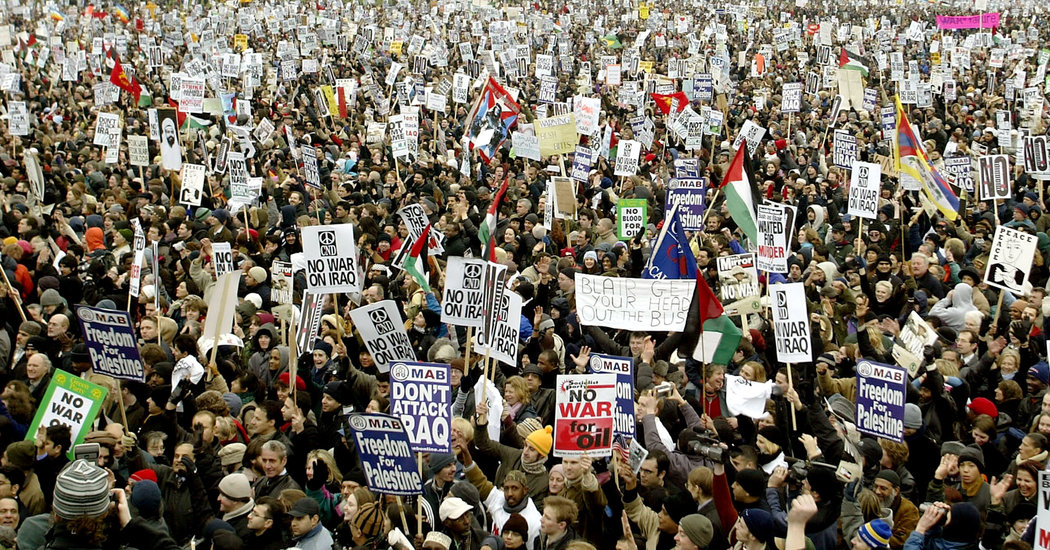
We, the participants at the 2nd Health Forum at Porto Alegre, Brazil are greatly alarmed by and unequivocally condemn, the preparations for a full-blown war against Iraq currently being undertaken by the United States of America and United Kingdom.

This forum unanimously warns the Bush and Tony Blair administrations that the consequences of a war on Iraq is disastrous for the health and lives of the people of Iraq, its neighbouring countries and the rest of the world. We urge the two governments to put public interest and peace before their military and private commercial interests. The war plans are impermissible, undemocratic and immoral. It must be stopped.

Testimonies by health and humanitarian workers, public health professionals and others who are assembled here (including some who often provide front-line medical, health and humanitarian assistance during war, conflict and humanitarian situations) who are present here, for this international forum reminds that more than 90 % of the casualties in any war are innocent civilians. All wars destabilise the already over burdened health systems. Case of Iraq will no way be different. The Health Forum endorses the observations made by the MEDACT (a constituent of the People’s health Movement) and the International Physicians for the Prevention of Nuclear War in their recent scientific report about the potential health and humanitarian consequences of the proposed war.

The 12 year embargo and trade sanctions have killed thousands Iraqi people and unmitigated hardships to the ordinary civilians in Iraq. It has also crippled the economy and devastated public life, leaving millions of children malnourished and reversing the health standards.

The war will also lead to a wider regional conflict in the Middle East that will have long-term devastating health, humanitarian, social, economic and political consequences. What we need to leave for the next generation is not a sense of death and destruction, but of peace, solidarity, non-violence and understanding. We need to work towards a just and peaceful world, which is not only possible, but also necessary.

We extend our solidarity for the ongoing efforts by the peace and other social movements to stop this war. We appeal to the people of the world to join us in condemning all expressions of military terrorism and war. In today’s context of an advanced development of weapons of mass destruction, life is too precious to bear the burden of war.

Vital statistics (Iraq and Health):

3,900,000 deaths if nuclear weapons are used www.TheMillionSignatureCampaign.org

WHO-DG to lead defence of health as a social right

WHO Director general elections debate
The Lancet; Volume 361, Number 9354 25 January 2003

To lead the defense of health as a social right

Alexis Benos
President of the International Association of Health Policy
Medical Dept, Aristotle University of Thessaloniki, Greece.

“The World Health Organisation’s mandate is to get the evidence right and ensure that is properly used to make the world a healthier place”(1). The new WHO Director-General, in initiating a crucially needed change in the policies of the leading international health agency, could use this statement that Gro Harlem Brundtland made in her message introducing the World Health Report 2002. In fact the content of the World Health Report 2002 recognises widening international health inequalities and acknowledges, albeit not overtly, their socio-economic determinants in focusing on poverty.

This is a substantial change in WHO’s approach to international health issues, especially when compared with the severely criticised approach of the World Health Report 2000(2). Any optimism that this marks a fundamental shift in WHO’s perspective is unfortunately contradicted by the recommendations of the WHR 2002 that focus on individual behavior and unhealthy choices, while neglecting the determining role of the globalised market economy. The accumulating evidence on social inequalities in health worldwide poses a substantial challenge for the new WHO leadership. The burden of health disparities, from the tragedy of the sub-Saharan African populations to the widening marginalisation of populations in Latin America and the developed and former socialist countries is already unbearable. The global division between rich and poor is not merely a topic of scientific interest. It is a key health policy issue, as its impact on the health status of the world population cannot be disregarded anymore. The reality, recognized by the World Health Report 2002, is that “the greatest burden of health risks is borne by the poor countries and by the disadvantaged in all societies”(1). The fact that the risk factors resulting in most of the global disease burden, viz. malnutrition, unsafe water and sanitation, unsafe sex and indoor air pollution are significantly determined by the socioeconomic policies1 can not be dealt with by a mere appeal for healthier lifestyles. Concrete actions and policies to create a more equitable society are urgently needed. Health and its socioeconomic determinants have to assume a higher priority in international and national policies with strong support and advocacy by the new WHO leadership. Regarding health care policies: “the conventional wisdom which promotes managed competition and privatization in the management and delivery of health services”(2) is still the driving approach in the international setting, including WHO. Here again there is accumulating evidence that, besides the overt public funding of for profit private corprorations(3), none of the anticipated targets of this policy is being achieved. To the contrary the picture is more of: budget deficits exploding under the pressure of debts to private companies(4), deregulated services, shortages of human resources, collapsing public health services and a constant increase in numbers of people denied any access to health care services. On the winners side there has been a geometric growth of private sector profits based on the promotion health commodification(5). These are the results of the implementation of the economic policy that the World Trade Organisation is promoting globally through the GATS (the General Agreement on Trade in Services) and TRIPS (Trade-Related Aspects of Intellectual Property) agreements. The new WHO leadership, in advocating for the defense of health and health care as a social right, has the duty to stand up against these devastating policies and consider seriously messages from the growing international movement, some of which is currently gathered at the World Social Forum in Porto Allegre. Millions of desperate people, their governments and health workers all around the world expect and deserve a substantial backing from WHO in their struggle for health and a better world.

References
1. Gro Harlem Brundtland. Message from the Director -General. World health Report 2002, World health Organisation 2002, Geneva.
2. Navarro V. Can Health Care Systems be compared using a single measure of performance? Am J Public Health 2002, 92:1:31-34.
3. Gaffney D, Pollock A, Price D, Shaoul J. NHS capital expenditure and the private finance initiative -expansion or contraction? BMJ 1999; 319: 48-51. 5. Pollock A. A wake up call for primary care. Br J Gen Practice November 2002:883-884.

II International Forum Advocacy of Peoples’ Health

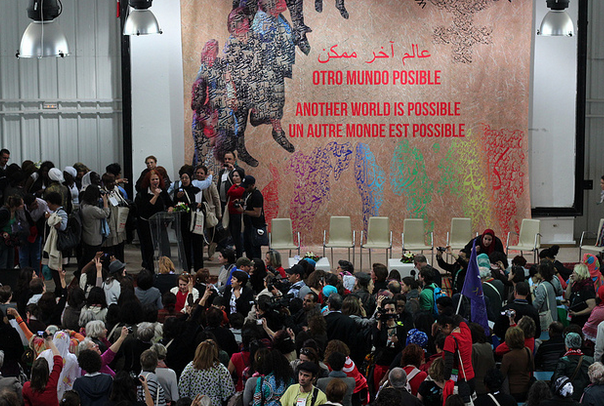
III World Social Forum: Another world is possible

II International Forum for the Advocacy of Peoples’ Health as an Essential Human Need, a Citizenship Right and a Public Good

Porto Alegre – RS – Brasil
January 20th – 23rd, 2003
Organization:
Asociación Latinoamericana de Medicina Social – ALAMES
International Peoples’ Health Council – IPHC
International Association of Health Policy – IAHP
Peoples’ Health Movement – PHM
Centro Brasileiro de Estudos em Saúde -CEBES
Secretaria Municipal de Saúde – SMS/PMPA
Prefeitura Municipal de Porto Alegre
Rede Brasileira de Cooperação em Emergências – RBCE
Subscription list is open for entities which want to act as organizers or supporters for the event.

Background:

Four hundred participants of the I International Forum for the Advocacy of Peoples’ Health, performed in Porto Alegre on January 2002, soon before the II World Social Forum (WSF), recommended the accomplishment of II International Forum for the Advocacy of Peoples’ Health preceding the III WSF in January 2003. This will allow a widened participation of all those interested, a preparation of the contributions on health issues for the III WSF, and, at the same time, to raise health theme to apower in the several activities within the WSF itself.
Conclusions of the I International Forum, attached to this letter, summarize the objective and the motivation for this II Forum, where we want to build an International Agenda on the Defense of the Health Right, as well as to launch the basis for an international call for the accomplishment of the I World Forum for the Advocacy of Health in Porto Alegre – Brazil, in the first semester of 2004.

Target public for this International Forum:

Social and political movements in general, concerned and/or active on people and collectivities’ right to health, such as Peasants’ Movement, Landless People Movement, Factory Workers, Services Workers, Teachers, Education Workers, Advocacy for Children and Adolescents, For Peace, Against Violence, Political Movements and Parties, Youth Movements, Ecological Movements, for Sanitation and Urban and Rural Development, for Free Sexual Option, for Public Security, for Safe Traffic, for Safe and Protector of Life Communities, Mental Health Movements, Student Movements in general, Journalists, Artists, Culture Workers, members of Religious Movements, Ethnical Movements, Afro and Indigenous People… that is, all those interested in establishing and fighting for an ANTI-NEOLIBERAL POLITICS, FOR THE ADVOCACY OF HEALTH AS A SOCIAL AND CITIZENSHIP RIGHT, TASK OF THE STATE AND A PUBLIC GOOD.

Objectives of the II International Forum for the Defense of the Peoples’ Health:

  • To build and to spread an enlarged perception of health as an indispensable element for social justice in the world, perceiving health as a right and as na endowment for each citizen and each collectivity.
  • To accompplish a critical analysis, analysing alternatives and proposing ways to overcome neoliberal principles in health, making them known and making suitable the ways used by successful experiences in the affirmation of an universality of rights with the construction of social equity.
  • To introduce or strengthen the theme of right to health in the agendas of social movements in general and governments and to insert social movements in general in the fight for health, adopting its wide and definition of human need and quality of life, where every one will identify with a theme which does not belong only to specialists, but pertains to the universe of needs and desires of all human beings.
  • To produce spaces of reflexion through working groups whose participants belong to different movements, and which main objective or reason is not health, to share with their interlocutors this double construction. Its object for fight – be it the rights of indigenous peoples, children and adolescents, women, elderly, ethnical minorities, for sexual option, for access to land, for access to work, for access to housing, … or even more general fight movements, as political parties and movements, unions, peasants, students, teachers, community associations… can be seen in their specific themes as well as embracing the theme of right to health, under a perspective of participation in the building of an universal social right to health, as a human being, as a right of citizenship and as a public good.
  • To build a political agenda for construction and diffusion of a political reason and the universal right to health, with the definition of spaces for articulation between different political and social movements, as well as together with socially commited governments to generate answers to the needs of population.
  • To structure in a participatory way the Call and the organization of the program to the I World Forum for the Right to Health and in Advocacy of the peoples’ health in 2004 in Porto Alegre.
  • To facilitate the vision of health policies and systems which are not oriented by neoliberalism, making known and concrete the Unified health System – SUS – in Porto Alegre and in Rio Grande do Sul, under the context of building a national SUS, also bringing other Brazilian SUS experiences for knowledgement, stimulating this kind of focus and alternative agenda for those countries which face the challenges of building appropriate and social security and health systems according to the principle of health as an universal social right, a duty of the State and co-responsibility of society.
  • To establish universality with equity as a big concreteness of the right to health expressed in equity of health conditions, in access to services and in the distribution of resources and opportunities.
  • To adopt the promotional quality of life strategy, overcoming the mere assistencialism, guiding health care to another direction of individuals and their collectivities’s autonomy and establishing a transdisciplinar and transectorial relationship on quality of life and health.

Methodology of the Forum:

To build a general reference for the debate through Panels, ordering general questions to be answered and the existing positions in the field of analysis and proposals. To develop sessions in the form of Working Groups where organizations and particpants of different social movements will be able to present their positions about four questions:

  1. which is the focus of the agenda in your political and social movement and which is the space and characteristics of the presence of Health as a Right in your current Agenda?
  2. which are the characteristics that should be adopted by the fight for health, which is your agenda and which are the strategies to be successful in this fight? Which are the reference experiences in this field?
  3. which are the interests, opportunities and barriers to be overcome to introduce the health theme as a Social Right in the Agenda of different social movements and how could this movement engage itself in the more general fight for Health as a Social Right.
  4. how to structure and operate the call and the conducting of the I World Forum for the encourage the organization of regional and/or national preparatory Forums.

These questions will be developed in Working groups, according to the dynamics adopted by indicated Coordinators and the group itself, assuring the expression of all in their positions’s presentations and soon consolidating in the debate a collective position to be presented to the General Plenary at the end of each day. General recommendations and joint working goals – Political Integrated Agenda, will be adopted at the Final Session, based on reports and its final outcome.
After the II International Forum, during the 23rd of January, site visits and lectures about the Unified Health System will be organized allowing people to know Porto Alegre’s SUS. On subscription, those interested should express their theme preferences in order to know our SUS.

Program:

January 20th, 2003
8:00 AM – Participants ??????
8:30 AM – Official Opening Ceremony
9:00 AM – Panel of Analysis of the International Situation of Peoples’s Health, of States Reforms, of Social and Political Movements and the Right to Health, instituting a critical focus on advances and retrocedings in the warranty of the right to health, situating health theme under the context of political agendas of governments and society. This Panel will try to trace a comprising view, covering all regions of the planet.
11:00 AM – Debate with the audience
12:30 – Lunch
2 PM – Working Groups, discussing about the two initial questions
5:00 PM – Information and Analysis about Social and Political Experience of SUS – Unified health System – in Brazil. Elements to Understand Porto Alegre’s Experience.
6:30 PM – Presentation of discussions in each Group of themes 1 and 2.
7:00 PM – Artistic acitivities
7:30 PM – Closing of the day

January 22nd, 2003

8:30 AM – Panel about alternatives for the development of health agendas in the scope of local / department / state / and national governments of social movements in general and in the form of these governments and movements to sum to for the building of a Political Agenda in Defense of Health as a Social Right. The role of international cooperation, North-South and South-South. Examples of success in the definition and development of social agendas in defense of the right to health. Discussion.
11:00 AM – Discussions with the audience
12:30 – Lunch
2:00 PM – Working Groups, themes 2 and 3
5:00 PM – Planary session: Synthesis of the recommendations of groups and discussion about how to ???????? this fight around an International Agenda for Defense of Health as a Social Right. Preliminary composition of recommendations and organization of actions for the Agenda in Defense of the Right to Health.
6:30 PM – Closing of the day’s activities
8:30 PM – Dinner for the Health of People, by adhesion

January 23rd, 2003
9:00 AM – Panel with a report of experience of organization and mobilization of the Assembly for the Health of the People in Bangladesh, of the World Social Forums and the World Education Forums, reports of other experiences of international mobilization. Reflexion about the role of events in the political mobilization. Initial ordering of an agenda of themes and initiatives which will take us to the organization of a I World Forum for the Right of health in 2004.
11:00 AM – Discussion with the audience
12:30 – Lunch
2:00 PM – ?????, theme 4. Conclusions and recommendations of each Group.
4:30 PM – Final Plenary Session: Approval of the Final report with the observations and recommendations of the event and with the proposal of a general program and strategies for the call and structure of organization for the I World Forum for the Right to Health. Definition of communication strategies about the theme Health and the conclusions of this II International Forum within the III World Social Forum. Approval of the International Agenda for the Advocacy of the Right to Health.
6:30 PM – Official closing of the II Forum.
9:30 PM – Party

January 23rd, 2003
9:00 AM to 4:00 PM
Optional activity post International Forum to visit and to know SUS – Unified Health System – in the city of Porto Alegre in sectors where the participants are interested on.

Information and Subscriptions:

Secretaria Municipal de Saúde de Porto Alegre
Av. João Pessoa, 325 – centro – Porto Alegre – RS – Brazil
CEP 90040-000

Telephone: (+55) 51 3289 2833, 3289 2859, 3289 2850
Fax: (+55) 51 3289 2827, 3289 2841
E-mail: joser@sms.prefpoa.com.br armandon@portoweb.com.br, ananyr@sms.prefpoa.com.br
alames@movinet.com.uy

On behalf of the Organizing Committee:
Armando De Negri Filho
General Coordinator of the Latin American Association of Social Medicine – ALAMES

When you send you subscription, please inform:

Name, entity or movement you are a member of, explaining its field of activities, position, mail address for institutional mailing, telephone, fax and e-mail. Please indicate which is your field of interest for site visits in Porto Alegre.

Subscriptions and information by Internet:
For subscriptions for the II International Forum for the Defense of Peoples’ Health, use the mail: assepla@sms.prefpoa.com.br

Please pay attention to the subscription at the III World Social Forum and for the subscription of activities of your institution / organization (in this case, until December 6th, 2002): Subscription
e-mail

As well as through the mail:
fsm-hospedagem@smic.prefpoa.com.br information about hosting

Million Signatures on the Internet to demand “Health for all now”

Hyderabad (India), Savar (Bangladesh), Managua (Nicaragua), 5th January 2003:

PEOPLE’S HEALTH MOVEMENT and INTERNATIONAL PEOPLE’S HEALTH COUNCIL launches:

The Million Signature Campaign:

A march on the Internet demanding HEALTH FOR ALL NOW!

“In the next 24 hours, over 30,000 children will die from preventable diseases on our planet earth. Today, while the world is writing a collective obituary of the future generation, we know why they are dying; we know who are responsible for these deaths. We know how these deaths can be stopped… Join ‘The Million Signature Campaign’, – a march demanding health for all.”

These are not just statistics, but precious lives that the World Health Organisation promised to save 25 years ago. In 1978, World Health Organisation, the apex UN body dealing with health, promised Health for all by 2000 through a historic moment, the Alma Ata declaration.

“Since the Alma Ata declaration in 1978, responses were promising. However, the spirit of Alma Ata and the idea of Health For All has been under attack by anti-health, anti-poor policies, reemerging and new diseases, new challenges and above all by efforts to put private profit over public health. In the current international health crisis, it is more essential to reaffirm and implement the principles and strategies of Alma Ata” sayswww.themillionsignaturecampaign.org, the home page for this-web based campaign.

The Million Signature campaign was officially launched today simultaneously from Bangladesh, Nicaragua and India. Thousands of people participating in the Asian Social Forum at Hyderabad, India, are expected to extend their solidarity on the opening day of this web campaign. People’s Health Movement is at Asian Social Forum to extend the solidarity of the global health movement.

25 years since the Alma Ata declaration, health for all by 2000 is not a reality. This signature campaign, initiated by the People’s Health Movement and the International People’s Health Council, is being endorsed by ordinary people from various walks of life and organisations, institutions, people’s associations and others working for a just world.

Ms. Parven Akhter, a 22- years old health worker from Souther, a village located in the Faridpur district of Bangladesh is the first signatory. “Let us work together, make other people aware of their health rights and ensure basic health care for all. I hope everybody will join this campaign”, said Ms. Akter.

Some of the first signatories include ordinary health workers, former UN officials and architects of the Alma Ata declaration, medical professionals, journalists, writers, policy-makers, academics, Nobel Prize and Right Livelihood award (alternate Nobel prize) winners, ministers and former heads of nations, politicians, celebrities, leading organisations, students and mass movements.

“The campaign is conceptualised and designed to catch the attention of the WHO, UNICEF, other UN bodies, social and political organisations, policy-makers, governments and others. It is one more step towards making health for all a reality,” said Dr. Qasem Choudhury, the outgoing facilitator for the People’s Health movement
(PHM) secretariat. PHM was launched in Dec 2000 through the People’s Health Assembly, a historic summit in Bangaldesh that had participation of over 1500 representatives from nearly 100 countries. The goal of the People’s Health Movement is to re-establish health and equitable development as top priorities in local, national and international policy-making, with comprehensive primary health care as the strategy to achieve these priorities.

PHM aims to draw on and support people’s movements in their struggles to build long-term and sustainable solutions to health problems. One of the outcomes of the PHA 2000 is the People’s Charter for Health, the largest consensus document on health.

“Last 25 years have seen several experiments in the health sector. Some of them met with success in the initial stages. Of late, corporate and private interests have defeated public health. The negative impacts of unregulated globalisation and privatisation are neutralising the achievements we had in making health for all a reality,” said Ms.Maria Hamlin Zuniga, Co-ordinator of the International People’s Health Council (IPHC). IPHC, a constituent of the PHM, is a worldwide coalition of people’s health initiatives and progressive groups and movements committed to working for the health and rights of disadvantaged people. “Primary Health care works where there is a political commitment,” she said.

“People’s Health Movement will observe 2003 as the year of Alma Ata. A series of activities are being planned to remind and revive the key principles of Alma Ata,” said Dr. Ravi Narayan, the new facilitator for the PHM secretariat.

“The struggle for justice and health for all needs to be fought at different levels. We are aware of the digital divide. Concerted efforts will be put to take this campaign and spread the struggle for health for all also to people who are below the digital line. Using media apart from the Internet will be one of the methods to popularize this Internet based campaign,” said Dr. Unnikrishnan PV of IPHC, facilitator for this web-based campaign.

Dr. Qasem Choudhury, Outgoing facilitator: PHM secretariat
Maria Hamlin Zuniga, Co-ordinator: IPHC
Dr. Ravi Narayan, Facilitator: PHM Secretariat.

For further media queries, please call:

India : Dr. Unnikrishnan PV (Mobile: +91 (0) 98450 91319 / unnikru@yahoo.com)

Thailand: Satya Sivaraman (E-mail: satyasagar@yahoo.com)

UK: Andrew Chetley (E-mail: chetley.a@healthlink.org.uk)

During Asian Social Forum : +91 (0) 98450 91319 / +91 (0) 98491 55692

European Social Forum: “Health and neoliberalism” (english / italian / french / spanish)

Another Health Care System is possible

The “Health and Neoliberalism” seminar, held in November 7th, in Florence, within the initiatives of the European Social Forum, has resulted in the following document which we submit to all the European Social Movements.

Health is a fundamental and universal right which belongs to everyone and must be free of any economic charge.

Neoliberalism has determined – with differences in the various nations, but following a unique trend – the progressive denial of this right in accordance with the IMF politics and GATS agreements.

Such denial is an integrant part of the process which is trying to dismantle the welfare state and to destroy the National Health Systems This is clearly demonstrated by the dismantling of all the conditions which promote health (equitable salaries, housing rights, pensions� and so on) and by the destruction of the independent scientific research working for the public good. Clear examples of this process are the imposition of budget restrictions for the public structures and the increasing role of the private health sector.

For health care users this essentially means a radical lowering in the quality of the assistance, and for health workers an increase in the load of work, with a total denial of the dignity of the workers themselves.

Reacting to this state of things necessarily implies:

  • to defend public health systems, which must be universal and free for everybody, including the migrants, and to answer to users� needs and desires;
  • to reaffirm these basic principles: health prevention and promotion, the respect of human dignity in health care and the guarantee of the treatment at the rehabilitation stage;
  • to watch over the disease treatment in order to avoid the logic of profit and the control of the pharmaceutical corporations;
  • to reduce the exposure of common people and workers to pollution (to the classic one, as in the case of amianthus, and to the new one due, for example, to the electromagnetic installations);
  • to fight against monopolistic patents on human genome which generate only excessive profits for pharmaceutical corporations and prelude to a hyper-technological medicine for few rich people, aimed at the production and the diffusion of genomic-based drugs and of diagnostic kits which could be used to discriminate and select the users on genetic basis.

We don’t want to play a role of mere resistance; we want to amplify and extend the national struggles of health workers and health-defense Associations and to propose the creation of a European network as an opportunity of analysis, discussion, confrontation of ideas and experiences, aimed at supporting the projects of international solidarity as those now active in Palestine.

We are planning a new kind of national health system, not dominated by the interests of industry and market, and aware that health is possible only through a more general social and political struggle.

The next European appointment aimed at building up a real alternative is on February 15th 2003, in Paris.

Associazione Italiana Esposti Amianto
ATTAC Germania
ATTAC Italia Commissione Ambiente e Salute
COBAS Sanita Italia
Collectif Travail Saut? Mondialisation G?neve
Coordinamento Salute Grecia
CUB/RdB Italia
FADSP (Federacion de Asociaciones de Defensa de la Sanidad Publico) Spagna
Forum per la difesa della salute – Lombardia
IAC (Intersindacal Alternativa de Catalunya)
Medicina Democratica – Movimento di lotta per la salute
La Comisión de Salud-Antiglobalización de Madrid

***

“Un’altra Sanità è possibile”

Il Seminario “Salute e neoliberalismo” tenutosi giovedì 7 novembre 2002 durante le giornate del Social Forum Europeo di Firenze ha elaborato il seguente documento che viene proposto a tutti i Movimenti Sociali Europei.

La Salute è un diritto universale ed essenziale che va garantito gratuitamente.

Il neoliberismo, con diverse modalità nazionali, ma con un’unica tendenza, ha determinato la negazione progressiva di questo diritto, in linea con le politiche del FMI e con gli accordi del GATS.

Questa negazione, parte integrante del processo di distruzione dello stato sociale, passa attraverso lo smantellamento dei Sistemi Sanitari Nazionali, di tutte le precondizioni necessarie per la salute (salari, diritto alla casa, pensioni, tempo libero, etc…) e distrugge la ricerca indipendente capace di produrre un sapere scientifico determinato dai bisogni della popolazione. L’imposizione del pareggio di bilancio per le strutture pubbliche ed il costante aumento del ruolo della sanità privata, sono esempi lampanti di una sempre più vasta mercificazione della salute.

In sostanza questo significa per gli utenti un drastico taglio dei livelli e della qualità assistenziali e per gli operatori sanitari un aumento dei carichi di lavoro con totale negazione della dignità dei lavoratori stessi.

Reagire a tutto questo significa:

  1. Garantire la difesa dei sistemi sanitari pubblici, universali, gratuiti per tutti, compresi i migranti, e qualitativamente rispondenti ai bisogni ed ai desideri degli utenti.
  2. Riaffermare l’obiettivo prioritario della prevenzione e della promozione della salute, l’umanizzazione delle cure e la garanzia della fase riabilitativa.
  3. Vigilare, con il controllo popolare, che la cura della malattia non sia sottomessa alle leggi del mercato e delle case farmaceutiche.
  4. Diminuire l’esposizione all’inquinamento (classico, come l’amianto, nuovo come i campi elettromagnetici) per la popolazione ed i lavoratori.
  5. Combattere la privatizzazione del genoma da parte delle multinazionali farmaceutiche che prelude ad una medicina ipertecnologica per pochi ricchi finalizzata alla produzione e commercializzazione di farmaci basati sulla genomica e di kit diagnostici utilizzabili a fini di discriminazione e selezione su base genetica degli utenti.

Per non continuare soltanto a resistere, per ampliare ed amplificare le lotte nazionali degli operatori sanitari e delle Associazioni a difesa del diritto alla salute, proponiamo la creazione di una rete europea che sia momento di analisi, di discussione, di confronto di esperienze, di iniziativa e di sostegno ai progetti di solidarietà internazionali come in Palestina.

Progettiamo un nuovo tipo di Sistema sanitario nazionale non asservito alle logiche di mercato e consapevole che la vera salute passa attraverso una battaglia complessiva politica e sociale.

Per costruire questa alternativa il prossimo appuntamento europeo è il 15 febbraio 2003 a Parigi.

Associazione Italiana Esposti Amianto
ATTAC Germania
ATTAC Italia Commissione Ambiente e Salute
COBAS Sanità Italia
Collectif Travail Sautè Mondialisation Gèneve
Coordinamento Salute Grecia
CUB/RdB Italia
FADSP (Federacion de Asociaciones de Defensa de la Sanidad Publico) Spagna
Forum per la difesa della salute – Lombardia
IAC (Intersindacal Alternativa de Catalunya
Medicina Democratica – Movimento di lotta per la salute
La Comisión de Salud-Antiglobalización de Madrid

***

“Une autre santé est possible”

Le séminaire “santé et néolibéralisme” qui s’est tenu jeudi 7 novembre 2002 pendant les journées du Forum Social de Florence a élaboré le document suivant, qui sera proposé à tous les mouvements sociaux européens:

La santé est un droit universel et essentiel qui doit ^etre garanti gratuitement

Le néolibéralisme, selon différentes modalités nationales, mais avec une m^eme tendance, a progressivement produit la négation de ce droit, conformément aux poliitiques du FMI et selon les accords du GATS.

Cette négation de droit s’insère dans le processus de destruction de l’Etat social, et passe à travers le démantèlement des systèmes nationaux et toutes les preconditions necessaires pour la sante (salaire, droit au logement,retraite, temps libre…).

Detruit la recherche independante capable de produire un savoir scientifique determiner par les besoins de la population.

L’obligation de l’équilibre de bilan pour les structures publiques et l’augmentation constante du r^ole des structures privées de santé sont des exemples éclatants d’une mise en marché de la santé de plus en plus vaste.

En bref, cela signifie pour les utilisateurs une coupe drastique du niveau et de la qualité des soins, et pour les personnels, une augmentation de la charge de travail provoquant la négation de plus en plus complète de la dignité des travailleurs.

Pour réagir à ce processus il faut:

  1. garantir des systèmes de santé publique, universels, gratuits pour tous, y compris les immigrés, et correspondant en termes de qualité aux besoins.
  2. réaffirmer l’objectif prioritaire de la promotion de la sante, de la prévention, le caratère respectueux de la personne humaine, des soins, de la rééducation,
  3. veiller, avec le controle populaire , que les traitements ne soient pas sous l’influence du marché et en particulier des grandes firmes pharmaceutiques.
  4. diminuer l’exposition à la pollution (classique comme l’amiante, nouveau comme les champs electromagnetiques) pour la population et pour les travailleurs.
  5. Combattre la privatisation du génome par les industries pharmaceutiques transnationales ce qui est le prélude d’une médecine hyper technologique rèservée aux riches dont le but serait la production et la commercialisation de médicaments à partir de la pharmacogénomique et de Kit diagnostique utilisable à des fins de discrimination et de sélection sur des bases génétiques de la population.

Pour ne pas seulement rèsister, pour amplifier les luttes nationales des personnels de la sante et des associations en defense du droit à la sante, nous proposons la creation d’un reseau europeen, qui soit à la fois un lieu d’analyse, de debat,de confrontation des experiences et de propositions de luttes à l’echelle europeenne.

Nous proposons la construction d’un nouveau genre de systeme de sante national non asservi aux logiques du marche tout en sachant que c’est seulement au travers d’une lutte generale, politique et sociale, que nous obtiendrons un systeme de sante repondant à l’ensemble des besoins de la population.

Pour construire cette alternative, le prochain rendez vous europeen est pris pour le 15 fevrier 2003 à Paris.

Contact pour Paris: Federation Sud Sante Sociaux
2 rue Henri Chevreau
75020 Paris
Tel. 01 40 33 85 00
patrick-sud.crc@wanadoo.fr

***

“Otro sistema de salud es posible”

El seminario “Salud y Neoliberalismo”, celebrado el 7 de Noviembre en Florencia, dentro de las iniciativas promovidas por el Foro Social Europeo, ha emitido el siguiente documneto, que ahora remitimos a todos los Movimientos Sociales Europeos.

La Salud es un derecho fundamental y universal que pertenece a todos y debe ser gratuito. El Neoliberalismo ha determinado – con diferencias entre distintos pa?ses, pero siguiendo la misma tendencia – la progresiva negaci?n de ?ste derecho, de acuerdo con el FMI y los acuerdos del AGCS.

Esto es parte integrante del proceso que est? tratando de desmantelar el Estado del Bienestar y destruir los Sistemas Nacionales de Salud. Esto se demuestra claramente por el desmantelamineto de todas las condiciones de vida saludables ( salarios equitativos, derechos de alojamiento, pensiones, etc ) y por la destrucci?n de los trabajos de investigaci?n cient?fica independiente que trabajan para el bienestar p?blico. Ejemplos claros de ?sto son la imposici?n de restriciones presupuestarias para las estructuras p?blicas y el creciente papel del sector privado de salud.

Para los usuarios de la Atenci?n Sanitaria, ?sto esencialmente signifca una radical disminuci?n en la calidad asistencial, y para los trabajadores sanitarios un incremento de la carga de trabajo, con una negaci?n total de de la dignidad de los mismos trabajadores.

Reaccionar contra ?ste estado de cosas necesariamente implica:

la defensa de los sistemas sanitarios p?blicos, los cuales deben ser para toda la poblaci?n, incluyendo a los inmigrantes, y que responda a las necesidades.

Reafirmar estos principios b?sicos: prevenci?n y promoci?n de la salud, respeto a la dignidad humana en la asistencia sanitaria y la garant?a de un tratamiento que incluya la rehabilitaci?n.

Velar por que la l?gica del beneficio y el contro de la industr?a farmace?tica no determine los tratamientos de las enfermedades.

Reducir la exposici?n de la poblaci?n a la contaminaci?n (a las formas cl?sicas, como es el caso del amianto y a las nuevas fuentes de contaminaci?n como la electromagn?tica debida a las antenas).

Luchar contra el monopolio de las patentes del genoma humano que s?lo generan beneficios a la industria farmace?tica y que son el preludio de una medicina hipertecnol?gica para ricos, basada en la producci?n y difusi?n de drogas basadas en el genoma y m?todos diagn?sticos que podr?an ser usados para discriminar y seleccionar a los usuarios del sistema sanitario.

Nosotros no deseamos jugar un papel de mera resistencia, nosotros deseamos amplificar y extender las luchas nacionales de los trabajadores de la salud y de las Asociacioanes en debensa de la salud y proponer la creaci?n de una Red Europea como una oportunidad de analizar, discutir, confrontar las ideas y experiencias dirigidas a apoyar los proyectos de la solidaridad internacional como los actuales de Palestina.

Proponemos un nuevo tipo de sistema nacional de salud no dominado por los intereses de la industria y el mercado y que tenga en cuenta que la salud es posible solamente atrav?s de una lucha social y pol?tica m?s amplia.

La siguiente cita en esta construcci?n de una alternantiva real ser? en Paris el 15 de Febrero de 2003.

Associazione Italiana Esposti Amianto
ATTAC Germania
ATTAC Italia Commissione Ambiente e Salute
COBAS Sanit? Italia
Collectif Travail Saut? Mondialisation G?neve
Coordinamento Salute Grecia
CUB/RdB Italia
FADSP (Federacion de Asociaciones de Defensa de la Sanidad Publico) Spagna
Forum per la difesa della salute – Lombardia
IAC (Intersindacal Alternativa de Catalunya)
Medicina Democratica – Movimento di lotta per la salute
La Comisión de Salud-Antiglobalización de Madrid

Urgent appeal from Palestine 19 November 2002

URGENT APPEAL
19th November 2002

The Union of Palestinian Medical Relief Committees (UPMRC) condemns the Israeli occupation of the Medical Relief Center in Jenin that occurred today, Tuesday 19th November 2002, at 5.00 am. We have received information that much of our equipment was intentionally destroyed. Our doctors and nurses were threatened at gun-point and prevented from accessing the center, which is currently used as an operational base for the Israeli occupying army.

This latest incident is just one in a series of recent events hindering the provision of medical services. Today, a UPMRC ambulance was stopped at the Walaje check-point on its way from Bethlehem to Hebron. The ambulance driver was beaten by Israeli soldiers. Over the last five days, 10 patients from Yatta who are suffering from chronic kidney disease were prevented from receiving their kidney dialysis treatment in Hebron. Their condition is highly critical. In May 2002, similar events lead to the death of 21-year old Aisha Ali Hasan from Qibiya. In the same region, a young child Mohammed Abu Sabha who was suffering from intermittent bleeding was denied treatment for two days. We urge our friends in the international community to take immediate action and intervene on our behalf stressing the violation of basic human rights that is implied in the denial of medical services. Please send letters protesting against the obstruction of UPMRC services to the Offices of the Foreign Minister ( Ministry of Foreign Affairs, HaKirya Romena, Jerusalem 91950 E-Mail: sar@mofa.gov.il, Tel: 0972-25303531/3631/530, Fax: 0972-25303506) or the Minister of Interior (Ministry of Interior, 29 Salah al-Din Str, Jerusalem 91010, Israel. Fax: 097226294750/ Tel: 097226294701)

Every letter or call does makes a difference and is greatly appreciated.

For more information contact Dr Mustafa Barghouthi , Tel:09722254218
or see our web-site:UPMRC

Call of the European Social Movements (12-11-2002)

We have come together from the social and citizens movements from all the regions of Europe, East and West, North and South. We have come together through a long process : the demonstrations of Amsterdam, Seattle, Prague, Nice, Genoa, Brusseles, Barcelona, the big mobilisations against the neoliberalism as well as the general strikes for the defense of social rights and all the mobilisations against war, show the will to build an other Europe. At the global level we recognise the Charter of Principles of WSF and the call of social movements of Porto Alegre.We have gathered in Florence to express our opposition to a European order based on corporate power and neoliberalism.

This market model leads to constant attacks on the conditions and rights of workers, social inequalities and oppresssion of women and ethnic minorities, and social exclusion of the unemployed and migrants. It leads to environmental degradation, privatisation and job insecurity. It drives powerful countries to try and dominate the economies of weaker countries, often to deny them real self determination.

Once more it is leading to war.

We have come together to strengthen and enlarge our alliances because the construction of another Europe and another world is now urgent. We seek to create a world of equality, social rights and respect for diversity, a world in which education, fair jobs, healthcare and housing are rights for all, with the right to consume safe foods produced by farmers and peasants, a world without poverty, without sexism, without racism, and without homophobia.

A world that puts people before profits.

A world without war.

We have come together to discuss alternatives but we must continue to enlarge our networks and to plan the campaigns and struggles that together can make this different future possible.

Great movements and struggles have begun across Europe : the European social movements are representing a new and concrete possibility to build up another Europe for another world.

We commit ourselves to enlarge our networks for the next year in the following mobilisations and campaigns :

  • Against neoliberalism
  • Against war
  • Against racism
  • Against sexism and homophobia
  • For rights and “another Europe”

Anti war call to all citizens of Europe

Anti war call to all citizens of Europe 12-11-2002

Together we can stop this war!

We, the European social movements are fighting for social rights and social justice, for democracy and against all forms of oppression.

We stand for a world of diversity, freedom and mutual respect.

We believe this war, whether it has UN backing or not, will be a catastrophe for the people of Iraq – already suffering because of the embargo and the Saddam Hussein regime – and for people across the Middle East. It should be opposed by everyone who believes in democratic, political solutions to international conflicts because it will be a war with the potential to lead to global disaster.

There is a massive opposition to war in every country of Europe. Hundreds of thousands have already mobilised for peace.

We call on the movements and citizens of Europe to start continent wide resistance to war, and to:

  1. 1organising massive opposition to an attack on Iraq starting now
  2. if war starts to protest and organise actions immediately and call for national demonstrations the next saturday
  3. to start organising enourmous anti war demonstrations in every capitals on February 15th.

We can stop this war.

La investigación participativa como derecho

La investigacion participativa como derecho: posibilidad o utopia?
Luis Justo*, Fabiana Erazun**, Jorgelina Villarreal***

* Medico, C?tedra de Bioetica, Universidad Nacional del Comahue, Argentina

** Profesora de Filosofia, C?tedra de Etica, Facultad de Filosofia, Universidad Nacional del Comahue, Argentina

*** Antrop?loga, C?tedra de Bioetica, Universidad Nacional del Comahue, Argentina

Presentado en la 1 Conferencia Internacional sobre Buenas Pr?cticas en Investigaci?n en Salud, Foro Latinoamericano de Comit?s de ?tica en Investigaci?n en Salud (FLACEIS), Brasilia, 28-30 de Octubre, 2002

Incorporar al investigado a la investigaci?n no s?lo como objeto de estudio sino como part?cipe de la misma, pone de manifiesto la dimensi?n moral de toda investigaci?n.

No creemos que sea la incorporaci?n misma la que abre esta dimensi?n, sino que a partir del reconocimiento de la participaci?n del sujeto se muestran claramente los alcances morales de la investigaci?n. Pero adem?s, la asunci?n de determinadas concepciones morales remite a una mirada m?s amplia que tiene alcances pol?ticos.

El modo en que el sujeto investigado es incorporado supone haber evaluado los motivos en que se funda tal incorporaci?n, tener expl?cita o impl?citamente una noci?n de sujeto que ha de condicionar los fines y medios que operan en la relaci?n entre el investigado, el investigador y la investigaci?n en si misma, y asumir una determinada concepci?n de lo pol?tico en t?rminos de acordar lo que es bueno y deseable para todos.

Esta problem?tica va a ser abordada desde dos perspectivas posibles: la primera vinculada con los derechos humanos remitiendo al sujeto como tal, y la segunda, inscripta en una determinada relaci?n de los sujetos entre s? y con los poderes instituidos. Nos referimos en este caso al agente en su rol de ciudadano y a las distintas maneras de concebir su participaci?n en la toma de decisiones.

La primera afirmaci?n que queremos defender es que el agente debe ser incorporado al proceso de investigaci?n porque tiene derecho a participar en ?l y no por meras razones instrumentales basadas en la eficacia .

Para tratar este tema vamos a encuadrarnos en el marco conceptual proveniente de la teor?a de los derechos humanos. Y para ello puede ser interesante una frase de C. Nino quien en su obra ?tica y derechos humanos dice:

“Los derechos humanos son uno de los m?s grandes inventos de nuestra civilizaci?n”

Con esta afirmaci?n, Nino pretende destacar algunos de los rasgos que considera relevantes a la hora de introducir la tem?tica de los derechos humanos. El primer rasgo es que el reconocimiento de estos derechos provoca en la vida de los seres humanos un impacto comparable con los efectos provocados por el desarrollo tecnol?gico aplicado (medicina, comunicaciones, confort dom?stico, etc.). El segundo rasgo es que tales derechos son artificiales, es decir, que son producto del hombre aunque dependan en alg?n grado de hechos naturales. El tercer rasgo es que la circunstancia de que estos derechos sean pensados como artefactos no les quita trascendencia. Los derechos humanos no son cualquier tipo de artefacto sino uno muy particular cuyo fin es neutralizar los efectos indeseables provocados sobre las mayor?as humanas por ciertas minor?as que los usan como instrumentos para su exclusivo y propio beneficio.

El modo de neutralizar a las concepciones ideol?gicas de diferentes cu?os que avalan la instrumentalizaci?n del hombre por el hombre, es la generalizaci?n de una conciencia moral de respeto por los derechos que todo ser humano merece en cuanto tal.

La formaci?n de una conciencia moral universal del reconocimiento de los Derechos Humanos supone no s?lo optar entre una posici?n que los reconoce y otra que los desconoce, sino que es imprescindible determinar cu?les son los derechos que deben ser reconocidos y qu? alcance debe d?rseles. En un primer momento parece obvio que los derechos humanos se refieren a situaciones normativas que est?n estipuladas en disposiciones del derecho positivo nacional e internacional. Desde esta perspectiva los derechos humanos son derechos jur?dicos. Sin embargo, cuando lo que es necesario es cuestionar leyes, medidas, instituciones o pr?cticas instituidas, esos derechos no se identifican necesariamente con los que surgen de normas del derecho positivo sino que, por el contrario, los derechos humanos que reconoce el derecho positivo son una consagraci?n o reconocimiento de derechos independientes de esta recepci?n jur?dica. Dice Nino:

“Se reclama el respeto de los derechos humanos aun frente a sistemas que no los reconocen y precisamente porque no los reconocen.”

La consagraci?n de los Derechos Humanos en el derecho positivo es muy importante en la medida en que hace menos controvertible su reconocimiento jur?dico y provee de herramientas necesarias para neutralizar su violaci?n, no obstante, su ausencia no exime de responsabilidad moral a quien los viole.

Los Derechos Humanos se refieren a bienes de fundamental importancia para sus titulares, y estos no son una subclase de hombres, sino que la clase de sus beneficiarios est? integrada por todos los hombres. En esta concepci?n la pertenencia a la especie humana es condici?n necesaria y suficiente para ser titular de estos derechos y otras propiedades como raza, sexo, actos cometidos, etc., son irrelevantes para dicha titularidad.

En una conferencia en el Instituto Interamericano de Derechos Humanos denominada “El Derecho y los Derechos Humanos: una aproximaci?n a la realidad social” Piza Escalante nos advierte de la legitimidad de estudiar a los Derechos Humanos en su dimensi?n de realidad social y/o de su idealidad pol?tica, pues considera que no s?lo son Derecho, es decir, formas normativas enmarcadas en lo que llamamos el Derecho como totalidad, sino que tambi?n son realidades sociales que los condicionan. El Derecho es aqu? concebido como una expresi?n de la cultura desde y para la sociedad, y as? entran en juego proyectos ideales que determinan a esos Derechos Humanos. Pero adem?s, el Derecho es un instrumento de realizaci?n de valores sociales lo que obliga a tener en cuenta a estos tres aspectos a la hora de hablar de Derechos Humanos. Desde esta perspectiva es que debemos pensar ahora que los Derechos Humanos, en tanto Derecho, no tienen por qu? ser reducidos a las formas jur?dicas (ni menos a?n quedar sumergidos en los formularismos de los c?digos) sino que con ellos se alude a tener en cuenta que aunque anclados en la realidad social (dependiendo de ella), los Derechos Humanos son instrumentos de realizaci?n de valores e ideales sociales, pero, adem?s, son realidades e instrumentos jur?dicos inscriptos en instituciones existentes y eficaces, pues de lo contrario simplemente no operan como Derechos Humanos.

Los Derechos Humanos son derivados de la realidad social pero, por un lado, en tanto que ideales la trascienden, y por otro permiten demandar que esta cambie a partir de exigir su cumplimiento por los medios que el derecho pone en manos de sus titulares (los seres humanos).

Sobre la relaci?n existente entre los Derechos Humanos y las condiciones para su realizaci?n efectiva (Estado de Derecho y Democracia), la cita de Piza Escalante resulta ?til:

‘Esas tres conquistas son inseparables en el pensamiento y en la realidad contempor?neos: sin el Estado de Derecho no son posibles ni la Democracia ni la dignidad y libertad del hombre; sin democracia no son posibles ni el Estado de Derecho ni la dignidad y libertad del hombre; sin dignidad y libertad del hombre no son posibles ni el Estado de Derecho ni la Democracia.” que lo faciliten” . Resulta as? ut?pico plantear la posibilidad misma del proceso participativo fuera del marco de la lucha por la liberaci?n latinoamericana a trav?s de la radicalizaci?n de los procesos democr?ticos, que permita reparar el tejido social a partir de la solidaridad y posibilite la determinaci?n de los leg?timos intereses populares que gu?en la investigaci?n en salud.

Exigen tolerancia y respeto a la Constitucion

Venezuela:

Organizaciones de derechos humanos y de desarrollo rechazan pronunciamiento militar

Las organizaciones de derechos humanos y de desarrollo abajo firmantes, preocupadas por la presencia de violencia discursiva y no discursiva en la vida pol?tica del pa?s, y ante la reciente manifestaci?n p?blica de un grupo de oficiales activos de la Fuerza Armada Nacional, convocando a desconocer la autoridad del Presidente de la Rep?blica, manifestamos lo siguiente:

  • Rechazamos categ?ricamente el pronunciamiento militar realizado el d?a 22 de octubre, por un grupo de 14 oficiales de alto rango de la FAN, por constituir una invitaci?n expl?cita a la ruptura del orden constitucional en Venezuela. En tal sentido, coincidimos con el comunicado del Secretario General de la OEA, en el que se plantea la necesidad de respetar el Estado de Derecho por parte de todas las entidades y sectores de la sociedad y recuperar la debida subordinaci?n que deben a las autoridades civiles los integrantes de la Fuerza Armada Nacional, en todo r?gimen democr?tico.
  • Exigimos a los poderes p?blicos que, en un marco de estricto respeto a los derechos humanos consagrados en nuestro ordenamiento legal, tomen medidas orientadas a investigar y sancionar cualquier acto que atente contra el hilo constitucional. Una de las razones fundamentales que ha contribuido a agudizar la confrontaci?n pol?tica en Venezuela es la impunidad de numerosas violaciones a los derechos humanos; de delitos graves que atentan contra la ciudadan?a, incluyendo atentados por motivos pol?ticos contra periodistas, l?deres sociales y medios de comunicaci?n; y de quienes abrog?ndose un supuesto apoyo popular, como estos militares que ayer se pronunciaron, han invocado el art?culo 350 de la Constituci?n de la Rep?blica para violentar la misma Constituci?n y la voluntad expresada en las urnas electorales.
  • Reiteramos nuestra opini?n, hecha p?blica desde el proceso constituyente de 1999, en cuanto a los riesgos y el da?o sustancial que sufrir?a la FAN al convertirse en un actor pol?tico, lo cual se ha evidenciado en el actual conflicto que vive la sociedad venezolana. Aceptar la invitaci?n que diversos sectores le formulan a la FAN para que asuma las riendas pol?ticas del pa?s, significar?a crear condiciones para una grav?sima situaci?n de violaciones a los derechos humanos. En este sentido reiteramos la necesidad de activar los mecanismos legislativos necesarios para subrayar, en nuestro ordenamiento, el car?cter no deliberante y subordinada al poder civil de la FAN.
  • Finalmente exigimos al Gobierno y a todos los sectores en pugna, resolver las diferencias que hoy nos aquejan como colectivo, a trav?s de v?as democr?ticas, constitucionales, respetuosas en la diversidad de ideas y de opciones, y poniendo por encima de los intereses de grupos, partidos o sectores los leg?timos intereses del colectivo nacional. En ese proceso, es fundamental el reconocimiento del Otro pol?tico como interlocutor en un mecanismo de negociaci?n.

Consalud, Comisi?n de Defensa de los Derechos Ciudadanos de la Universidad de Carabobo (CODDECIUC), Red de Apoyo por la Justicia y la Paz, Oficina de Derechos Humanos de San Fernando de Apure, Servicio Jesuita para los Refugiados, Equipo de Formaci?n-Informaci?n y Publicaciones (Efip), Instituto de Investigaci?n y Defensa Integral Autogestionaria (India), Colectivo de Asistencia y Servicio Integral a los Trabajadores (Aportes),Federaci?n de Familiares de Detenidos-Desaparecidos de Am?rica Latina (Fedefam), Comisi?n de Derechos Humanos �Derecho y Justicia� de la Arquidi?cesis de Ciudad Bol?var, C?tedra de la Paz y los Derechos Humanos �Monse?or Romero� de la Universidad de los Andes, Centros Comunitarios de Aprendizaje (Cecodap), Asociaci?n por la Vida (Asovida / M?rida), Programa Venezolano de Educaci?n-Acci?n en Derechos Humanos (Provea)