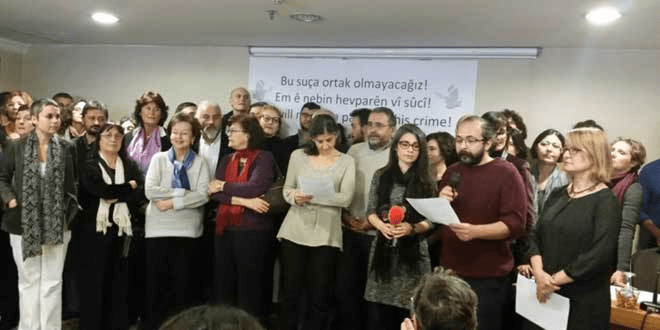
Urgent call: The antidemocratic shift in Turkey is not only a turkish problem

Dear friends,

The situation in Turkey is getting worse. A big wave of hunting and sacking people from their jobs is growing. The fact is that, contrary to the propaganda speaking about Gulen people, the majority of the sacked and threatened people are progressive and left wing activists. The news are that 41 more persons that signed the petition asking for peace where expeled from their jobs. Among them; Onur Hamzaoglu and Özlem Özkan are also the board members of IAHPE.
 

Our turkish friends are asking for our solidarity. In what follows, you will find their call which is asking to send messages to several turkish authorities.

As Martin Shultz was this week in Ankara greeting the soltan Erdogan I suggest that we have also to send him some angry messages. You can send them at

 
Another relatively urgent issue is that on the 27th of September in Istanbul there is a trial against academics because they signed the petition for peace. There is a crucial need to organise the presence of international observers in the trial.
 
Please propagate this message wherever you can and organise concrete solidarity activities. The antidemocratic shift is not only a turkish problem. It is a trend that is threatening all our societies. We have to react immediately and massively!

Turkey purge: ‘strong academic institutions cannot emerge in a climate of fear’

Academics in Turkey are scared, and they have every reason to be, says Serdar Değirmencioğlu

Those who are concerned about the higher education system in Turkey were stunned when 1,577 deans were recently asked to resign immediately. Even more shocking was that not a single dean resisted this demand.

Rectors were summoned to Ankara by the Higher Education Council and told that the deans had to resign for the “sake of democracy”. And so they did, for the “sake of democracy”. Anyone familiar with the notion or practice of democracy would, of course, not believe any of this.

Most deans remained as “acting deans” – they were to be examined so as to determine if they deserved to be reinstated.

The message was loud and clear: the regime has full control of universities, and a purge is on the way. The move was presented to the public as a purge. The regime was intact, stronger than ever, and, as President Recep Tayyip Erdoğan said on various occasions, would not hesitate to be ruthless.

The removal of deans was, in fact, a move to instil fear.

If all deans could fall at once, all academics would feel very vulnerable. An atmosphere of chaos already prevailed after the cancellation of all summer leave and a ban on scholars travelling abroad. Recent moves consolidated the fear: rectors of four universities were dismissed.

The Higher Education Council is portraying itself as a saviour of democracy but in fact it is a product of the military coup in 1980. The junta was determined to subdue the universities and all political movements within them, and quickly created a powerful agency to obstruct academic autonomy and freedom. I believe that the council has never been a democratic institution and is a political tool that has recently become ruthless.

The council, of course, denied any wrongdoing in a press release: “The resignation of the deans should be regarded as a precautionary measure to facilitate and precipitate the implementation of the necessary steps to reestablish the autonomy of our universities by severing possible ties with these clandestine and illegal organizations,” it says. The statement reveals why none of the deans resisted. Resistance would be a sign of “possible ties”.

A house of cards

The reality is that higher education in Turkey is a house of cards. After the coup in 1980, many academics were dismissed, harassed and then marginalised for years. The council weakened academic institutions. The person in charge of the council founded the first non-public university and paved the way for universities, driven solely by profit and offering no job security. Populist politics responded to the demand for higher education and new universities, both public and for-profit, were founded.

Soon, there was a shortage of academics. As universities mushroomed, academic departments shrank in size. It became easier to be an academic and the quality of education and scholarship both suffered.

It became easier to become a rector. Close ties to the ruling party were sufficient. Some academic staff were recruited and promoted simply because they were linked with the Gülen movement. The ongoing purge is targeting rectors and academics who were appointed or promoted by the current regime.

This is not a trimming operation. As soon as the state of emergency was declared, 15 universities were closed. Students enrolled in these universities have become academic orphans. Many of these universities were created in the past decade and promoted by the current regime. They were shut only because of alleged ties to the Gulen movement. Otherwise, they are not very different from the recently founded universities that are under the firm control of the ruling party.

The council has asked universities to report on every academic staff member. The following waves will certainly target all academics who are considered opponents – perhaps members of Eğitim Sen, the labour union, and Academics for Peace.

The regime claims that it can cleanse academia and purge bad elements. Academics are frightened and dizzy, as if they are caught up in a washing machine. The machine will wash all colours away and produce a single colour.

It is clear now that rectors will have to toe the government line. There will be one voice, one line, for the “sake of democracy”, a “strong democracy”.

The purge will reshuffle the deck and build a new house. But it will still be a house of cards. Strong academic institutions cannot emerge in a climate of fear and cannot thrive without academic freedom and job security. A single colour indicates the death of universities.

Serdar Değirmencioğlu (serdardegirmencioglu@gmail.com) was professor of developmental and community psychology at Doğuş University in Istanbul.

Article appeared in timeshighereducation.com

XIV Congreso Latinoamericano de Medicina Social y Salud Colectiva, Paraguay – del 24 al 29 de octubre de 2016

Aquí puede descargar el PROGRAMA DEL CONGRESO ALAMES 2016 que se celebrará del 24 al 29 de octubre de 2016 en distintos puntos del centro de Asunción y San Lorenzo, Paraguay. 

El presente programa está en proceso de construcción.  Presentamos aquí los ejes y subejes a modo orientativo. Le invitamos a regresar a esta página en el futuro o a seguirnos en Facebook para acceder al programa final. Anunciaremos en Facebook cuándo estará conformado el archivo definitivo.

por mas: http://congresoalames.com/

Call for Support to the Academicians Threatened by Prison in Turkey

Turkish scholars have been subject to heavy pressures and constraints since the declaration of the petition “We’ll not be a part of this crime” launched by the Academicians for Peace initiative in mid-January. In Mersin, a middle-sized city on the Mediterranean Coast, this climate of pressure has been experienced in an accentuated manner as the twenty-one petitioners of the city’s University have since then faced very serious threats and sanctions.

In contradiction to all traditional practices and even to legislations, the university administration has cancelled the contracts of three assistant professors, two lecturers and one research assistant since last January.

And now, a group of these scholars in Mersin are threatened by serious juridical accusations that were launched obviously in relation with the petition. These lawsuits that may end up with prison sentences are as follows:

1. The first case was launched against assistant professors Hakan Mertcan, Mustafa Şener and Selim Çakmaklı for the charge of “insult of the president” due to their Facebook messages.

2. Again due to their social media messages, they are  sued for “propaganda of terrorist organisation” as well as “provocation of the people for hatred and hostility”. The hearing of this second case in which research assistant Esin Gülsen is also accused will be held on the July 12th, 2016 in Mersin.

3. In addition to these two cases, the public prosecution office of Mersin carries out an investigation against Mertcan, Gülsen and Çakmaklı for “insult of institutions and organs of the Turkish state” through Facebook messages. These academicians thus risk a third lawsuit.

4. Apart from Facebook messages, two of the petitioners, Mustafa Şener and Atilla Güney are sued for violation of the law on meetings and demonstrations due to a public statement that they participated. The hearing of this case will take place on the July 13th, 2016.

5. Last but not the least, Prof. Atilla Güney is sued for ungrounded charges related to his presidency of a charity organisation supported by the Municipality of Akdeniz governed by the pro-Kurdish HDP.

In short, this group of petitioners in Mersin are threatened by prison sentences up to 14,5 years for just using their elementary rights of freedom of opinion and expression. If they are also sued for “insult of institutions and organs of the Turkish state”, this prison risk may amount up to 21,5 years.

The gravity and the urgency of the situation in Mersin is obvious. Therefore, we urge for the support and the concern of the democratic international community to the scholars at both professional and juridical risks in Mersin. For this purpose, we invite all those who can, to attend to the hearings on July 12th and 13th in Mersin.

For those who won’t manage to be physically with us on these days, we ask them to send us short videos of support recorded by your phone, tablet or webcam (max. ten seconds during which we hear your name, title, institution and words of support to our colleagues) to bakmersin@gmail.com.

We shall organise a press meeting to share your messages to demonstrate the support of the nternational community to our colleagues.

La Asociación Latinoamericana de Medicina Social manifiesta su indignación ante el asesinato de profesores en Oaxaca, México

Para imponer el neoliberalismo en nuestros países las clases dominantes han recurrido a los engaños, a la antidemocracia y a la represión. Hoy ha tocado el turno a los maestros y el pueblo de Oaxaca en México sufrir una brutal represión por parte de la policía federal enviada por el gobierno de Enrique Peña Nieto. Por miles llegaron los policías federales armados a Oaxaca, decididos a levantar por la fuerza a los retenes de los profesores en varias carreteras en demanda de dar marcha atrás en una reforma educativa dirigida ante todo a desmantelar los derechos laborales de los docentes y a privatizar la educación pública.
Usaron sus armas como toletes, gases, escudos, helicópteros, etc. y ante la resistencia de los maestros y la amplia solidaridad popular en el pueblo de Nochistlán un grupo policial específico  disparó armas de fuego directo hacia la gente asesinando a ocho personas así como hiriendo a otras cien. Por si fuera poco, tomaron el hospital de la comunidad impidiendo que los heridos pudieran acceder a éste y detuvieron a muchas personas. Hoy hay todavía decenas de desaparecidos, Nochistlán se encuentra sin energía eléctrica cortada por el gobierno y en todo el Estado se vive un clima de represión y terror.
No es la primera vez que el gobierno de Peña Nieto, actúa de esta manera, sus actos son ya conocidos en todo América Latina y el mundo; son ya muchos los casos de que ante la resistencia popular se recurre a la violencia, el asesinato y el encarcelamiento como el que hoy practican contra los dirigentes de los profesores. Baste solo recordar que ante la desaparición de los 43 estudiantes normalistas de Ayotzinapa el gobierno neoliberal de Peña Nieto inventó mil mentiras para ocultar la participación de las fuerzas federales cosa que quedó al descubierto por el grupo de expertos internacionales de la CIDH.
Hoy el pueblo mexicano se une a los maestros en su lucha contra el neoliberalismo y la Asociación Latinoamericana de Medicina Social nos unimos con el pueblo mexicano exigiendo el cese inmediato a la represión.  Llamamos a todas las organizaciones sociales y populares de nuestros países a sumar sus voces a la del pueblo mexicano a movilizarse en las embajadas mexicanas exigiendo alto a la represión y a difundir la denuncia de lo que está ocurriendo en México.
¡Viva la lucha de los maestros y el pueblo de México contra las reformas neoliberales!
¡Alto a la represión en contra del magisterio!
 
Por la Asociación Latinoamericana de Medicina Social
 
Ana María Costa, Coordinadora General (Brasil)
Ana Lucía Casallas, Coordinadora Adjunta (Colombia)
Ricardo Santamaría, Coordinador Adjunto (El Salvador)
Rafael González, Secretario Ejecutivo (México)

Oppose the persecussion of turkish academics

IAHPE is expressing its serious concern regarding the agravation of the situation in Turkey

After Erdogan’s directive (“it is not possible for an accused to get minto the courts by one door and get out from another”) the first three academics being in the court for interogation.

Statement in memory of Dr. Quentin Young, 1923-2016

Dr. Quentin D. Young, who served as national coordinator of Physicians for a National Health Program from 1992-2014, and who also served the organization’s past president, died on March 7 in Berkeley, Calif., where he had been under the watchful eyes and care of his daughters and other family members. He was 92.

In addition to his work with PNHP, Dr. Young co-founded and chaired for many years the Chicago-based Health and Medicine Policy Research Group.

Dr. Young was known for his sharp, clear-eyed analysis of social and economic problems, particularly in health care, his deep commitment to social justice and racial equality, his quick wit, his insuppressible optimism, personal courage, and his ability to inspire those around him to join him in the battle for a more equitable and caring world.

Beginning in the late 1980s, he was perhaps the nation’s most eloquent and high-profile spokesperson for single-payer national health insurance, or improved Medicare for all, and was a vigorous champion of single-payer legislation, notably “The Expanded and Improved Medicare for All Act,” H.R. 676, sponsored by Rep. John Conyers Jr. and others.

Dr. Young graduated from Northwestern Medical School and did his residency at Cook County Hospital in Chicago. During the 1970s and early 1980s, he served as chairman of the Department of Internal Medicine at Cook County, where he established the Department of Occupational Medicine. In 1983, Chicago Mayor Harold Washington appointed him president of the Chicago Board of Health, where he served with distinction. From 1952 to 2008, he was an internal medicine doctor in private practice in Chicago’s Hyde Park community, where he lived most of his life.

For many years Dr. Young hosted a popular program on WBEZ, Chicago’s public radio station, where he discussed health and social issues and took calls from listeners.

In 1998, he had the distinction of serving as president of the American Public Health Association and in 1997 was inducted as a Master of the American College of Physicians. In 2009 he was appointed Health Advocate for the state of Illinois by Gov. Patrick Quinn.

In addition to his distinguished career as a physician, Dr. Young was a leader in public health policy and medical and social justice issues. He was Dr. Martin Luther King Jr.’s personal physician during the latter’s stays in Chicago, and during the civil rights era he served as national chairman of the Medical Committee for Human Rights.

In 1999, Physicians for a National Health Program established the “Quentin D. Young Health Activist Award” to honor physicians and other health professionals who exemplify Dr. Young’s commitment to social justice. It is regarded as PNHP’s highest award.

In his 2013 autobiography, “Everybody In, Nobody Out: Memoirs of a Rebel Without a Pause,” Dr. Young wrote as follows:

“From my adolescent years to the present, I’ve never wavered in my belief in humanity’s ability – and our collective responsibility – to bring about a more just and equitable social order. I’ve always believed in humanity’s potential to create a more caring society.

“That viewpoint has infused my relations with family, friends, patients and medical colleagues. It’s been a lifelong, driving force to promote equality and the common good, and I believe it has served me well.

“I suppose being a physician has made it easier for me to work toward this goal. Easier, that is, than if I had chosen a different occupation. I’ve spent a lifetime trying to help others – in my daily rounds, in my clinic, as a hospital administrator, at demonstrations, in my work with health advocacy groups – and it all adds up to deeply rewarding career. Few people have such good fortune.

“But as you’ve no doubt noticed in the preceding pages, my views and actions have also propelled me into sharp conflict with institutions and person who would perpetuate injustice. That was true yesterday; it remains true today. My work is unfinished.”

PNHP extends its condolences Dr. Young’s family and friends, and we pledge to carry on his work, forever inspired by his example.

Physicians for a National Health Program (www.pnhp.org) is an organization of 20,000 physicians who advocate for single-payer national health insurance. It was founded in 1986.

If you wish to make a donation to PNHP in memory of Dr. Young, please click here.

http://www.pnhp.org/news/2016/march/statement-in-memory-of-dr-quentin-yo…

En defensa de la democracia y apoyo al pueblo Brasilero

Denunciamos y manifestamos nuestra indignación y repudio frente al abuso de poder y camino de un golpe de Estado, contra Brasil.
 
Expresamos nuestro  apoyo y solidaridad a las fuerzas  democráticas de la sociedad brasilera. Estamos atentos a generar denuncias masivas a nivel de cada país, de la región y del mundo, para evitar que se fragüe este golpe, afectando los avances democráticos en Brasil.
 
Nuestro hermano pueblo brasilero, vive horas decisivas para defender su democracia y bienestar, mismos  que ganaron en las urnas como expresión de la voluntad popular, y en contra de los intereses capitalistas, que hoy movilizan este golpe.
 
El Partido de los Trabajadores – PT- es objeto de una persecución que busca destruirlo afectando directamente a uno de sus líderes más querido y reconocido, en el continente, el presidente Ignacio Lula Da Silva.
  
De esta forma quieren eliminar la esencia de  las conquistas ganadas en los últimos años, buscan con vehemencia reestablecer su proyecto neoliberal. El PT y Lula en particular, son un obstáculo para conseguirlo y por ello los atacan.
  
Con este golpe quieren avasallar  los pilares democráticos construidos desde 2003. Quieren aAfectar el logro de la construcción y materialización de los derechos civilizatorios   y la autonomía económica.
  
Al poner en el foco del desprestigio a los líderes, buscan debilitar el nuevo orden social establecido, y esperan subordinar a los brasileros para apoderarse de los recursos naturales, principalmente la explotación de las reservas de petróleo.
 
Desde ALAMES apoyamos a todos los movimientos de resistencia en Brasil, a los ciudadanos, y a los entrañables amigos y compañeros de la medicina social y la salud colectiva brasilera, quienes  históricamente se han destacado por ser un movimiento sanitarista comprometido y combativo.
 
Sabemos que lo que ocurre en Brasil, tendrá grandes repercusiones en todo el continente, y no es ajeno a lo que acontece en Argentina, Bolivia, Venezuela. Nos proclamamos alertas y  solidarios  con Brasil. 

In Defense of the Autonomy and Institutionality of the Universidad Andina Simon Bolivar

A los pueblos y gobiernos de la comunidad Andina, de Latinoamerica y del mundo

(english version is following)

La Asociación Latinoamericana de Medicina Social (ALAMES) se une a todas las voces que desde América Latina y el mundo expresan su preocupación ante el desconocimiento de los procesos democráticos que llevaron a la designación del Dr. César Montaño Galarza, como rector de la Universidad Andina Simón Bolívar Sede Ecuador.

ALAMES, organismo que agrupa a grupos de académicos de universidades en la región, así como a responsables de salud, en Ministerios e instituciones de salud y movimientos nacionales en defensa del derecho a la salud y a la educación, reconoce a la Universidad Andina Simón Bolívar, como un muy importante espacio de formación en pregrado y posgrados del más alto nivel. En su condición de universidad pública, acoge estudiantes de todo el continente, y cuenta con una alta calidad académica y científica, así como con un prestigioso cuerpo docente; sus aportes a la investigación hablan también de la importancia de la Universidad Andina.

Esta situación se no es ajena a otros países de la región., es un mensaje claro de los intereses oscuros de fuerzas políticas y económicas en un intento de captación de la universidad pública, una intromisión para afectar la autonomía y el libre pensamiento.

ALAMES acompaña y se solidariza con las directivas, docentes, estudiantes y trabajadores de la Universidad Andina Simón Bolívar, hace un llamado al Presidente Correa y a todas las fuerzas sociales del Ecuador para defender la Universidad permitiendo que su propia comunidad universitaria con sus dirigentes académicos legítimos – como es el caso de nuestro compañero Jaime Breilh- trabajen en una solución que preserve su autonomía y evite una intervención externa que constituiría un precedente funesto no solo para la Universidad ecuatoriana sino para las demás de América Latina ALAMES convoca a todos sus asociados en los países de la región a que suscriban este y sus propios pronunciamientos en la siguiente dirección electrónica:

http://www.uasb.edu.ec/web/autonomia-universitaria/solidaridad-internacional

Por la Coordinación de ALAMES

Latinoamérica, 8 de febrero de 2016.

Ana María Costa, Coordinadora General

Ana Lucía Casallas y Ricardo Santamaría, Coordinadores Adjuntos

Rafael González, Secretario Ejecutivo

***

The Ecuadorian university system has been affected by the attempt to disqualify the legitimate designation of Dr. César Montaño Galarza as Rector (President) of the Ecuadorean seat of the Universidad Andina Simón Bolívar. In face of this, we express our rejection of this clear attempt to violate democracy, university autonomy, and academic freedom, and express our support for the Universidad Andina, which enjoys well deserved prestige inside and outside the country. We demand respect for the university´s institutionality and for the overwhelming majority vote of the university community for Dr. Montaño, legally appointed as Rector by the Governing Board (Consejo Superior). We who have signed this declaration, as individuals, are members of various centers of higher learning, of diverse academic specializations and ideological orientations, but we stand together in the defense of an institution and the university system of Ecuador.

http://www.uasb.edu.ec/web/autonomia-universitaria/solidaridad-internacional

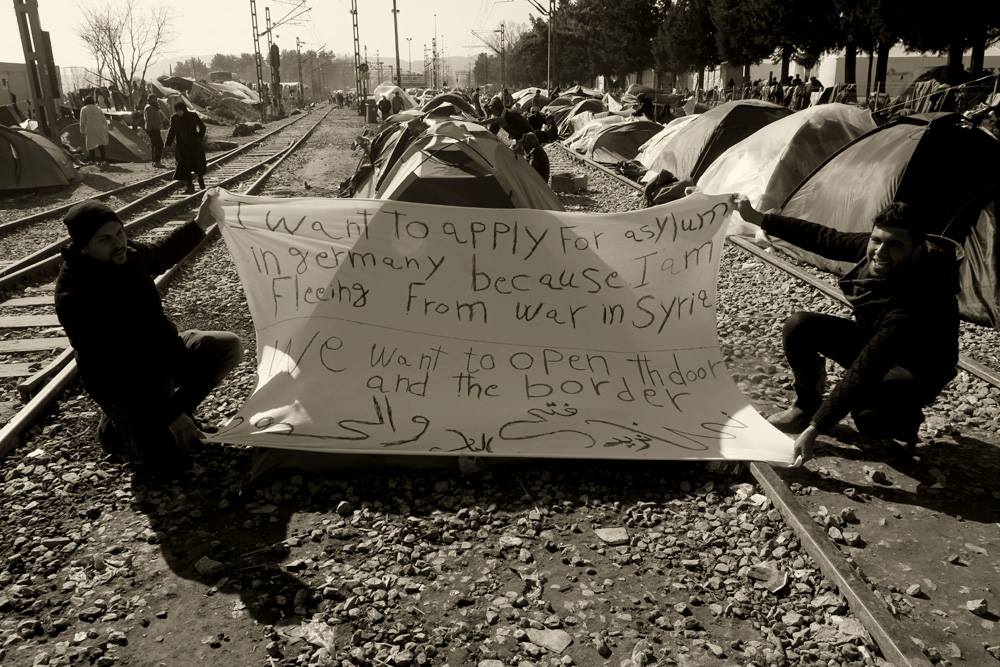
La Crisis de los Refugiados y los riesgos para la Salud: Hay que actuar de inmediato

La crisis de los refugiados que pueblan los mares, fronteras y países se extiende como una mancha  física y moral por toda Europa. Las causas han sido analizadas y conocidas por todos y tienen que ver con los conflictos de intereses geoestratégicos relacionados con el control del petróleo, el comercio internacional y los intentos de los países desarrollados por controlar a las potencias emergentes. Las principales víctimas de esta política son los 278 millones de personas que viven en 6 países. En conjunto, sus debilitados sistema de salud pública destinaban 9.570 millones de euros en el año 2013, seis veces menos que lo que gastamos en España para una población seis veces superior, con un gasto medio en salud por habitante de apenas 34 euros (40 veces inferior al nuestro), mientras el gasto en armamento ya se situaba en 40euros/habitante, sin tener en cuenta el empleado por las fuerzas irregulares.
 
Ahora las débiles infraestructuras sanitarias de estos países (hospitales, centros de salud) han sido en su mayor parte destruidas por la guerra,  lo que supone una catástrofe sanitaria, a la que habría que añadir las destrucción de las infraestructuras de agua,  centrales eléctricas (cadenas de frío para conservación de alimentos, funcionamiento de quirófanos, etc.), viviendas, o los muertos directos por heridas, hambre o enfermedades trasmisibles.
 
En este horrible escenario lo normal es que quien disponga de recursos intente escapar a otros países. Los pobres y enfermos no tienen más opción que sufrir la guerra.
 
Pero lo más cruel es que las autoridades de los países europeos, además de negarles el asilo hacen negocios con los medios utilizados para frenar su entrada, recurriendo a la colaboración público-privada en el control de fronteras y en la vigilancia marítima, que llevan a cabo multinacionales pagadas con fondos de la Unión Europea. El control fronterizo, la venta de concertinas y  alambradas (que hieren y mutilan a quienes pretenden traspasarlas, como en Ceuta y Melilla) o lasdevoluciones forzosas  en aviones suponen un importante nicho de negocio, en franco crecimiento. El gasto en blindar lasfronteras de Europa crece progresivamente. Ya entre los años 2007 y 2013 alcanzó los 2.000 millones de euros, frente a los 700 millones gastados en ayuda a los refugiados. En España las diferencias son muy superiores, con un gasto público en recursos para reforzar fronteras de 289 millones de euros frente a los 9,3 millones de euros empleados en proteger a los refugiados.
 
Los países europeos disponen de recursos económicos y de infraestructuras sanitarias suficientes para atenderlos y evitar las graves consecuencias que se avecinan. Además, es posible la aparición de epidemias y problemas de salud que pueden afectar a  toda la población, incluyendo a la europea, sin contar el riesgo de desestabilización moral y política, que puede ser el germen de la xenofobia y el fascismo, graves  enfermedades que afectan a la salud social, la paz  y la seguridad de los pueblos. 
 
Es necesario un Plan de Emergencia Europeo para los Refugiados, dotado de fondos europeos suficientes,destinados a:
 
1. Identificar los problemas y necesidades relacionados con la salud que afectan a los miles de refugiados, especialmente los más vulnerables como los niños, embarazadas y ancianos.
 
2. Elaborar un plan de actuación urgente, dotados de un presupuesto suficiente, para atender las necesidades inmediatas: Alimentación, vivienda, cuidados de salud, etc., con recursos públicos (esta actividad no puede estar en manos de ONGs, como en los países subdesarrollados).
 
3. Establecer una estrategia a medio plazo para atender a estas personas, poniendo a la vez todos los medios posibles para mejorar los sistemas de salud y la situación general en sus países de origen.
 
Hay que actuar sin dilación, cada minuto que tardemos en hacerlo supone la pérdida de vidas inocentes.  Los gobiernos de los países europeos y la UE deben de movilizarse e inmediato. Los profesionales de la salud tenemos una especial obligación ética para exigirlo.
 
Federación de Asociaciones para la Defensa de la Sanidad Pública
 
16 de Septiembre de 2015