Declaración de ALAMES sobre la muerte de Fidel

La desaparición física del Comandante Fidel Castro el 25 de noviembre, al cumplirse 60 años de la partida del Granma desde Tuxpán Veracruz hacia territorio cubano, representa un momento singular para la Asociación Latinoamericana de Medicina Social.

Torrentes de tinta se escriben y escribirán por estos días para elogiarlo o para denostarlo mientras los periódicos de todos los signos no tienen más remedio que poner su foto en la tapa limitándose a elegir entre las más icónicas, las más antiguas o donde se lo vea más anciano.

La singularidad de lo que podemos expresar desde ALAMES es que en dimensiones que no alcanza ningún otro líder político, sentimos -y hay motivos de sobra para ello- que Fidel es nuestro, que es parte constitutiva de ALAMES.

No se trata de un deseo ni de un recurso retórico, lo hizo él mismo, metiéndose en el corazón de la salud, comprendiéndola como ningún otro líder desde adentro  y transformando a la salud en uno de los ejes identitarios del proceso revolucionario y del internacionalismo cubano.

Que difícil resulta seleccionar los hitos que quedan en la memoria colectiva como el haber reconstruido la educación médica cubana hasta posicionarla como una referencia mundial a partir apenas de un puñado de 12 profesores al principio de la revolución cuando los médicos y sobre todo los profesores de medicina engrosaban las filas de quienes buscaban otros horizontes en Miami.   

Como explicar esos primeros años en que las dificultades económicas, el bloqueo  y el aislamiento impuesto por EE UU no fueron una excusa para postergar la salud ni la educación y en apenas una década la isla se poblaba de médicos, de enfermeras y de policlínicos mientras la población organizada y protagónica de esta gesta comenzaba a naturalizar que la salud es un derecho, que los servicios son públicos y gratuitos, que la mortalidad infantil podía reducirse estructural y sustentablemente y que ese derecho se extendía a todo el país, a las poblaciones urbanas y a las rurales a todo lo ancho y largo de la isla.

Como explicar la fuerza con que la diplomacia cubana instalaba sus temas de agenda forzando a las grandes potencias a discutir cara a cara en cada organismo internacional sobre políticas de salud y sobre sus pobres programas de supuesta cooperación internacional. Como medir hasta qué punto logró influir en organismos internacionales de salud como la OMS o la propia OPS que por su carácter dual de Interamericana y mundial no pudo excluir a Cuba de sus países miembros.

Como ignorar ese momento dilemático a principio de los 80’s cuando la planificación sanitaria demostraba palmariamente que debía discontinuarse el ingreso a las facultades de medicina porque no había condiciones para una mayor absorción laboral. Fue entonces otro momento revelador de su perspectiva de largo plazo en el que Fidel personalmente comienza a liderar un proceso de formación de médicos de familia, nuevamente 12 pioneros que una vez ajustado y validado el proceso formativo inaugurarán en 1986 un nuevo ciclo en la revolución sanitaria.

Apenas una década después el número de médicos se había más que duplicado y ese nuevo médico especialista de las 120 familias ya representaba más del 50 % de los médicos de la isla y los equipos de salud viviendo en cada barrio, en cada localidad pasaron a engrosar el equipamiento social y a constituirse en parte de la vida cotidiana de las comunidades.

No se imaginaba al comienzo de ese proceso que apenas tres años después la URSS pudiera colapsar y mucho menos cuando pocos apostaban que la revolución cubana pudiera sobrevivirla.

Será para 1991, en una cumbre de Educación Médica en Punta del Este, allí donde 30 años antes el Che entonces Ministro de Economía había disertado, que el Viceministro de Salud responsable del área educativa va a pronunciar un diagnóstico contundente. Los grandes logros de la revolución cubana en salud los logramos antes de contar con médicos de familia pero no los perdimos durante el período especial gracias a los médicos de familia. Cabe señalar que, a la vez Cuba avanzaba importantemente en el área de la biotecnología creando productos para las necesidades de tratamiento de diversos padecimientos.

El internacionalismo ha estado en los genes mismos de la revolución cubana pero el rol de la diplomacia sanitaria llevó a Cuba a los niveles más importantes de protagonismo en cada proceso transformador, en cada crisis humanitaria. Ningún país en la historia a disposición de la humanidad la cantidad y proporción de recursos que Cuba ha ofrecido en mas de 80 países en África, en Asia, en América Latina, en el Caribe y si la sensatez lo hubiera permitido hasta en los EE UU, durante el desastre que el huracán Katrina produjo en Nueva Orleans.

En 1998 luego de los desastres de los huracanes Mitch y George el propio Fidel llegó a la conclusión que hacía falta dar un paso más, eran jóvenes de los propios países quienes podían en forma más sustentable, hacer llegar los aportes de la salud y del acompañamiento  profesional a las poblaciones más apartadas, más desprotegidas para lo cual se creó la Escuela Latinoamericana de Medicina ELAM . Una década después 25.000 médicos de 84 países, incluyendo EE. UU. Se habían graduado y muchos de ellos especializado en la ELAM.

Fue en las escalinatas de la Facultad de derecho en Buenos Aires en su visita a Argentina en mayo del 2003, donde Fidel se ocupó de explicar personalmente la concepción profundamente revolucionaria antes que humanitaria de la diplomacia médica cubana. “Dicen que los Estados Unidos pueden enviar un misil inteligente al rincón más apartado y oscuro del planeta; Cuba puede enviar un médico al rincón más apartado u oscuro del planeta”.

No se trataba de ninguna exageración, terribles desastres como el terremoto y la subsecuente epidemia de cólera en Haití en el 2010 o la epidemia de Ébola en África Occidental en el 2014 encontraron, a la cooperación cubana en la vanguardia de la cooperación.

Dos años después la portavoz del Gobierno norteamericano Marie Harf tuvo que referirse a ello “reconocemos y apreciamos la colaboración de Cuba. Francamente que un país tan pequeño esté proporcionando tantos recursos -más que muchos otros países- francamente supone una contribución muy significativa” Posteriormente el propio Secretario de Estado  John Kerry ratificó esas declaraciones y brindó más precisiones “Cuba, un país de solo 11 mi­llones de personas, ha enviado 165 profesionales de la salud y se propone enviar cerca de 300 más”.

Durante sus 30 años de existencia ALAMES fue una caja de resonancia y se sintió respaldada en esta enorme y generosa apuesta a demostrar que el derecho a la salud es posible. Cada uno de los compañeros y compañeras de ALAMES Cuba participando activamente en nuestras redes temáticas, ofreciendo sistemáticamente ser sede de nuestros Congresos,  protagonizando nuestros encuentros e iniciativas traían las fuertes resonancias de una forma particular de ser parte, de ser miembro de ALAMES representando a todo un país.

ALAMES no tiene organizaciones, estados o países miembros como asociados y por ello se solidariza con el pueblo cubano y despide a la persona que representa como nadie a esa inconmensurable gesta antiimperialista, al Comandante Fidel Castro Roux, quien ha acompañado e inspirado el devenir de ALAMES por tres décadas como se despide al primero, al fundador, al mejor de sus asociados.

¡Hasta Siempre Comandante!


Coordinación de ALAMES

Bogotá, Buenos Aires, Foz de Iguazú, Ciudad de México., 27 de noviembre del 2016

XVIII Conference of the International Association of Health Policy in Europe, 21-24 September 2017, Thessaloniki – Greece

XVIII Conference of the International Association of  Health Policy in Europe, 21-24 September 2017, Thessaloniki-Greece

European health policies in the era of capitalist crisis and restructuring

The International Association of Health Policy in Europe in collaboration with Aristotle University of Thessaloniki and Queen Mary University of London are inviting you to the XVIII IAHPE Conference that will be held in Thessaloniki on the 21st until the 24th September 2017.

IAHPE following its 40 years tradition will focus on the contemporary developments in European health policies within the context of capitalist crisis and capitalist economicrestructuring. The conference will be covering the following themes:

  • International trade agreements and their impact on Europe’s health
  • Privatization and marketization of healthcare services in Europe
  • Eurozone crisis and its impact on health and health policy reform
  • Refugee crisis and its health and social implications
  • Academic freedom under threat in Europe
  • Social movements and health in Europe

The conference is supported by

unnamed

socmedicine-06-05-11

***

In advance to the conference IAHPE is organizing the following workshops:

14 – 15 January 2017

Turkish Medical Association

Istanbul

International trade and health in Europe

see all interventions here

2 – 3 June 2017

Queen Mary, University London

London

Refugee crisis and health in Europe

Details regarding the venue and programme of the conference will be released on IAHP’s website: https://iahponline.wordpress.com.

Queries regarding the programme and abstract submission can be send to: IAHPEconference2017@gmail.com.
hosted


Urgent call: The antidemocratic shift in Turkey is not only a turkish problem

Dear friends,

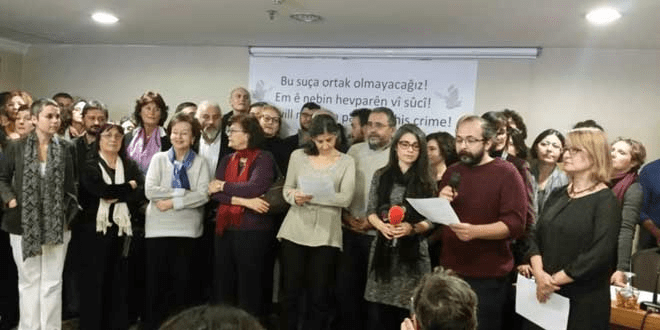
The situation in Turkey is getting worse. A big wave of hunting and sacking people from their jobs is growing. The fact is that, contrary to the propaganda speaking about Gulen people, the majority of the sacked and threatened people are progressive and left wing activists. The news are that 41 more persons that signed the petition asking for peace where expeled from their jobs. Among them; Onur Hamzaoglu and Özlem Özkan are also the board members of IAHPE.
 

Our turkish friends are asking for our solidarity. In what follows, you will find their call which is asking to send messages to several turkish authorities.

As Martin Shultz was this week in Ankara greeting the soltan Erdogan I suggest that we have also to send him some angry messages. You can send them at

 
Another relatively urgent issue is that on the 27th of September in Istanbul there is a trial against academics because they signed the petition for peace. There is a crucial need to organise the presence of international observers in the trial.
 
Please propagate this message wherever you can and organise concrete solidarity activities. The antidemocratic shift is not only a turkish problem. It is a trend that is threatening all our societies. We have to react immediately and massively!

Turkey purge: ‘strong academic institutions cannot emerge in a climate of fear’

Academics in Turkey are scared, and they have every reason to be, says Serdar Değirmencioğlu

Those who are concerned about the higher education system in Turkey were stunned when 1,577 deans were recently asked to resign immediately. Even more shocking was that not a single dean resisted this demand.

Rectors were summoned to Ankara by the Higher Education Council and told that the deans had to resign for the “sake of democracy”. And so they did, for the “sake of democracy”. Anyone familiar with the notion or practice of democracy would, of course, not believe any of this.

Most deans remained as “acting deans” – they were to be examined so as to determine if they deserved to be reinstated.

The message was loud and clear: the regime has full control of universities, and a purge is on the way. The move was presented to the public as a purge. The regime was intact, stronger than ever, and, as President Recep Tayyip Erdoğan said on various occasions, would not hesitate to be ruthless.

The removal of deans was, in fact, a move to instil fear.

If all deans could fall at once, all academics would feel very vulnerable. An atmosphere of chaos already prevailed after the cancellation of all summer leave and a ban on scholars travelling abroad. Recent moves consolidated the fear: rectors of four universities were dismissed.

The Higher Education Council is portraying itself as a saviour of democracy but in fact it is a product of the military coup in 1980. The junta was determined to subdue the universities and all political movements within them, and quickly created a powerful agency to obstruct academic autonomy and freedom. I believe that the council has never been a democratic institution and is a political tool that has recently become ruthless.

The council, of course, denied any wrongdoing in a press release: “The resignation of the deans should be regarded as a precautionary measure to facilitate and precipitate the implementation of the necessary steps to reestablish the autonomy of our universities by severing possible ties with these clandestine and illegal organizations,” it says. The statement reveals why none of the deans resisted. Resistance would be a sign of “possible ties”.

A house of cards

The reality is that higher education in Turkey is a house of cards. After the coup in 1980, many academics were dismissed, harassed and then marginalised for years. The council weakened academic institutions. The person in charge of the council founded the first non-public university and paved the way for universities, driven solely by profit and offering no job security. Populist politics responded to the demand for higher education and new universities, both public and for-profit, were founded.

Soon, there was a shortage of academics. As universities mushroomed, academic departments shrank in size. It became easier to be an academic and the quality of education and scholarship both suffered.

It became easier to become a rector. Close ties to the ruling party were sufficient. Some academic staff were recruited and promoted simply because they were linked with the Gülen movement. The ongoing purge is targeting rectors and academics who were appointed or promoted by the current regime.

This is not a trimming operation. As soon as the state of emergency was declared, 15 universities were closed. Students enrolled in these universities have become academic orphans. Many of these universities were created in the past decade and promoted by the current regime. They were shut only because of alleged ties to the Gulen movement. Otherwise, they are not very different from the recently founded universities that are under the firm control of the ruling party.

The council has asked universities to report on every academic staff member. The following waves will certainly target all academics who are considered opponents – perhaps members of Eğitim Sen, the labour union, and Academics for Peace.

The regime claims that it can cleanse academia and purge bad elements. Academics are frightened and dizzy, as if they are caught up in a washing machine. The machine will wash all colours away and produce a single colour.

It is clear now that rectors will have to toe the government line. There will be one voice, one line, for the “sake of democracy”, a “strong democracy”.

The purge will reshuffle the deck and build a new house. But it will still be a house of cards. Strong academic institutions cannot emerge in a climate of fear and cannot thrive without academic freedom and job security. A single colour indicates the death of universities.

Serdar Değirmencioğlu (serdardegirmencioglu@gmail.com) was professor of developmental and community psychology at Doğuş University in Istanbul.

Article appeared in timeshighereducation.com

XIV Congreso Latinoamericano de Medicina Social y Salud Colectiva, Paraguay – del 24 al 29 de octubre de 2016

Aquí puede descargar el PROGRAMA DEL CONGRESO ALAMES 2016 que se celebrará del 24 al 29 de octubre de 2016 en distintos puntos del centro de Asunción y San Lorenzo, Paraguay. 

El presente programa está en proceso de construcción.  Presentamos aquí los ejes y subejes a modo orientativo. Le invitamos a regresar a esta página en el futuro o a seguirnos en Facebook para acceder al programa final. Anunciaremos en Facebook cuándo estará conformado el archivo definitivo.

por mas: http://congresoalames.com/

Call for Support to the Academicians Threatened by Prison in Turkey

Turkish scholars have been subject to heavy pressures and constraints since the declaration of the petition “We’ll not be a part of this crime” launched by the Academicians for Peace initiative in mid-January. In Mersin, a middle-sized city on the Mediterranean Coast, this climate of pressure has been experienced in an accentuated manner as the twenty-one petitioners of the city’s University have since then faced very serious threats and sanctions.

In contradiction to all traditional practices and even to legislations, the university administration has cancelled the contracts of three assistant professors, two lecturers and one research assistant since last January.

And now, a group of these scholars in Mersin are threatened by serious juridical accusations that were launched obviously in relation with the petition. These lawsuits that may end up with prison sentences are as follows:

1. The first case was launched against assistant professors Hakan Mertcan, Mustafa Şener and Selim Çakmaklı for the charge of “insult of the president” due to their Facebook messages.

2. Again due to their social media messages, they are  sued for “propaganda of terrorist organisation” as well as “provocation of the people for hatred and hostility”. The hearing of this second case in which research assistant Esin Gülsen is also accused will be held on the July 12th, 2016 in Mersin.

3. In addition to these two cases, the public prosecution office of Mersin carries out an investigation against Mertcan, Gülsen and Çakmaklı for “insult of institutions and organs of the Turkish state” through Facebook messages. These academicians thus risk a third lawsuit.

4. Apart from Facebook messages, two of the petitioners, Mustafa Şener and Atilla Güney are sued for violation of the law on meetings and demonstrations due to a public statement that they participated. The hearing of this case will take place on the July 13th, 2016.

5. Last but not the least, Prof. Atilla Güney is sued for ungrounded charges related to his presidency of a charity organisation supported by the Municipality of Akdeniz governed by the pro-Kurdish HDP.

In short, this group of petitioners in Mersin are threatened by prison sentences up to 14,5 years for just using their elementary rights of freedom of opinion and expression. If they are also sued for “insult of institutions and organs of the Turkish state”, this prison risk may amount up to 21,5 years.

The gravity and the urgency of the situation in Mersin is obvious. Therefore, we urge for the support and the concern of the democratic international community to the scholars at both professional and juridical risks in Mersin. For this purpose, we invite all those who can, to attend to the hearings on July 12th and 13th in Mersin.

For those who won’t manage to be physically with us on these days, we ask them to send us short videos of support recorded by your phone, tablet or webcam (max. ten seconds during which we hear your name, title, institution and words of support to our colleagues) to bakmersin@gmail.com.

We shall organise a press meeting to share your messages to demonstrate the support of the nternational community to our colleagues.

La Asociación Latinoamericana de Medicina Social manifiesta su indignación ante el asesinato de profesores en Oaxaca, México

Para imponer el neoliberalismo en nuestros países las clases dominantes han recurrido a los engaños, a la antidemocracia y a la represión. Hoy ha tocado el turno a los maestros y el pueblo de Oaxaca en México sufrir una brutal represión por parte de la policía federal enviada por el gobierno de Enrique Peña Nieto. Por miles llegaron los policías federales armados a Oaxaca, decididos a levantar por la fuerza a los retenes de los profesores en varias carreteras en demanda de dar marcha atrás en una reforma educativa dirigida ante todo a desmantelar los derechos laborales de los docentes y a privatizar la educación pública.
Usaron sus armas como toletes, gases, escudos, helicópteros, etc. y ante la resistencia de los maestros y la amplia solidaridad popular en el pueblo de Nochistlán un grupo policial específico  disparó armas de fuego directo hacia la gente asesinando a ocho personas así como hiriendo a otras cien. Por si fuera poco, tomaron el hospital de la comunidad impidiendo que los heridos pudieran acceder a éste y detuvieron a muchas personas. Hoy hay todavía decenas de desaparecidos, Nochistlán se encuentra sin energía eléctrica cortada por el gobierno y en todo el Estado se vive un clima de represión y terror.
No es la primera vez que el gobierno de Peña Nieto, actúa de esta manera, sus actos son ya conocidos en todo América Latina y el mundo; son ya muchos los casos de que ante la resistencia popular se recurre a la violencia, el asesinato y el encarcelamiento como el que hoy practican contra los dirigentes de los profesores. Baste solo recordar que ante la desaparición de los 43 estudiantes normalistas de Ayotzinapa el gobierno neoliberal de Peña Nieto inventó mil mentiras para ocultar la participación de las fuerzas federales cosa que quedó al descubierto por el grupo de expertos internacionales de la CIDH.
Hoy el pueblo mexicano se une a los maestros en su lucha contra el neoliberalismo y la Asociación Latinoamericana de Medicina Social nos unimos con el pueblo mexicano exigiendo el cese inmediato a la represión.  Llamamos a todas las organizaciones sociales y populares de nuestros países a sumar sus voces a la del pueblo mexicano a movilizarse en las embajadas mexicanas exigiendo alto a la represión y a difundir la denuncia de lo que está ocurriendo en México.
¡Viva la lucha de los maestros y el pueblo de México contra las reformas neoliberales!
¡Alto a la represión en contra del magisterio!
 
Por la Asociación Latinoamericana de Medicina Social
 
Ana María Costa, Coordinadora General (Brasil)
Ana Lucía Casallas, Coordinadora Adjunta (Colombia)
Ricardo Santamaría, Coordinador Adjunto (El Salvador)
Rafael González, Secretario Ejecutivo (México)

Oppose the persecussion of turkish academics

IAHPE is expressing its serious concern regarding the agravation of the situation in Turkey

After Erdogan’s directive (“it is not possible for an accused to get minto the courts by one door and get out from another”) the first three academics being in the court for interogation.

Statement in memory of Dr. Quentin Young, 1923-2016

Dr. Quentin D. Young, who served as national coordinator of Physicians for a National Health Program from 1992-2014, and who also served the organization’s past president, died on March 7 in Berkeley, Calif., where he had been under the watchful eyes and care of his daughters and other family members. He was 92.

In addition to his work with PNHP, Dr. Young co-founded and chaired for many years the Chicago-based Health and Medicine Policy Research Group.

Dr. Young was known for his sharp, clear-eyed analysis of social and economic problems, particularly in health care, his deep commitment to social justice and racial equality, his quick wit, his insuppressible optimism, personal courage, and his ability to inspire those around him to join him in the battle for a more equitable and caring world.

Beginning in the late 1980s, he was perhaps the nation’s most eloquent and high-profile spokesperson for single-payer national health insurance, or improved Medicare for all, and was a vigorous champion of single-payer legislation, notably “The Expanded and Improved Medicare for All Act,” H.R. 676, sponsored by Rep. John Conyers Jr. and others.

Dr. Young graduated from Northwestern Medical School and did his residency at Cook County Hospital in Chicago. During the 1970s and early 1980s, he served as chairman of the Department of Internal Medicine at Cook County, where he established the Department of Occupational Medicine. In 1983, Chicago Mayor Harold Washington appointed him president of the Chicago Board of Health, where he served with distinction. From 1952 to 2008, he was an internal medicine doctor in private practice in Chicago’s Hyde Park community, where he lived most of his life.

For many years Dr. Young hosted a popular program on WBEZ, Chicago’s public radio station, where he discussed health and social issues and took calls from listeners.

In 1998, he had the distinction of serving as president of the American Public Health Association and in 1997 was inducted as a Master of the American College of Physicians. In 2009 he was appointed Health Advocate for the state of Illinois by Gov. Patrick Quinn.

In addition to his distinguished career as a physician, Dr. Young was a leader in public health policy and medical and social justice issues. He was Dr. Martin Luther King Jr.’s personal physician during the latter’s stays in Chicago, and during the civil rights era he served as national chairman of the Medical Committee for Human Rights.

In 1999, Physicians for a National Health Program established the “Quentin D. Young Health Activist Award” to honor physicians and other health professionals who exemplify Dr. Young’s commitment to social justice. It is regarded as PNHP’s highest award.

In his 2013 autobiography, “Everybody In, Nobody Out: Memoirs of a Rebel Without a Pause,” Dr. Young wrote as follows:

“From my adolescent years to the present, I’ve never wavered in my belief in humanity’s ability – and our collective responsibility – to bring about a more just and equitable social order. I’ve always believed in humanity’s potential to create a more caring society.

“That viewpoint has infused my relations with family, friends, patients and medical colleagues. It’s been a lifelong, driving force to promote equality and the common good, and I believe it has served me well.

“I suppose being a physician has made it easier for me to work toward this goal. Easier, that is, than if I had chosen a different occupation. I’ve spent a lifetime trying to help others – in my daily rounds, in my clinic, as a hospital administrator, at demonstrations, in my work with health advocacy groups – and it all adds up to deeply rewarding career. Few people have such good fortune.

“But as you’ve no doubt noticed in the preceding pages, my views and actions have also propelled me into sharp conflict with institutions and person who would perpetuate injustice. That was true yesterday; it remains true today. My work is unfinished.”

PNHP extends its condolences Dr. Young’s family and friends, and we pledge to carry on his work, forever inspired by his example.

Physicians for a National Health Program (www.pnhp.org) is an organization of 20,000 physicians who advocate for single-payer national health insurance. It was founded in 1986.

If you wish to make a donation to PNHP in memory of Dr. Young, please click here.

http://www.pnhp.org/news/2016/march/statement-in-memory-of-dr-quentin-yo…

En defensa de la democracia y apoyo al pueblo Brasilero

Denunciamos y manifestamos nuestra indignación y repudio frente al abuso de poder y camino de un golpe de Estado, contra Brasil.
 
Expresamos nuestro  apoyo y solidaridad a las fuerzas  democráticas de la sociedad brasilera. Estamos atentos a generar denuncias masivas a nivel de cada país, de la región y del mundo, para evitar que se fragüe este golpe, afectando los avances democráticos en Brasil.
 
Nuestro hermano pueblo brasilero, vive horas decisivas para defender su democracia y bienestar, mismos  que ganaron en las urnas como expresión de la voluntad popular, y en contra de los intereses capitalistas, que hoy movilizan este golpe.
 
El Partido de los Trabajadores – PT- es objeto de una persecución que busca destruirlo afectando directamente a uno de sus líderes más querido y reconocido, en el continente, el presidente Ignacio Lula Da Silva.
  
De esta forma quieren eliminar la esencia de  las conquistas ganadas en los últimos años, buscan con vehemencia reestablecer su proyecto neoliberal. El PT y Lula en particular, son un obstáculo para conseguirlo y por ello los atacan.
  
Con este golpe quieren avasallar  los pilares democráticos construidos desde 2003. Quieren aAfectar el logro de la construcción y materialización de los derechos civilizatorios   y la autonomía económica.
  
Al poner en el foco del desprestigio a los líderes, buscan debilitar el nuevo orden social establecido, y esperan subordinar a los brasileros para apoderarse de los recursos naturales, principalmente la explotación de las reservas de petróleo.
 
Desde ALAMES apoyamos a todos los movimientos de resistencia en Brasil, a los ciudadanos, y a los entrañables amigos y compañeros de la medicina social y la salud colectiva brasilera, quienes  históricamente se han destacado por ser un movimiento sanitarista comprometido y combativo.
 
Sabemos que lo que ocurre en Brasil, tendrá grandes repercusiones en todo el continente, y no es ajeno a lo que acontece en Argentina, Bolivia, Venezuela. Nos proclamamos alertas y  solidarios  con Brasil.