Prof Onur Hamzaoglu arrested by turkish police

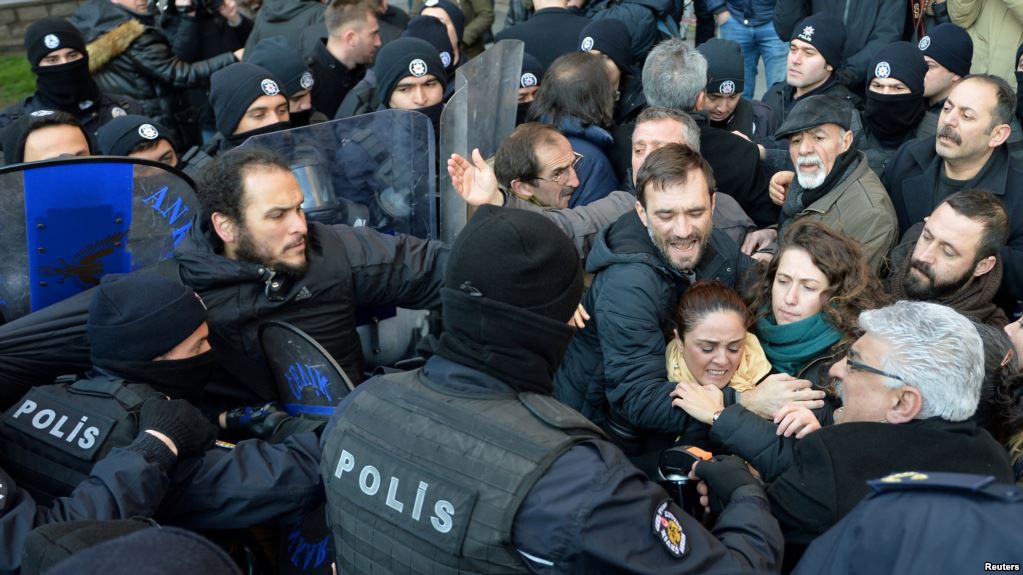
Prof Onur Hamzaoglu was arrested a few hours ago after a raid of the police in his house in Istanbul.

Prof Onur Hamzaoglu is an internationally known scientific researcher and practitioner, recently reelected in the Executive Board of the International Association of Health Policy in Europe in its 18th International Conference held end September 2017.

Prof Onur Hamzaoglu is envisaging and promoting with his example the duty of the academics and health professionals to develop their scientific activities aiming to serve the health of the population. He is famous internationally for his scientifically sound research on the implications on the health of the population of environmental deterioration in a local area. It is this activity that offered him enemies in the business circle and the repressive authorities of his country.

IAHPE Executive Board is strongly condemning the arrest of Prof Onur Hamzaoglu and is requesting his immediate release free of what ever charges. His independent scientific activity and his clear position in defending the health and the well being of his fellow citizens needs to be honoured instead of being jailed!

We call the international academic community to strongly react against this attrocity of the turkish authorities. Ya basta!!!

Unprecedented oppression against Turkish Medical Association and civil liberties

The International Association of Public Health in Europe is expressing its anger over the oppression expressed against the Turkish Medical Association and the arrest of its leadership accused to be terrorists because they just fulfilled their duties.

The International Association of Public Health in Europe, as an association of scientists committed to public health, is considering as a main and fundamental duty of any health professional to raise public awareness regarding  the damages that are threatening public health during an war expedition. The negative impacts of the war to the populations’ health are, unfortunately, very well documented and no questionable. Peace is considered by the World Health Organisation as a fundamental prerequisite for health protection and promotion.

We are therefore strongly condemning the unprecedented repression of the turkish authorities against the obvious right and duty of the Turkish Medical Association to protect the health of the turkish people.

We call on the Turkish authorities to release immediately the detained physicians, to stop any legal prosecution against them and to call off the intimidation and threatening campaign  against them.

Call for Solidarity Actions for Academics for Peace from Turkey (en|fr|de|tk)

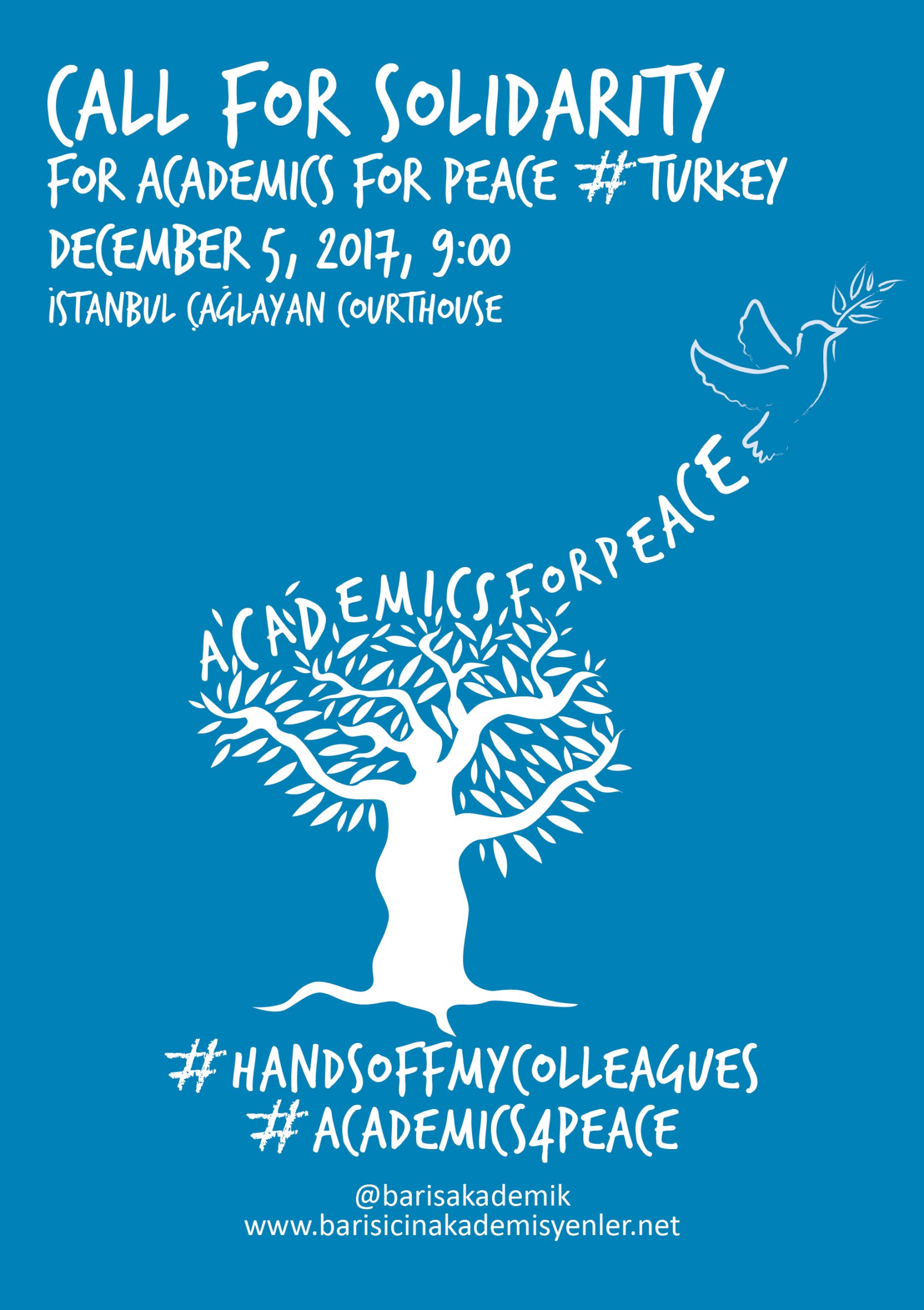
Call for Solidarity Actions for Academics for Peace from Turkey
The first court hearings start on December 5, 2017, at 9:00 pm in İstanbul Çağlayan Justice Palace

As the signatories to the Peace Petition of January 11, 2016, we have gone through many various types of repression since we shared our claim to peace with the public by the declaration titled “We Will Not Be A Party To This Crime.” We have also experienced a variety of solidarity practices. Since January 2016, more than 500 of our colleagues were separated from their universities and from their students through dismissal from public service, firing, and forced retirement. Four of our colleagues were detained for weeks.

Today we are on the edge of a new phase. The signatories to the January 11 Peace Petition, publicly known as the Academics for Peace Petition, are being sued on an individual basis on the accusation of “propagandizing for terror” (See Turkish AntiTerror Law, Article 7/2). The public prosecutor proposes imprisonment extending to 7.5 years.

First the signatory academics from İstanbul University and Galatasaray University were sued at the Criminal Court. They were followed by the signatory academics from Marmara University, Yıldız Technical University, Istanbul Technical University, Özyeğin University and Kemerburgaz University. It is not clear who will be added to this chain.

The cases are opened with the same ‘copy and paste’ bill of indictment, but on an individual basis. The cases are distributed to different Criminal Courts, on different dates and in 10-minute intervals so as to preempt the sued academics from standing together.

As of November 15, 2017, only one tenth of the signatory academics have been sued. The cases are organized so as to extend from December 2017 to April 2018.

In due process, the support extended from members of universities and institutions in the country and abroad has been of the utmost importance to us. In this new turn of events, where we are well aware that it is not the individual academics who are being sued, but the claim to peace and the voice of the free science that put forth this claim that are on trial, we need your support more than ever.

We hope to continue forming solidarity through close cooperation.

We call you to stand by us in the courts starting from December 5, 2017 by sending monitoring teams, by observers, generating news, and through transparency and dissemination of information.

As citizens of this country we will continue in our claim to peace and life and to stand against all kinds of rights violations and injustices.

We will continue to do so in ever growing solidarity.

@barisakademik
fb/barisicinakademisyenler/
http://www.barisicinakademisyenler.net
contact:bakuluslararasi@gmail.com

***

Appel à la Solidarité avec les universitaires pour la Paix en Turquie.
Les premières audiences ont lieu le 5 décembre 2017 à 9h00 au Palais de Justice de Çağlayan (Istanbul)

Nous, les signataires de la Pétition pour la paix, avons à la fois subi des pressions de toute sorte et bénéficié de nombreuses formes de solidarité depuis le jour où nous avons déclaré que “nous ne serons pas complices de ce crime!” A ce jour, ce sont plus de 500 parmi nous qui ont été séparé-e-s de leurs institutions, de leurs étudiant-e-s, suite à des limogeages par des décret-loi, des licenciements, des démissions ou des départs forcés à la retraite. Quatre de nos camarades ont passé des semaines
en prison.

Nous sommes au seuil d’une nouvelle phase. Les signataires de la Pétition pour la paix du 11 janvier 2016 sont traduits devant la justice dans des procès individuels avec le même chef d’accusation, faire la propagande de la terreur (l’article 7/2 du code pénal turc), et encourent des peines allant jusqu’à 7,5 ans d’emprisonnement. Une première vague de procès individuels contre nos camarades des Universités d’İstanbul et de Galatasaray a été suivie de convocations ciblant certains collègues des Universités Marmara, Yıldız Teknik, İstanbul Teknik, Özyeğin et Kemerburgaz. Rien ne
dit quelle sera la prochaine étape.

Les procès, tous séparés, sont néanmoins ouverts avec le même acte d’accusation préparé suivant la méthode du copié-collé. Les audiences sont éparpillées entre plusieurs cours pénales, avec dix minutes de séparation de façon à empêcher les signataires de se rejoindre. Les convocations ne concernent pour le moment que dix pour cent des signataires, mais les audiences s’étalent déjà sur la période du décembre 2017 en avril 2018!

Le soutien de membres sensibles des universités et autres institutions, tant en Turquie qu’à l’étranger, a été important pour nous. Ce soutien est encore davantage nécessaire dans cette nouvelle phase où nous savons parfaitement bien que ce ne soit pas nous en tant qu’individus, mais notre demande de paix et de liberté d’expression de la science qui est jugée.

Nous espérons continuer cette solide coopération, et souhaitons la présence d’observateurs assurant la transparence des informations diffusées lors du marathon judiciaire qui commencera le 5 décembre 2017.

En tant que citoyens de ce pays, nous continuerons à soutenir la vie, exiger la paix, combattre les injustices.

Nous resterons solidaires!
@barisakademik
fb/barisicinakademisyenler/
http://www.barisicinakademisyenler.net
bakuluslararasi@gmail.com

***

Aufruf zur Solidarität mit den Friedensakademiker*innen aus der Türkei
Die ersten Gerichtsverhandlungen finden am 5.Dezember. 2017, um 9:00 in İstanbul, Justizpalast Çağlayan statt.

Seit der Veröffentlichung der Friedenspetition am 11. Januar 2016 „wir werden kein Teil dieses Verbrechens“ mit unseren Unterschriften haben wir sowohl massive Unterdrückung als auch große Solidarität erfahren. Bis heute sind mehr als 500 Kolleg*innen durch Notstandsdekrete vom Staatsdienst entlassen und von den Universitäten gekündigt, sowie durch Druck zur Zwangspensionierung von ihren Universitäten und von ihren Studierenden getrennt. Vier unserer Kolleg*innen wurden ferner wochenlang arrestiert.

Heute stehen wir vor einer neuen Phase. Gegen die einzelnen Unterzeichner*innen der Friedenspetition vom 11. Januar werden einer nach dem anderen Verfahren mit dem Vorwurf “Propaganda für den Terror” eingeleitet. (siehe: türkisches Strafgesetzbuch, Artikel 7/2). Die Staatsanwaltschaft verlangt eine Haftstrafe von bis zu 7,5 Jahren.

Zuerst wurden die Unterzeichner*innen aus der Universität Istanbul und der Galatasaray Universität vor dem Strafgericht angeklagt. Ihnen folgten die Unterzeichner*innen der Marmara Universität, der Technischen Universität Yıldız, der Technischen Universität Istanbul, der Özyeğin Universität und der Kemerburgaz Universität. Wir wissen nicht, welche Unterzeicher*innen morgen an der Reihe sind.

Die Fälle werden mit derselben Anklageschrift “copy and paste ” eingeleitet, jedoch separat gegen einzelne Unterzeichner*innen. Die Fälle werden zu verschiedenen Terminen und in 10-Minuten-Abständen an verschiedene Strafgerichte verteilt, um die angeklagten Wissenschaftler*innen daran zu hindern, dass Sie vor Gericht zusammenstehen.

Bis zum 15. November 2017 wurde nur ein Zehntel der unterzeichnenden Wissenschaftler*innen angeklagt.

Trotzdem erstecken sich die Prozesse vom Dezember 2017 bis April 2018.

Die bisherige Unterstützung, die von den solidarischen Mitgliedern der Universitäten und Institutionen im In- und Ausland ausgeht, ist für uns von größter Bedeutung. In dieser neuen restriktiven Phase wissen wir, dass nicht die einzelnen Wissenschaftler*innen, sondern die Forderung nach Frieden und die Stimme der freien Wissenschaft angeklagt werden.

Wir brauchen wir Eure Unterstützung vor Gericht mehr denn je. Diese bisherige enge Unterstützung wollen wir noch koordinierter fortführen. Wir bitten Euch deshalb, uns ab dem 5. Dezember 2017 vor Gericht zu begleiten, indem Überwachungsteams, Beobachter*innen vor Ort zu gesendet werden, um einen transparenten Informationsaustausch zu ermöglichen.

Als Bürger*innen dieses Landes werden wir unsere Forderung nach Frieden und Leben weiter aufrechthalten und uns gegen alle Rechtsverletzungen und Ungleichheiten widersetzen.

@barisakademik
fb/barisicinakademisyenler/
http://www.barisicinakademisyenler.net
Kontakt: bakuluslararasi@gmail.com

***

Barış İçin Akademisyenlerle Dayanışma
Çağrısı: #BarışTalebiSuçDeğildir
‘Barış Davası’ 5 Aralık 2017, saat 9:00’da Çağlayan
Adliyesi’nde başlıyor!

Barış talebimizi “Bu Suça Ortak Olmayacağız” başlıklı metine attığımız imzalarımızla kamuoyuyla paylaştığımızdan bugüne baskının da dayanışmanın da her türünü yaşadık. Bugüne dek KHK’lerle kamu görevinden ihraç, işten çıkartma, istifaya zorlama, emekli etme gibi yöntemlerle 500’den fazla arkadaşımız üniversite ve öğrencilerinden kopartılmaya çalışıldı. Dört arkadaşımız haftalarca tutuklu kaldı.

Şimdi ise yeni bir döneme girildi. Kamuoyunda Barış için Akademisyenler bildirisi olarak bilinen 11 Ocak Barış

Bildirisi İmzacıları hakkında tek tek “terör propagandası yapmak” iddiasıyla (TMK 7/2) 7.5 yıla kadar hapis cezası istemiyle davalar ardı ardına açılmaya başlandı.

Önce İstanbul ve Galatasaray Üniversiteleri’ndeki akademisyenler için açılan bireysel ağır ceza davaları, Marmara, Yıldız Teknik, İstanbul Teknik, Özyeğin ve Kemerburgaz Üniversitelerinden arkadaşlarımızla devam ediyor. Yarın bu zincire hangi üniversitenin ekleneceğini bilmiyoruz.

Davalar, aynı ‘kes+yapıştır’ iddianameyle ama ayrı ayrı açılıyor. Duruşmaların iki imzacı yan yana gelmeyecek şekilde, Ağır Ceza Mahkemelerine, günlere 10’ar dakikalık aralarla dağıtıldığını görüyoruz.

Bugün itibarıyla sadece onda birimize dava açılmış olmasına karşın, duruşmalar Aralık 2017’den Nisan 2018’e kadar uzanmış durumda.

Bugüne kadar yaşananlarda yurt içinde ve yurt dışındaki farklı üniversitelerin ve kurumların duyarlı mensuplarının gösterdiği destek bizim için çok önemli oldu. Aslında yargılananın tek tek bireyler değil, barış talebi ve talep ortaya koyan özgür bilimin sesi olduğunu çok iyi bildiğimiz bu yeni dönemeçte, desteğinize daha da fazla gereksinim duyuyor, sağlam bir işbirliğiyle süreci koordineli sürdürmeyi umuyoruz. 5 Aralık 2017’de başlayan dava maratonumuza gözlemcilerle, haber takibiyle, şeffaf bilgilendirmeyle katkıda bulunmanızı rica ediyoruz.

Bu ülkenin vatandaşları olarak barışı ve yaşamı talep etmeye, hak ihllalerinin ve eşitsizliklerin her türlüsüne karşı çıkmaya devam edecek, dayanışacağız.

@barisakademik
fb/barisicinakademisyenler/
http://www.barisicinakademisyenler.net
info@barisicinakademisyenler.net

XVIII IAHPE Conference Preliminary Programme

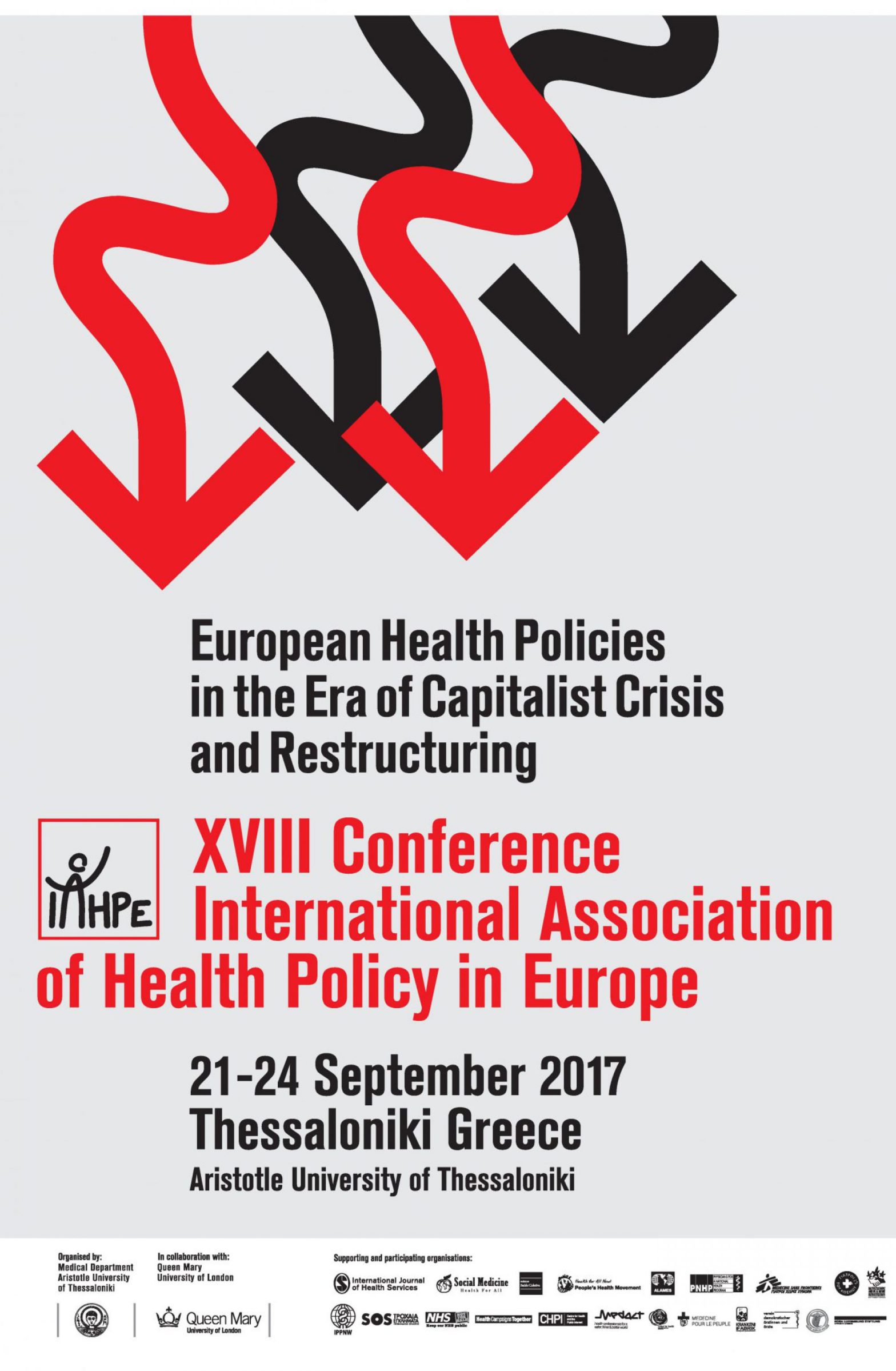
XVIII Conference of the International Association of  Health Policy in Europe, 21-24 September 2017, Thessaloniki-Greece

European health policies in the era of capitalist crisis and restructuring

The International Association of Health Policy in Europe in collaboration with Aristotle University of Thessaloniki and Queen Mary University of London are inviting you to the XVIII IAHPE Conference that will be held in Thessaloniki on the 21st until the 24th September 2017.

You can download the preliminary programme here

IAHPE pre-conference research workshop at QMUL, organised by the International Health and Political Economy of Health (IHPEH) Research Group | 14th September 2017, London

IHPEH pre-conference research workshop

14 September 2017 – 10:00 to 16:00

Garrod Building, Whitechapel Campus, Queen Mary, University of London


Overview

The XVIII Conference of theInternational Association of Health Policy in Europe (IAHPE) will be held on the 21st -24th of September 2017 in Thessaloniki Greece. The IAHPE conference will focus on the contemporary developments and research in European health polices within the context of capitalist crisis and capitalist economic restructuring.

The International Health Political Economy of Health (IHPEH) research workshop on the 14th September at QMULwill provide a space for researchers to practice and critique their research papers ahead of IAHPE’s conference.The workshop will allow young researchers to present their posters, practice their presentation skills, and explore through constructive thinking ways for improving their research projects. Topics that will be discussed at the workshop include among others research on the Europeanization of health systems, International Trade Agreements and their impact on health services, health governance of the refugee crisis in Europe and the role of social movements in public health advocacy. 

Attendance

Attendance at this event is by invitation only. 

IHPEH Workshop Organizing Committee

Sarah Amin (s.amin@qmul.ac.uk), Arianna Rotulo (ariannarotulo@gmail.com), Dr. Jonathan Filippon (j.g.filippon@qmul.ac.uk), Dr. Elias Kondilis (e.kondilis@qmul.ac.uk)

Contact and further information

For any query regarding the event please send an email at: ihpehresearch@gmail.com

[DISRITMIAS] Mario Hernández: Cobertura universal o sistemas universales de salud?

Actualmente organismos internacionales como el Banco Mundial y la Organización Mundial de Salud promueven la cobertura universal en salud. Mario Hernández propone un análisis crítico de lo que implica la cobertura universal en salud en términos de la reproducción de desigualdades sociales y defiende la necesidad de sistemas universales de salud.

Defending academic and medical independence in Turkey

By Alexis Benos, Chiara Bodini, Hannah Cowan, David McCoy, Penelope Milsom and David Sanders, on behalf of 207 individuals and 25 organisations; a full list of signatories is available in the appendix. 

We write on behalf of 207 health professionals, academics, and researchers, and 25 health and human rights organisations from many countries (appendix). We wish to bring to the attention of The Lancet’s readers alarming events taking place in Turkey, where the state has been waging a campaign of terror and punishment against thousands of health professionals and academics.

Following the coup attempt on July 15, 2016, the Turkish Government imposed various measures as part of a temporary state of emergency. However, these measures have been extended to undermine civil liberties and democracy. Among other actions, tens of thousands of public servants have been dismissed without explanation or due process.1 There have also been 63 blanket curfews imposed on towns such as Cizre, Silvan, and Sur, affecting over 1·8 million people.2

As part of this crackdown, 463 academics have been dismissed (11 of them have been recently suspended from their work, which is often a precursor to dismissal),3 for having signed a declaration for peace under the banner of “Academics for Peace”. Notably, this declaration was made in January, 2016, several months before the attempted coup. Many of the 463 dismissed academics have been banned from travelling via the cancellation of their passports. Among those previously dismissed and recently suspended are a number of academic physicians who are all highly respected doctors with international reputations. Additionally, many medical international non-governmental organisations have been banned from working in Turkey.

The Turkish Medical Association has called on all parties to protect the professional autonomy of health-care workers to provide health care, respect their professional autonomy, obey liabilities originating from international legislation, investigate any violations urgently, and identify violators.4

The attack by the Turkish state on academic freedom and freedom of speech is part of a wider attack on democracy that has been documented by Amnesty International.5 However, these developments cannot be viewed simply as a national problem. They are also part of a worrying trend towards authoritarianism in several parts of the world.

The international academic community cannot stay silent. We must react strongly by expressing our disapproval to the Government and universities of Turkey, requesting the immediate reinstatement and standing in solidarity with our colleagues and fellow professionals who have lost their jobs, as well as insisting that restitution of civil rights is a prerequisite for the right to health.

CB and DS are co-chairs of the People’s Health Movement. We declare no competing interests.

Source: The Lancet
____________________________
References
  1. European Commission for Democracy through Law (Venice Commission). Turkey— opinion on emergency decree laws nos. 667–676 adopted following the failed coup of 15 July 2016, adopted by the Venice Commission at its 109th Plenary Session.((accessed July 23, 2017).)

    Human Rights Foundation of Turkey. Curfews in Turkey between the dates 16 August 2015–1 June 2017. ((accessed July 23, 2017).)

  2. 12 peace declaration signatory academics discharged from Dokus Elül University. Bianet(Istanbul). ((accessed July 23, 2017).)
  3. Vatansever, K, Tanık, FA, Gökalp, Ş et al. Rapid assessment of health services In eastern and south-eastern Anatolia regions in the period of conflict starting from 20 July 2015. Turkish Medical Association Publications (Ankara). ((accessed July 23, 2017).)
  4. Amnesty International. No end in sight: purged public sector workers denied a future in Turkey.((accessed July 23, 2017).)

UniverSSE 2017: “From resisting (a world) to creating (a new one)”

by Bengi Akbulut*

The 4th Congress of the Intercontinental Network for the Promotion of Social Solidarity Economy (RIPESS)-Europe, UniverSSEtook place in Athens last month–with plenty of food for thought for political ecologists. 

“We are experiencing the derailing of globalised neoliberalism”, read the framework of UniverSSE— a feeling shared by many political ecologists. And it goes on to say, “Every universe is composed by necessity and vision alike (…) From resisting (a world) to creating (a new one)”.

The 4th Congress of the Intercontinental Network for the Promotion of Social Solidarity Economy (RIPESS)-EuropeUniverSSE, took place in Athens between June 9-11, 2017. The event, following its priors convened in Barcelona (2011), Lille (2013) and Berlin (2015), brought together representatives of social and solidarity economies from different parts of Europe, and was attended by some 1000 people. During the three days that it lasted, the event venue itself was turned into a space of social and solidarity economy: food and drinks were prepared by solidarity kitchens based in Athens, and the alternative currency of the conference, Coopernicus, was used in all monetary transactions.

The congress was organized within 6 thematic zones and through different session formats, such as panels, workshops, and assemblies. The discussions focused on a variety of topics, including labor and cooperation within the social solidarity economy (SSE), agroecology and food security, social/solidarity markets, finance and alternative currencies, interlinks with the SSE and the commons, collective/cooperative housing and co-existence with refugees.

Δημοκρατία-στην-Οικονομία-Χειραφέτηση-της-Κοινωνίας-Ενδυνάμωση-της-Αλλαγής

While some of the debates were geared towards pushing public policies that are supportive of the SSE, others centered on how to strengthen and expand the existing network of SSE through self-organized tools and methods. Within the latter, sessions have picked up how different configurations of the SSE can overcome challenges they face: What kind of a market, for instance, can help build a more self-sufficient SSE network? How can different value inflows and outflows across SSE initiatives be revealed to build more resilient structures? How can fair trade be a strengthening tool for SSE? What are the alternative financial tools and financing mechanisms available to the SSE?

Sessions built on co-learning and sharing of experience across SSE representatives were especially noteworthy. These were the venues where experiences with, for instance, participatory collective mapping or the use of time-banking and alternative currencies were discussed by different SSE initiatives themselves.

From the many enriching debates –some not necessarily on ecology per se— emerged themes that different threads within political ecology have also been concerned with. One such thread was the question of value and valuation, which has recently been picked up by a debate on ENTITLE blog as well.

UNIVERSSE2017_opening
Source: RIPESS Europe

The debates on the kinds of markets to link different nodes of SSE, for instance, were accompanied by a discussion of how to represent different flows of value. There are already many existing examples of social markets or alternative currencies used by SSE initiatives, such as the Solidarius and Mercado Social. Yet the point is not only building a parallel market, but also making it work with different objectives and based on different principles. How to avoid relying exclusively on monetary value signs (i.e. prices) was discussed extensively within this context; so were alternative ways of social valuation to capture different (non-monetarized) capacities and needs.

What is at stake here, then, is the question of what we consider to be values in our economies, and how we renumerate them. Do we only consider forms of labor, goods and services that command a monetary value, or do we build tools and mechanisms to recognize non-monetary flows of value?

The commons was another node of debate that has particular relavance to political ecology. While past congresses of RIPESS have definitely tackled it, this year’s congress was first in engaging with the notion of the commons more directly and extensively. In addition to a number of panels devoted to the commons, there were workshops and open assemblies that explored the links between SSE and the commons, and how to build an economy of the commons. The session on SSE practices on natural commons, for instance, featured participants from European Federation of Renewable Energy Cooperatives (RESCOOP) and the European Water Movement, where opportunities as well as challenges of organizing the field of commons within an SSE vision were discussed.

At a time when political ecologists are debating pathways into post-capitalist and post-growth futures, UniverSSE was inspiring and timely, to say the least. It has foregrounded the question of “the means of transition”, so to speak, for political ecology: who are the potential subjects of a post-growth post-capitalist transition, and do they have command over the means (material as well as immaterial) of such a transition? More importantly, how do we claim and reclaim the means of transition?

Peliti_logo_Greek

The struggle for seeds by the Peliti Community is a telling example in this respect: when farmers cannot manage their seeds, they are often locked within specific farming practices, i.e. those that involve high chemical use and mechanization. That is to say, without reclaiming seeds, there is only a limited horizon of action in terms of organizing farming practices differently, in a way that is more conducive for a post-growth post-capitalist transition. A similar parallel can be drawn with energy and water: transition to an alternative future will be substantially hard without organizing the production and provision of energy and water in local, collective and autonomous forms. The SSE provides an opening especially in this sense.

Hosted in the heart of a rich panaroma of SSE practices, as well as of growing seeds of a post-growth vision, the UniverSSE 2017 made it clear, once more, that the social and solidarity economy has a lot to offer to political ecologists—especially for those of us who are not only challenging the world but aspiring to create a new one.

*Bengi Akbulut is an assistant professor at the Department of Geography, Planning and Environment, Concordia University.