El Derecho a la Salud para todos en la Unión Europea

El Derecho a la Salud para todos en la Unión Europea

Declaración de Toledo

Los ciudadanos y ciudadanas de los países miembros de la Unión Europea disfrutan de unos niveles de salud y de bienestar social entre los más altos del mundo desarrollado, resultado de la acción política de los gobiernos, de la intervención del conjunto de los agentes sociales y del desarrollo de los sistemas sanitarios públicos. La salud es un logro social, es un logro de todos/as.

Los ciudadanos y ciudadanas otorgan una gran importancia a la salud individual y colectiva, y demandan mayoritariamente que las políticas públicas continúen el esfuerzo por mantener y mejorar los niveles de salud y bienestar actuales, afrontando los retos de futuro.

Los sistemas sanitarios de los países miembros de la Unión Europea han introducido, progresivamente, reformas en la organización, funcionamiento y mejora de la calidad de sus servicios de atención a la salud. No obstante, existen diferencias y desajustes internos que exigen adoptar medidas para mejorar sus niveles de ineficiencia y reducir los desequilibrios.

Las diferentes situaciones de partida de los sistemas sanitarios de cada país miembro exigen contextualizar estas medidas para lograr a medio largo plazo la convergencia en materia de salud y bienestar.

Las autoridades públicas de los estados miembros tienen la responsabilidad de garantizar el derecho a la salud y responder a las preocupaciones expresadas por los ciudadanos y los agentes sociales.

Sería necesario definir los contenidos del Art. II – 35 del proyecto de Constitución Europea, sobre el derecho a la protección de la salud, ampliando y concretando este derecho.

La Unión Europea se fundamenta sobre los valores indivisibles y universales de la dignidad humana, la libertad, la igualdad y la solidaridad; a dichos valores deber incorporarse también el derecho a la salud como un derecho básico.

Ante esta situación consideramos que existen algunos obstáculos a tener en cuenta:
Los criterios de convergencia económica están determinando el desarrollo y sostenimiento de los actuales niveles del Estado de Bienestar. Las medidas de contención del gasto público tienen un impacto negativo sobre el gasto social. No sólo importa el nivel global del gasto público sino también su distribución

El envejecimiento de la población, las nuevas estructuras familiares, la incorporación de la mujer al trabajo, la llegada de inmigrantes, sobre todo en los países del sur de Europa exige para responder a nuevas demandas y necesidades, un incremento del gasto social incompatible con la política de contención del gasto público.

La OMC (Organización Mundial del Comercio) declaró que los servicios públicos están excluidos del AGCS (Acuerdo General sobre el Comercio de Servicios). Sin embargo la Conferencia Intergubernamental de la Unión Europea celebrada en Niza concedió a la Comisión Europea mayor autonomía en las negociaciones del comercio de servicios. Se establecieron como excepciones los sectores de salud, educación y servicios sociales, sectores que todavía requieren del acuerdo por unanimidad de los países de la Unión Europea.

Ante esta situación proponemos:

  1. Que se escuchen las demandas de los ciudadanos y agentes sociales, para lo que consideramos necesario la creación de un grupo de presión en el que estos estén representados.
  2. Dicho grupo debería elaborar propuestas para corregir los desequilibrios en los niveles de salud y de desarrollo de los servicios sanitarios de los diferentes países miembros. Consideramos posible y necesario mantener el estado del bienestar dentro de una economía de mercado.
  3. En base a estas propuestas debería definir y exigir que se establezcan criterios e instrumentos de cooperación para garantizar el derecho a la salud, fortalecer la cohesión y lograr la convergencia europea en materia de políticas públicas de bienestar social y sanitaria.

Disintegrated and integrated care, by Jean-Pierre Unger et al

The authors are arguing that the  negative impact of neoliberal health policy on disease control and health care in low and middleincome countries justifies an alternative aid policy to improve both disease control and health care.

The authors  propose social-and-democrat health policy calls for networking, lobbying and training as a joint effort in which committed health professionals can lead the way.

unger-disintegratedhealth

unger-integratedhealth

World Health Organization and Radiations: Denounce the Cover Up

As the international health authority, the World Health Organization (WHO) is responsible for providing scientific and medical guidance to states in the interests of their population’s health. In line with its Constitution, that guidance must be free of all commercial interest. However, on 28 May 1959, the WHO signed an agreement with the International Atomic Energy Agency (IAEA) which prevents either organization from taking a public position on an issue which might harm the interests of the other party (WHA 12-40). The IAEA was established in 1957 to promote civil nuclear energy and in practice, in matters of radiation and health, the WHO is subordinate to the International Atomic Energy Agency.

“Independent WHO”
for the independence of the World Health Organization

More

www.independentwho.info

Chile’s Neoliberal Health Reform: An Assessment and a Critique

Jean-Pierre Unger, Pierre De Paepe, Giorgio Solimano Cantuarias, Oscar Arteaga Herrera

The Chilean health system underwent  drastic neoliberal reform in the 980s, with the creation of a dual system: public and private health insurance and public and private provision of health services.

• This reform served as a model for later World Bank–inspired reforms in countries like Colombia.

• The private part of the Chilean health system, including private insurers and private providers, is highly inefficient and has decreased solidarity between rich and poor, sick and healthy, and young and old.

• In spite of serious underfinancing during the Pinochet years, the public health component remains the backbone of the system and is responsible for the good health status of the Chilean population.

• The Chilean health reform has lessons for other countries in Latin America and elsewhere: privatisation of health insurance services may not have the expected results according to neoliberal doctrine. On the contrary, it may increase unfairness in financing and inequitable access to quality care.

Μore

Medical Education for the 21st Century – Teaching for Health Equity, 30 November to 3 December 2008, Havana, Cuba

IAHP and ALAMES join in organizing the Medical Education for the 21st Century: Teaching for Health Equity. This conference, will bring together health professionals and researchers in the fields of medical and health sciences education; public health; and basic, clinical and social sciences to exchange the latest thinking and construct new paradigms in medical and health sciences education. Conference participants are united by a common objective: making health care that responds to the needs and hopes of people around the world, especially to those of marginalized and discriminated populations, a reality.

The global shortfall of health workers needed to assure basic health services for the 1.3 billion people in the world who have no health care stands conservatively at 4.2 million. To address this shortage of health personnel, including physicians, it is imperative to recruit the right people, with the right knowledge base and skills, and place them in the right place at the right time, to do the right thing. All this requires training with science plus commitment, aimed at achieving equitable health coverage on a global scale.

More infromation at http://siglo21.sld.cu

FADSP is denouncing Madrid’s Regional Governement that abolishes Public Health Structures

IAHP executive expressed its solidarity to our friends of the Federación de Asociaciones para la Defensa de la Sanidad Pública www.fadsp.org “La IAHP (International Association of Health Policy) adhiere y se solidariza con la denuncia de la desaparición de la Dirección General de Salud Pública de Madrid, sustanciada por decreto el pasado 3 de abril. 
Esta medida aparece consecuente con aquellas políticas que tienden a minimizar la acción pública en salud y ,por ende, recortar derechos de ciudadanía, a fin de subordinar los servicios de salud a la lógica mercantil de la producción de ganancia.
Los acompañamos en esta denuncia y en las acciones que de ella se desprendan con el fin de preservar el derecho a la salud y la vida de los ciudadanos de Madrid”.

read more in the attached files in spanish, english or french.

Sign the relevant petition at http://saludpublicamadrid.blogspot.com/

madrid27spublichealthworkersstatement

comunicado_trabajadores_salud_publica

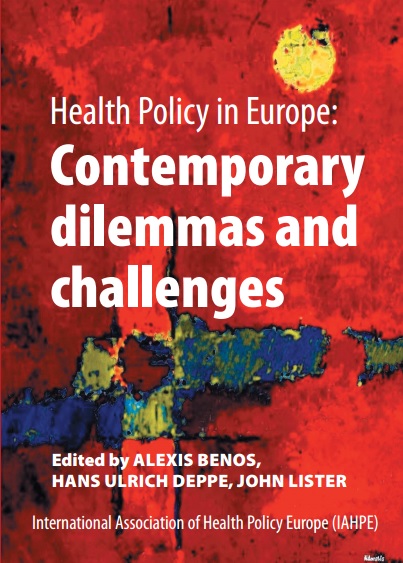
Health Policy In Europe: Contemporary dilemmas and challenges, a new book by IAHPE

IAHPE new book

This book is an effort to describe and critically analyse the recent experience of various European countries and discuss the dilemmas and challenges that confront health policy and policy-makers in this period of time and geopolitical setting, providing concrete evidence from various countries.

Specific chapters address issues in Germany, Sweden, the United Kingdom, Croatia, the Republic of Macedonia, Serbia, Greece, Turkey and Palestine, with an additional comparative study of the situation in the market-dominated health care system in the United states.

It is produced as an aftermath of the productive exchanges during the XIV Conference of the International Association of Health Policy in Europe (IAHPE), held in Thessaloniki in May 2005, with papers subsequently edited through a peer review process.

iahpe-bookcover

iahpe_healthpolicyineurope_contents

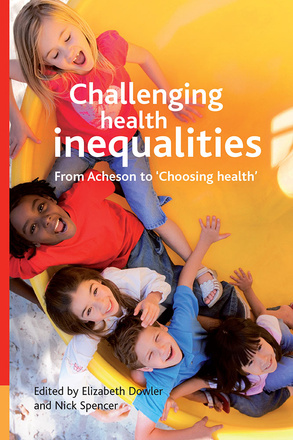
Challenging health inequalities, a new book edited by Elizabeth Dowler and Nick J. Spencer

This book offers a unique multi-disciplinary perspective on tackling health inequalities in a rich country, examining the New Labour policy agenda for tackling health inequalities and its inherent challenges. 

The book presents an overview of progress since the publication of the seminal and ambitious 1998 Acheson Inquiry into health inequalities, and the theoretical and methodological issues underpinning health inequalities. The contributors consider the determinants of inequality – for example, early childhood experience and ethnicity – the factors that mediate the relationship between determinants and health – nutrition, housing and health behaviour – and the sectoral policy interventions in user involvement, local area partnership working and social work.

Challenging health inequalities offers a combination of broad analysis of progress from differing perspectives and will be key reading to academics, students and policy makers. find more about the book and its publisher at https://www.policypress.org.uk/catalog/product_info.php?cPath=&products_id=1109

ALAMES: Declaracion de Salvador de Bahia

Asociación Latinoamericana de Medicina Social (ALAMES)
Catalina Eibenschutz
Leticia Artiles Visbal
Coordinación General

DECLARACIÓN DE SALVADOR DE BAHÍA

En la ciudad de Salvador de Bahía, a los 18 días del mes de julio del año 2007, en ocasión de celebrarse los congresos IV Brasileño de Ciencias Sociales y Humanas en Salud, XIV de IAHP y X de ALAMES.

La ALAMES se propone desarrollar sus acciones sobre la base de un compromiso social y político dirigido a:

Fortalecer la articulación entre la academia con la fuerza de los movimientos sociales, que permitan un avance conjunto y sinérgico entre teoría y práctica, ciencia y política como una de las estratégicas para la defensa de la salud como bien público y derecho ciudadano.
Estar conscientes, para la definición de estrategias y objetivos del contexto actual que el movimiento de la medicina social se encuentra a inicios de siglo caracterizado por, el resurgimiento de la lucha antiimperialista en América Latina, producto del auge de movimientos sociales y políticos, de gobiernos revolucionarios con un discurso y práctica contrahegemónicos; de un imperialismo norteamericano cuyas acciones se expresan en la agresión militar, terrorista, excluyente con las consecuencias ineludibles para el deterioro de la salud y de la calidad de vida de las poblaciones.

Retomar en teoría y práctica las categorías imperialismo, capitalismo, clases sociales y otras como género, etnia y territorio, así como las que refieren a la defensa del ambiente, que dan cuenta explícita de la última determinación social para el análisis del momento actual, la difusión del pensamiento médico social y su utilización como herramienta para una práctica política transformadora.

Apoyar y acompañar a los países que constituyen la “Punta de lanza” en los avances transformadores de la sociedad como son Cuba, Venezuela, Ecuador y Bolivia, blancos principales de las agresiones directas del imperialismo, así como Uruguay y Brasil que emergen progresivamente con fuerza en el escenario latinoamericana.

Apoyar las instancias transformadoras para el desarrollo de Latinoamericana como el ALBA en contra de los acuerdos castrantes para nuestros países del ALCA impuestos por el imperialismo norteamericano

El presente es de lucha, el futuro es nuestro
Un mundo mejor, SÍ es posible

Asociación Latinoamericana de Medicina Social (ALAMES)

A note for the IAHP’s History, by Vinçen Navarro

Dear Colleagues and Friends of the International Association of Health Policy:

It gives me enormous pleasure to see that the International Association of Health Policy (IAHP) has now completed its XIV Conference in Salvador de Bolivia, Brazil. When many, many years ago, a few of us got together in Amsterdam at the European Center of the Institute for Policy Studies to establish the Association, we had no idea that it would become so large and so productive. It makes me think that maybe “history is on our side,” as we used to say many years ago.

The IAHP was started when several of us were tired of attending mainstream conferences where the conventional wisdom was produced and reproduced for public consumption. At these conferences, progressive scholars were ignored or marginalized in a dominant discourse that saw disease primarily as a biological and individual phenomenon and medicine as a biological intervention. Few of us challenged that ideological position, presented as a scientific one. We saw health and disease as a population-based phenomenon that was politically, socially, economically, and culturally determined. While of different political traditions, all the founders of the IAHP believed – as our ancestors from Engels to Virchow said – that the main interventions to promote the health and quality of life of our populations are those aimed at transforming class–as well as gender and race­–power relations in our societies and in the world at large. We were in a very small minority indeed. And while wanting to continue the ideological struggle in the mainstream forums and conferences, denouncing the dominant ideology, we also felt the need to have our own meetings where we could discuss our own work in constructive debate among colleagues and friends who shared these views. That need was widely felt.

I sent a note to several colleagues (some I knew personally, others I did not) and then spoke with my friend Len Rodberg, who was working in a progressive think tank in Washington, D.C., the Institute for Policy Studies (IPS), and made two requests – both of which the IPS granted. One was to get money to cover the travel expenses of our colleagues coming from developing countries. The other was to find a place to hold the first meeting. This place should be outside the U.S., since the U.S. government at that time would not grant visas to many of our colleagues from other countries. The IPS offered its European Center in Amsterdam, and this is how and why we met in Amsterdam. On a rainy day, we started three exciting days during which the IAHP was established. It was from June 28th to July 2nd of 1976, more than thirty years ago.

We soon chose three objectives for the IAHP. The first was to create a forum for progressive scholars (of many different political persuasions) who would critically analyze the world as a necessary step to changing it. Our commitment was to optimize the health of our populations through the elimination of class, as well as gender and race, exploitation. We were indeed creatures of the 60’s, and we had to speak quite loudly in order to be heard in a suffocatingly conservative academic environment. To give you an idea of how conservative the academic environment was at that time, I could relate some of the negative reviews that some of our work received in mainstream journals. One of them, Social Science and Medicine, accepted a paper of mine on the condition that I drop the use of terms such as “working class,” as too ideological! This was the environment in which we had to struggle in the 70’s. I did not abide by SSM’s request, and the article was not published. It was published later in the International Journal of Health Services (IJHS). We spoke loud and clear through the instruments we had at our disposal, of which the IJHS was the best known. Actually, most of the critical analyses and the debates among progressive scholars in the English-speaking world during those years (and this continues today) were found in the IJHS. All the board members of the IAHP were also members of the IJHS editorial board.

The second objective of the IAHP was to promote and support the work of progressive scholars. The overwhelming dominance of conservative thinking, reproduced through networks that systematically excluded critical thinkers, made the promotion of progressive scholarship particularly difficult. Here again, the International Journal of Health Services played a critical role, as one of the few forums where progressive thinking was welcome. Even though its title, “Health Services,” seemed to indicate a preference for subjects specifically on this topic, the contents of the journal have always reflected its broader subtitle: health and social policy, political economy and sociology, history and philosophy, and ethics and law.

The third objective of the IAHP was to provide support of all types for our comrades struggling to improve the health of their people against horrible dictatorships in Latin America and on other continents at that time. This explains why, in the beginning, the IAHP was not an association open to everyone. Candidates for membership had to be sponsored by two current members, in order to avoid infiltration by repressive forces. We lived through some tense moments and meetings because of this. I was elected the first president of the IAHP, and re-elected several times, which forced me to do a lot of traveling to several countries to help our comrades in situations of stress and need. We established a committee within the IAHP (chaired by Sally Guttmacher from the U.S.) to assist our international solidarity work. I should stress that the task of solidarity was, of course, part of our commitment to becoming involved not only as individuals but also as an association in supporting and participating in progressive struggles around the world, working to optimize the health of our populations.

To our pleasant surprise, the IAHP grew very quickly, even on continents where the growth had to take place under almost clandestine conditions. The Latin American chapter became particularly active. And the European chapter was soon to follow.

Did the IAHP influence the evolution of events?

Our objective was not just to analyze the world; we wanted to change it. We saw ourselves as scientists and intellectuals supporting the struggle for change in our own countries and in the world. How does one evaluate the work of a group of committed intellectuals? One way is to look at their impact and influence in changing the themes and subjects that are discussed in national and international debates. From that perspective, we can affirm that we did have an impact, and a major one. Many of the issues we raised in the 60’s, 70’s, and 80’s (such as the effects of class, gender, and race exploitation on health; the consequences for health of social inequalities; the social determinants of health; the impact of neoliberalism, and globalization on health – and many others) became the major issues of the 90’s, and now of the new century. We showed, once again, that to be radical is to think ten or twenty years ahead. The historical task of radical scholarship has always been to raise the unwelcome questions that the dominant ideology puts aside in order to strengthen class, gender, and race exploitation in a world where one child dies of hunger every other second. Some of our work has appeared in Baywood Publishing’s Health Policy series, such as the Political Economy of Social Inequalities: Consequences for Health and Quality of Life; and The Political and Economic Determinants of Population Health (co-edited with Carles Muntaner); and more recently, Neoliberalism, Globalization and Inequalities: Consequences for Health and Quality of Life. (I would appreciate it, incidentally, if the IAHP could promote these volumes; many of their contributors are members of the IAHP. I’m enclosing an attachment with promotional material of these books).

The responses of the international and national establishments to our critiques have been predictable. The first response was to ignore us, but when that could no longer be sustained, the response became enormous hostility. (Some of our colleagues lost their jobs in academia, and some even committed suicide. The ideological struggle has its own casualties.) And Social Science and Medicine, (whose editor had vetoed the use of the term “work class” in my article) published as a leading article an abrasive insult to several of us, although focusing in a large degree on my work, defining our position as “a disease” concluding that human liberation called for the elimination of that disease (Vol. 19 and my reply Vol. 20). We had to assume that the author meant intellectual rather than physical elimination. This abusive article precipitated the resignation, as a protest, from that journal’s Executive Board of Professor Howard Waitzkin, at that time of the University of California. That was the level of hostility, but we kept moving on, and when the reality of exploitation became so clear and obvious, as it is now, the establishments tried to co-opt the subject (see the huge literature on inequalities and health in mainstream academic journals), if not the authors, thus depoliticizing it. These mainstream studies on inequalities, for example, never touch on the power relations that determine them. Concepts and terms such as exploitation rarely “contaminates” their writings. In these mainstream analyses, power and politics are systematically ignored, transforming the analyses into apolitical, ahistorical descriptive studies. In this dominant intellectual climate, the solution of the world’s health problems is presented as a matter of providing “more aid to the poor” or better managing existing resources–but never referring to the political, economic, social, and cultural institutions that support an overwhelming class, gender, race, and national exploitation, the primary cause of the worldwide health problems. We have seen, for example, the farce of transforming the important and urgent struggle to end exploitation into an international strategy to reduce poverty through the UN Millennium Program, in which the solution promoted by the proponents of that program is for the rich countries to provide more aid to the poor ones (accompanied by the songs of Bono). Meanwhile, the same promoters of the Millennium Program are extremely hostile toward the few countries that are indeed trying to resolve their health problems. The recent hostility toward the Venezuelan Government is just the latest example. The Millennium folks (as the IMF and the World Bank did before) continue to promote Mexico’s health insurance as a shining example for other countries to follow, but as Cristina Laurell shows in a recent issue of the IJHS, the Mexican program has been an authentic disaster for the health of the Mexican people.

I mention all these points not only to relate some of our own history but also to renew a call to arms since we are again in a dark period where the forces of reaction dominate many national and international agencies (including WHO). I am all in favor of optimizing our influence in international forums, becoming also more structured and more formal. I find the suggestions made in that direction helpful and important. But, let’s never forget that our objective should be–as Karl once proposed-“To be uncompromising in our critical evaluation of all that exists, uncompromising in the sense that our criticism fears neither its own results nor the conflict with the powers that be.” I am sure you agree.

Warmly yours,
Vicente Navarro.
A founder of the IAHP