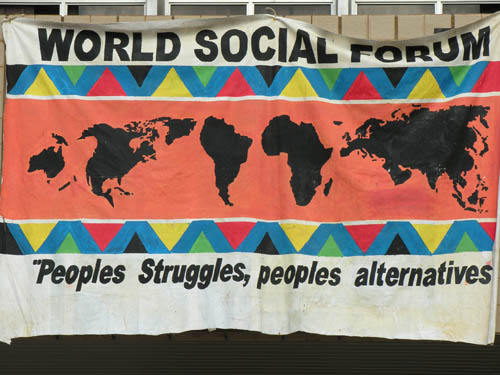
TO ALL PARTICIPANTS OF THE 2nd WORLD SOCIAL FORUM
Conclusions of the 1st International forum for the Defense of the Health of People
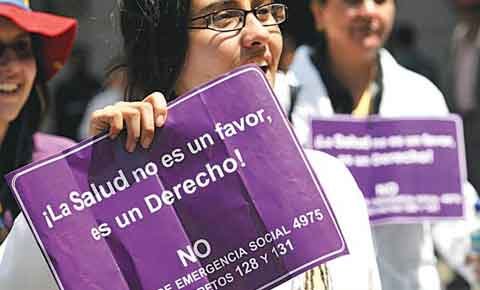
HEALTH AS AN ESSENTIAL HUMAN NEED, A RIGHT OF CITIZENSHIP AND
A PUBLIC GOOD
HEALTH FOR ALL IS POSSIBLE AND NECESSARY …
Organizers:
Latin American Association of Social Medicine � ALAMES
Brazilian Center for Studies on Health – CEBES
Porto Alegre City Government � PMPA / Municipal Health Secretary � SMS
Rio Grande do Sul State Government / State Health Secretary
The participants of the 1st International Forum for the Defense of the Health of People, accomplished in Porto Alegre � Brazil, on January 29th and 30th, call on all the people of the world, all women and men who feel responsibilities, challenges and the imperative to build fair and equitative societies as theirs… to gather around these words to make them publicized and transformed on sustained actions…
We understand that this 2nd World Social Forum starts a new step on the fight for the universalization of social rights, and particularly the right to health, as an expression of the right of life, since in our understanding health is the expression of conditions and quality of life, not only the occasional access to health services.
We want to denounce to the world the devastating effects of the macroeconomic adjustment policies and the militarization of international relationships over the possibility and quality of people´s life, as well as to affirm that these effects are not neoliberal economic policies exceptional accidents, but the real essence of a logic that aims the maximization of profits, the destruction of States´s social welfare measures and the very identity of the national states, dividing the world through a huge social apartheid where regions, countries and continents are relegated to the condition of spectators of the immense accumulation of international capital. It results in a very unmerciful side of the so called economic or capital globalization: the deep inequity established as a perpetuating logic for the social injustice, making every day richer the riches and desperately poorer the poor people, making weak the infants´s and seniors´s lives and giving to poverty a feminine profile. As a result of these inequities, the poor of the world look at the rich countries as from the other side of the shopping malls windows, searching for the paradise, which is denied to them by the same world economic order renown as a socially segregating and ecologically unsustainable model, by means of economic migrations.
We understand that the Argentinean tragedy is the direct consequence of the sustained and faithful application of neoliberal principles, which ignore interests and needs of the citizens, a awaited and lots of times denounced product of a logic that cares for capital�s health but not for the people’s health.
We would like to alert all of you that the world-widening of the capital is not an abstraction, since it defines life quality possibilities, as well as it is not made by abstract beings like the World Bank and IMF, since these organisms reflect all the directives of the big capitalistic conglomerates that dominate the world nowadays, supported by their political managing of governments of many rich and poor countries, which dominant classes are committed to the health of their and other one’s capital instead of to the health and welfare of their own people. So, we affirm that the fight place against the bad dominant world order finds its expression in every town, region and continent by means of a possible and necessary fight that call on every woman and man to defend their dignity and the dignity of future generations towards a fair, equitative and solidarian world.
We understand that we are frequently trapped within a social fascism where those options, which are offered to us, are so bad and poor that all we have is resistance fights only, for fear that the future may be even worse. Laws are often disrespected and violated by their own formal guardians, generating rights�s vulgarization and the loss of meaning of formal freedoms. Only politicization of the debate and its essencialization can give us political power and creativity to create another world with the defense of social rights and the unvulgarization of life.
Health as a complete expression of economical and social determinations about health conditions is a fight field for the full respect of social, economical and cultural people’s rights. For us, health is an essential human right, a primary right of citizenship and a public good. It also is a duty of the State, which is desired to be the undertaker of public interest, defending those interests in the market arena, avoiding the purchasing of health. So, we defend the State come back to its citizen and life’s defense functions through the assurance of dignity on politics as a public and democratic place. We revindicate that all states defend social welfare and health systems where universalization, integrality and equity are the founding characteristics inserted and respected within their constitutional and legal texts, as well as in the organization and financing of health systems and services.
We demand from politics and economy to have their ethical principles to defend human beings dignity recovered and to pronounce the world widening of solidarity and life defense with all economical effort directed towards people�s needs satisfaction, which includes the right to life in the first place.
It is a scandal that economical adjustments and efficiency searches for the health sector never demand prices and pharmaceutical costs control, since medicines industry are directly linked to the wild accumulation in health sector, imposing exorbitant prices within the Third World and blocking those initiatives for development of national pharmaceutical industries. We demand exclusive patent rights are broken, giving rise to a wider perspective of social and economical development for medication and health equipment.
We want to manifest our extreme suspicion about all speeches of international financing agencies, governments and political parties from rich and poor countries that speak about poverty and the need to fight it without mentioning the need to change economical development model which is generating unemployment, destruction of social rights warranties and making the inequity abyss deeper.
We challenge these organisms, governments and corporations to accept a public and democratic debate of a development with a human face.
By no means we deny the need for reforming health systems and states so that they can be closer to the integral and equitative human development ideals. What we do not accept is the imposition of one only logic focused on the interests of international capital market.
In a moment of a great scientific development of humanity, the themes of ethics and equity are even more important to defend health as a public good. Specifically in relation to the human genome charting, it sounds essential to assure the right of humankind, since genetical inheritance is inherited by every human being, avoiding a purchasing that would increase inequities and would have devastating effects over people�s access to science progress.
Facing all these elements, we propose:
- a strong and steady manifestation against neoliberal logic and its consequences over the right to life;
- solidarity to the Argentinean people and to all countries where neoliberalism destroys social rights and the specific worry with the increasing war and its internationalization in Colombia;
- a strong resistance against integration to Americas Free Commerce Zone � ALCA, understood as an additional attack against our economies and our sovereignty;
- a search for the essence and politicization of the debate, with the collective building of a Political Agenda for Defense of Health as a Right, defining health as an Essential Human Need, as Public and Citizenship Policy, as a Public Good and Duty of the State. By Public Policy Agenda we mean the democratic and participative process of building of what our societies, in each town, region and continent, want and need, having in mind the concrete accomplishment of agreements that warrant under participation human dignity and an ethics beyond immediate financial interests. There is an urge for a world public debate about a development model towards equity. As part of this effort, we propose the agreement to the elaboration of an alternative report on equity on life and health conditions;
- the reivindication for People�s Representation Councils beside organisms like MERCOSUL and the World and Pan-American Health Organizations, aiming to express directly our needs, without the frequently irresponsible mediation of our governments;
- the inclusion in each country�s judicial legislation about the right to health, under universality, integrality and equity, with the assignation of enough resources to answer to social needs on life and health quality, mobilizing national and international capital to fight against those programs that focus on poverty without warranting universal rights, proposing universality with equity as a superior way of social justice;
- for the same reason, we condemn and repel Colombia�s health care model, known as structured pluralism, which usage has been taking to increasing exclusion and inequities, and we affirm that no country should adopt such a model, which is contrary to the interests of people�s health;
- we also alert against and condemn the attempts of Paraguayan government to reform, without any social participation, the Law n. 1032 and the Sanitary Code, besides trying to make private the Social Welfare Institute (IPS), making even weaker all the warranties of social rights in the country, applying the questioned principles of the Colombian system;
- we support the attempts of constitutional reform in Uruguay to warrant the right to health of all Uruguayans and not only the indigent ones, like it is presently established by law;
- we affirm the defense and warranty of the right to health in Brazil through the warranty of enough resources and the accomplishing of universality, equity and integrality as principles not warranted to all population by the Brazilian State yet;
- we condemn all and every form of violation of the rights to health by public or private institutions, with special emphasis on the control of violations caused by the states and governments themselves, searching for the constitution of an International Observatory to observe and control these violations and to show them to the International Justice Court;
- we reivindicate from governments to adopt one figure public goals for all health and quality of life indicators, reducing inequities related to not answered needs, reducing maternal and infants mortality rates, unemployment, lack of proper housing, etc to one figure only, in the same way it is done for economical or capital�s health goals…
We call on you to make a formal and fraternal international call to all workers, organizations and inhabitants so that in those countries where there are multinational pharmaceutical industries with subsidiaries in Argentina or not, to break all privilege or right to patents or property over medicines which are asked and needed to allow the survival of Argentinean population: medication is a public good, as Brazil and South Africa have shown and done in relation to drugs against AIDS;
We reivindicate that Health as a Right of Humanity to be one of the central themes on the 3rd World Social Forum in 2003;
That Health of the People be one of the central themes on the Rio + 10 Forum, which will happen in Africa in 2002;
That we formally protest against the violation of union manifestation rights in Uruguay and against civil rights violations of Paraguayan citizens who are members of the Patria Libre Movement and were victims of arbitrary imprisonment and persecuted by the police on behalf of the Paraguayan Government;
We call for a wide process of mobilization towards the accomplishing of the 2nd International Forum for the Defense of the Right to Health of People in Porto Alegre on January of 2003, before the 3rd World Social Forum;
And a wide and transectoral calling on the 1st World Health Forum, to be performed in the first semester of 2004 in Porto Alegre also;
That all individuals and governmental or non governmental organizations who and which agree with the principles and guidelines proposed on this document gather to the invitation for our meetings in 2003 and 2004, as well as in the proposed initiatives;
That we organize a continental protest against the transformation of health in a purchased good, with all workers from public services who work under the contribution regimens, stopping all the charging of their care for one day, while those where there is no charge that work wearing some sign to show to patients the aim of the demonstration for the right to health.
We propose and we invite you to act on our places of life as citizens of the world, fighting for a society oriented towards social justice and equity, where respect for human dignity goes beyond the wild accumulation of capital. We call on you to reflect about and to act, moved by hope and indignation.
Porto Alegre, January 30th, 2002.
For contacts and manifestation, please write to alames@movinet.com.uy or armandon@portoweb.com.br or joser@sms.prefpoa.com.br
***
La Salud como Necesidad Humana Esencial, Derecho de Ciudadanía y Bien Público
Una Salud para todos es posible y necesaria…
Organizadores:
Associação Latino Americana de Medicina Social -ALAMES
Centro Brasileiro de Estudos em Saúde � CEBES
Prefeitura de Porto Alegre �PMPA / Secretaria Municipal de Saúde de Porto Alegre � SMS
Governo do Estado do Rio Grande do Sul / Secretaria Estadual da Saúde
L@s participantes del I Fórum Internacional por la Defensa de la Salud de los Pueblos, realizado en Porto Alegre � Brasil, del 29 al 30 de enero de 2002, convocan a todos los pueblos del Mundo, a todas las mujeres y hombres que sienten como suyos las responsabilidades, desafíos y el imperativo de construir sociedades justas y equitativas… para que se sumen a estas palabras difundiéndolas y trasformándolas en acciones sostenidas…
Entendemos que este II Fórum Social Mundial, abre una nueva etapa en la lucha por la universalización de los derechos sociales, y particularmente por el derecho a la salud, como expresión del derecho a la vida, entendiendo salud como la expresión de las condiciones y la calidad de vida y no simplemente el acceso eventual a los servicios de salud.
Queremos denunciar al Mundo los efectos devastadores de las políticas de ajuste macroeconómico y de la militarización de las relaciones internacionales, sobre la posibilidad y la calidad de vida de los pueblos, y afirmar que estos efectos no son accidentes excepcionales de las políticas económicas neoliberales, sino que son la esencia misma de una lógica que objetiva la maximización del lucro, la destrucción de la capacidad de seguridad social de los Estados y la misma identidad de los estados nacionales, dividiendo el mundo a través de un inmenso apartheid social, donde regiones, países y continentes son relegados a la condición de espectadores de la monstruosa acumulación de capitales internacionales. De esto resulta la faz más despiadada de la llamada globalización económica o mundialización del capital: la profunda inequidad que se establece como una lógica perpetuadora de la injusticia social, tornando a los ricos cada día más ricos y a los pobres desesperadamente más pobres. Con la fragilización de la vida infantil y de la vejez y la feminización de la pobreza. Como fruto de estas inequidades, los pobres del mundo miran a los países ricos como del otro lado de las vidrieras del shopping mundial, buscando en desesperadas migraciones económicas el paraíso que el mismo orden económico mundial les niega, y que ya sabemos es un modelo de desarrollo socialmente segregador y ecologicamente insostenible.
Así es que entendemos que la tragedia Argentina es la consecuencia directa de la aplicación sostenida y fiel de los principios neoliberales, ignorando los intereses y necesidades de los ciudadanos, producto esperado y muchas veces denunciado de una lógica que cuida de la salud del capital y no de la salud de los pueblos.
Asimismo queremos alertarles que la mundialización del capital no es una abstracción, pues define la posibilidad de la calidad de vida, la salud y por ende la posibilidad de la vida humana, y además no es hecha por entes abstractos como el Banco Mundial y el FMI, pues estos organismos reflejan las directivas de los grandes conglomerados capitalistas que hoy dominan el mundo, apoyados en el manejo político de gobiernos de muchos países ricos y pobres, cuyas clases dirigentes están comprometidas con la salud del capital, suyo y ajeno, más que con la salud y bienestar de sus própios pueblos. Así es que afirmamos que el espacio de lucha contra el perverso orden mundial dominante encuentra su expresión en cada ciudad, región y continente, a través de una lucha posible y necesaria que convoque cada mujer y cada hombre a defender su dignidad y la dignidad de las generaciones futuras hacia un mundo justo, equitativo y solidario.
Entendemos que estamos frecuentemente atrapados en un fascismo social donde las opciones que nos ofrecen son tan malas y pobres que nos resta solamente luchas de resistencia, por temor de que el futuro pueda ser aún peor. Las leyes son frecuentemente no respetadas y violadas por sus propios guardianes formales, generando la banalización de los derechos y el vaciamiento del sentido de las libertades formales. Solamente la politización del debate y su esencialización pueda darnos potencia política y creatividad para crear otro mundo con la defensa de los derechos sociales y la desbanalización de la vida.
La salud como expresión compleja de las determinaciones económicas y sociales sobre las condiciones de vida, es un campo de lucha por el pleno respeto a los derechos sociales, económicos y culturales de los pueblos. Para nosotros y nosotras, salud es un derecho humano esencial, derecho fundamental de ciudadanía y un bien público. Y también es un deber del Estado, al cual lo deseamos como garantizador del interés público, defendiendo esos intereses en la arena del mercado, evitando la mercantilización de la salud. Así es que defendemos el rescate del Estado para sus funciones de defensa del ciudadano y de la vida, a través de la afirmación de la dignidad de la política como espacio público y democrático. Así es que reivindicamos que los estados defendan sistemas de seguridad social y salud, donde la universalidad, la integralidad y la equidad sean sus características fundantes, plasmadas y respetadas en los textos constitucionales y legales y en la organización y financiamiento de los sistemas y servicios de salud.
Exigimos de la política y de la economía su recuperación hacia principios éticos que defiendan la dignidad del hombre y proclamen la mundialización de la solidaridad y de la defensa de la vida. Con todo el esfuerzo económico dirigido a la satisfacción de las necesidades de la gente, lo que incluye primeramente el derecho a la vida.
Nos escandaliza que los ajustes y búsquedas de eficiencia económica para el sector salud nunca exijan el control de los precios y costos farmacéuticos, puesto que las industrias de fármacos están directamente vinculadas a la acumulación salvaje en el sector salud, imponiendo precios exorbitantes en el Tercer Mundo y bloqueando las iniciativas de desarrollo de industrias farmacéuticas nacionales. Exigimos así que se rompan los derechos exclusivos de patentes, generando una perspectiva ampliada de acceso social y económico a los medicamentos y equipamentos de salud.
Queremos manifestar nuestra extrema desconfianza hacia los discursos de las agencias financieras internacionales, gobiernos y partidos de países ricos y pobres, que hablan de la pobreza y de la necesidad de combatirla, pero sin hablar de la necesidad de cambiar el modelo de desarrollo económico que está generando desempleo, destrucción de las garantías de los derechos sociales y profundizando el abismo de las inequidades.
A estos organismos, gobiernos y corporaciones los desafiamos al debate público y democrático de un desarrollo con cara humana.
De ninguna manera negamos la necesidad de reforma en los sistemas de salud y en los estados para que se acerquen a los ideales de desarrollo humano integrales y equitativos, lo que no aceptamos es la imposición de una lógica única centrada en los intereses de mercado del capital internacional.
En un momento de gran desarrollo científico de la humanidad, se torna aún más importante el tema de la ética y de la equidad, con la defensa de la salud como un bien público, en particular en el tema del mapeo del genoma humano, nos parece esencial afirmar el derecho de la humanidad, puesto que el patrimonio genético es patrimonio de cada ser humano, evitando una mercantilización que aumentaría las inequidades y tendría efectos devastadores sobre el acceso de los pueblos del mundo a los avances de la ciencia.
Frente a todos estos elementos, proponemos:
- la manifestación fuerte y firme en contra de la lógica neoliberal y sus consecuencias sobre el derecho a la vida;
- la solidaridad con el pueblo de Argentina y de todos los países donde el neoliberalismo hace ruinas de los derechos sociales y la particular preocupación con la escalada guerrerista y la internacionalización de la guerra en Colombia;
- rechazo a la integración a la Zona de Libre Comercio de las Américas � ALCA, entendida como un ataque más contra nuestras economías y nuestra soberanía;
- la esencialización y politización del debate, con la construcción colectiva de una Agenda Política en Defensa de la Salud como Derecho, definida Salud como Necesidad Humana Esencial, Derecho Social y de Ciudadanía, Bien Público y Deber del Estado. Entendiendo como Agenda Política Pública al proceso de construcción democrática y participativa acerca de lo que quieren y necesitan nuestras sociedades, en cada ciudad, región, país y continente, pensando la materialización de acuerdos que garanticen participativamente la dignidad humana y la ética más allá de los intereses financieros inmediatos. Urge el debate público mundial acerca de un modelo de desarrollo hacia la equidad. Como parte de este esfuerzo proponemos la adhesión a la elaboración de un informe alterno de la equidad de las condiciones de vida y salud;
- la reivindicación de la formación de Consejos de Representación de los Pueblos junto a los organismos como el MERCOSUR y las Organizaciones Mundial y Panamericana de la Salud, con el objetivo de expresar directamente nuestras necesidades, sin la mediación frecuentemente irresponsable de nuestros gobiernos;
- la inclusión en los aparatos jurídicos de cada País del pleno derecho a la salud, con universalidad, integralidad y equidad, con asignación de recursos suficientes para responder a las necesidades sociales en calidad de vida y salud, movilizando capitales nacionales e internacionales. Combatiendo los programas de focalización a la pobreza sin la garantía de derechos universales, proponiendo universalidad con equidad, como forma superior de justicia social;
- por esta misma razón condenamos y rechazamos el modelo de atención a la salud en Colombia, conocido como pluralismo estructurado, cuya aplicación ha conducido a la exclusión e inequidades crecientes, afirmamos que ningún País debe adoptar tal modelo, contrario a los intereses de la salud de los pueblos;
- así mismo alertamos y condenamos los intentos del Gobierno Paraguayo para reformar, sin participación social, la Ley 1032 y el Código Sanitário, además de intentar privatizar el Instituto d Previsión Social � IPS, haciendo aún más frágil el aparato de garantías de derechos sociales en el País, aplicando los principios del perverso sistema colombiano;
- apoyamos los intentos de reforma constitucional en Uruguay para garantizar el derecho a la salud de todos los uruguayos y no solamente a los �indigentes�, como hoy establece la Ley;
- afirmamos además la defensa y garantía del derecho a la Salud en Brasil, a través de la garantía de recursos suficientes y la concreción de la universalidad, equidad e integralidad, como principios que el Estado Brasileiro aún no garantiza para toda su población;
- la sanción de toda y cualquier violación de los derechos a la salud por parte de entes públicos o privados, con particular énfasis en el control de las violaciones provocadas por los propios estados y gobiernos, buscando la constitución de un Observatorio Internacional que monitoree estas violaciones y las presente frente a la Corte Internacional de Justicia;
- exigir a los gobiernos y a las agencias multilaterales para que adopten metas públicas de un dígito para todos los indicadores de calidad de vida y salud, reduciendo las inequidades cuanto a las necesidades no satisfechas, reduciendo la mortalidad materna, infantil, el desempleo, la falta de viviendas adecuadas….a un dígito, tal cual lo hacen con las metas económicas o de salud del capital…
Les convocamos a hacer un formal y fraterno llamado internacional a todos los trabajadores, organizaciones y habitantes para que en aquellos países donde existan empresas multinacionales farmacológicas con subsidiarias en Argentina o no, para que rompan con todo privilegio o derecho de patente o propiedad sobre las drogas que se soliciten y permitan la subsistencia de la población argentina: el medicamento es un bien social, como Brasil y Sudáfrica lo han demostrado y hecho con las drogas contra el SIDA;
Reivindicamos que la Salud como Derecho de la Humanidad sea uno de los temas centrales del III Fórum Social Mundial, en 2003;
Que la Salud de Los Pueblos sea uno de los temas centrales del Fórum Rio + 10 que se celebrará en África, en 2002;
Que se proteste formalmente contra la violación de los derechos de manifestación sindical en Uruguay y contra las violaciones de los derechos civiles de ciudadanos paraguayos miembros del Movimiento Patria Libre, los cuales fueran víctimas de prisión arbitraria y persecución policial por parte del Gobierno Paraguayo;
Que se realice un amplio proceso de movilización hacia la realización del II Fórum Internacional en Defensa del Derecho a la Salud de los Pueblos, en Porto Alegre, en enero de 2003, antecediendo el III Fórum Social Mundial;
Que se produzca una convocatoria ampliada y transectorial hacia el I Fórum Mundial de la Salud, a realizarse en el primer semestre de 2004, también en Porto Alegre;
Que todos aquellos individuos y organizaciones gubernamentales o no, que esten de acuerdo a los principios y líneas de acción propuestos en este documento, se asocien en la convocatoria de nuestros eventos en 2003 y 2004, así como en las iniciativas aquí propuestas;
Que se organice una protesta continental en contra de la mercantilización de la salud, con los trabajadores de los servicios públicos que trabajen con regímenes de contribución suspendiendo la facturación de las atenciones por un día y aquellos donde no hay facturación diferenciada, trabajando con brazaletes o chapas y aclarando a los pacientes el objeto de la lucha por el derecho a la salud;
Nos proponemos y los invitamos, para actuar en nuestros espacios de vida como ciudadanos y ciudadanas del mundo, luchando por una sociedad orientada hacia la justicia social y la equidad, donde el respeto a la dignidad humana se posicione más allá de la acumulación salvaje del capital. Les convocamos a la reflexión y a la acción, movidos por la esperanza y la indignación.
Porto Alegre, 30 de enero de 2002
Para contactos y manifestaciones:
alames@movinet.com.uy o armandon@portoweb.com.br o joser@sms.prefpoa.com.br
A TOD@S @S PARTICIPANTES DO II FÓRUM SOCIAL MUNDIAL
CONCLUSÕES DO I FÓRUM INTERNACIONAL EM
DEFESA DA SAÚDE DOS POVOS
A Saúde como Necessidade Humana Essencial, Direito de Cidadania e Bem Público
Uma Saúde para todos é possível e necessária…
Organizadores:
Associação Latino Americana de Medicina Social-ALAMES
Centro Brasileiro de Estudos em Saúde � CEBES
Prefeitura de Porto Alegre �PMPA / Secretaria Municipal de Saúde de Porto Alegre � SMS
Governo do Estado do Rio Grande do Sul / Secretaria Estadual da Saúde
@s participantes do I Fórum Internacional em Defesa da Saúde dos Povos, realizado em Porto Alegre � Brasil, de 29 a 30 de janeiro de 2002, convocam a todos os povos do Mundo, a todas as mulheres e homens que sentem como suas as responsabilidades, desafios e o imperativo de construir sociedades justas e equitativas… para que se somem a estas palavras difundindo-as e transformando-as em ações sustentadas…
Entendemos que este II Fórum Social Mundial, abre uma nova etapa na luta pela universalização dos direitos sociais, e particularmente pelo direito à saúde, como expressão do direito à vida, entendendo saúde como a expressão das condições e da qualidade de vida e não simplesmente como o acesso eventual aos serviços de saúde.
Queremos denunciar ao Mundo os efeitos devastadores das políticas de ajuste macroeconômico e da militarização das relações internacionais, sobre a possibilidade e a qualidade de vida dos povos, e afirmar que estes efeitos não são acidentes excepcionais das políticas econômicas neoliberais, mas sim a própria essência de uma lógica que objetiva a maximização do lucro, a destruição da capacidade de seguridade social dos Estados e da própria identidade dos estados nacionais, dividindo o mundo através de um imenso apartheid social, onde regiões, países e continentes são relegados à condição de espectadores da monstruosa acumulação de capitais internacionais. Disto resulta a face mais impiedosa da chamada globalização econômica ou mundialização do capital: a profunda iniquidade que se estabelece como una lógica perpetuadora da injustiça social, tornando os ricos cada dia mais ricos e os pobres desesperadamente mais pobres. Com a fragilização da vida infantil e da terceira idade e a feminilização da pobreza. Como fruto destas iniquidades, os pobres do mundo assistem aos países ricos como se estivessem do outro lado das vitrines do shopping mundial, buscando através de desesperadas migrações econômicas, o �paraíso� que a mesma ordem econômica mundial lhes nega, e que já sabemos ser um modelo de desenvolvimento socialmente segregador e ecologicamente insustentável.
Por isso é que entendemos que a tragédia Argentina é a conseqüência direta da aplicação sustentada e fiel dos princípios neoliberais, ignorando os interesses e as necessidades dos cidadãos, sendo o produto esperado e muitas vezes denunciado de uma lógica que cuida da saúde do capital e ignora a saúde dos povos.
Da mesma maneira queremos alertá-los que a mundialização do capital não é uma abstração, pois define a possibilidade da qualidade de vida, a saúde e por ende da possibilidade da vida humana, e além disso não é feita por entes abstratos como o Banco Mundial e o FMI, pois estes organismos refletem as diretivas dos grandes conglomerados capitalistas que hoje dominam o mundo, apoiados no manejo político de governos de muitos países ricos e pobres, cujas classes dirigentes estão comprometidas com a saúde do seu capital e dos outros, mais que com a saúde e em estar dos seus próprios povos. Assim é que afirmamos que o espaço de luta contra a perversa ordem mundial dominante, encontra sua expressão em cada cidade, região e continente, através de uma luta possível e necessária que convoca cada mulher e cada homem a defender sua dignidade e a dignidade das gerações futuras em direção um mundo justo, equitativo e solidário.
Entendemos que estamos freqüentemente presos em uma situação de fascismo social onde as opções que nos oferecem são tão ruins e pobres, que nos fazem crer que somente nos restam as lutas de resistência, por temor de que o futuro possa ser ainda pior. As leis são freqüentemente desrespeitadas e violadas por seus próprios guardiães formais, gerando a banalização dos direitos e o esvaziamento do sentido das liberdades formais. Somente a politização do debate e sua essencialização podem nos dar potência política e criatividade para criar outro mundo com a defesa dos direitos sociais e a desbanalização da vida.
A saúde como expressão complexa das determinações econômicas e sociais sobre as condições de vida, é um campo de luta pelo pleno respeito aos direitos sociais, econômicos e culturais dos povos. Para nós, saúde é um direito humano essencial, direito fundamental de cidadania e um bem público. E também é um dever do Estado, ao qual desejamos como defensor do interesse público, defendendo estes interesses na arena do mercado, evitando a mercantilização da saúde. Por isso é que defendemos o resgate do Estado para suas funções de defesa do cidadão e da vida, através da afirmação da dignidade da política como espaço público e democrático. Portanto reivindicamos que os estados defendam sistemas de seguridade social e saúde, onde a universalidade, a integralidade e a equidade sejam suas características fundantes, plasmadas e respeitadas nos textos constitucionais e legais e na organização e financiamento dos sistemas e serviços de saúde.
Exigimos da política e da economia sua recuperação seguindo princípios éticos que defendam a dignidade do homem e proclamem a mundialização da solidariedade e da defesa da vida. Com todo o esforço econômico dirigido à satisfação das necessidades das pessoas, o que inclui primeiramente o direito à vida.
Nos escandaliza que os ajustes e esforços de eficiência econômica para o setor saúde nunca exijam o controle dos preços e custos farmacêuticos, posto que as industrias farmacêuticas estão diretamente vinculadas à acumulação selvagem no setor saúde, impondo preços exorbitantes ao Terceiro Mundo e bloqueando as iniciativas de desenvolvimento de industrias farmacêuticas nacionais. Exigimos portanto que se rompam os direitos exclusivos de patentes, gerando uma perspectiva ampliada de acesso social e econômico aos medicamentos e equipamentos de saúde.
Queremos manifestar nossa extrema desconfiança em relação aos discursos das agencias financeiras internacionais, governos e partidos de países ricos e pobres, que falam da pobreza e da necessidade de combatê-la, porém sem falar da necessidade de mudar o modelo de desenvolvimento econômico que está gerando desemprego, destruição das garantias dos direitos sociais e aprofundando o abismo das iniquidades.
A estes organismos, governos e corporações os desafiamos ao debate público e democrático sobre um desenvolvimento com face humana.
De nenhuma maneira negamos a necessidade de reforma nos sistemas de saúde e nos estados para que se aproximem aos ideais de desenvolvimento humano integrais e equitativos, o que não aceitamos é a imposição de uma lógica única centrada nos interesses de mercado do capital internacional.
Em um momento de grande desenvolvimento científico da humanidade, se torna ainda mais importante o tema da ética e da equidade, com a defesa da saúde como um bem público, em particular no tema do mapeamento do genoma humano, nos parece essencial afirmar o direito da humanidade, posto que o patrimônio genético é patrimônio de cada ser humano, evitando uma mercantilização que aumentaria as iniquidades e teria efeitos devastadores sobre o acesso dos povos do mundo aos avanços da ciência.
Frente a todos esses elementos, propomos:
- a manifestação forte e firme contra a lógica neoliberal e suas conseqüências sobre o direito à vida;
- a solidariedade com o povo da Argentina e de todos os países onde o neoliberalismo faz ruínas dos direitos sociais e a preocupação especial com a escalada da guerra e a internacionalização da guerra na Colômbia;
- rechaço à integração como Zona de Livre Comércio das Américas � ALCA, entendida como mais um ataque contra nossas economias e nossa soberania;
- a essencialização e politização do debate, com a construção coletiva de uma Agenda Política em Defesa da Saúde como Direito, definida Saúde como Necessidade Humana Essencial, Direito Social e de Cidadania, Bem Público e Dever do Estado. Entendendo como Agenda Política Pública ao processo de construção democrática e participativa sobre o que querem e necessitam nossas sociedades, em cada cidade, região, país e continente, pensando a materialização de acordos que garantam participativamente a dignidade humana e a ética para além dos interesses financeiros imediatos. Urge o debate público mundial sobre um modelo de desenvolvimento com o objetivo de alcançar a equidade. Como parte deste esforço propomos a adesão à elaboração de um informe alterno da equidade das condições de vida e saúde;
- a reivindicação da formação de Conselhos de Representação dos Povos junto aos organismos como o MERCOSUR e as Organizações Mundial e Pan Americana da Saúde, com o objetivo de expressar diretamente nossas necessidades, sem a mediação freqüentemente irresponsável de nossos governos;
- a inclusão nos aparatos jurídicos de cada País do pleno direito à saúde, com universalidade, integralidade e equidade, com alocação de recursos suficientes para responder às necessidades sociais em qualidade de vida e saúde, mobilizando capitais nacionais e internacionais. Combatendo os programas de focalização da pobreza sem a garantia de direitos universais, propondo universalidade com equidade, como forma superior de justiça social;
- por esta mesma razão condenamos e rechaçamos o modelo de atenção à saúde em Colômbia, conhecido como pluralismo estruturado, cuja aplicação conduziu à exclusão e iniquidades crescentes, afirmamos que nenhum País deve adotar tal modelo, contrário aos interesses da saúde dos povos;
- do mesmo modo alertamos e condenamos as tentativas do Governo Paraguaio para reformar, sem participação social, a Lei 1032 e o Código Sanitário, além de tentar privatizar o Instituto de Previsión Social � IPS, tornando ainda mais frágil o aparato de garantias dos direitos sociais do País, aplicando os princípios do perverso sistema colombiano;
- apoiamos as tentativas de reforma constitucional no Uruguai, visando garantir o direito à saúde de todos os uruguaios e não somente aos �indigentes�, como hoje estabelece a Lei;
- afirmamos além disso a defesa e garantia do direito no Brasil, através da garantia de recursos suficientes e a concretização da universalidade, equidade e integralidade, como princípios que o Estado Brasileiro ainda não garante para toda sua população;
- a sanção de toda e qualquer violação dos direitos à saúde por parte de entes públicos ou privados, com particular ênfase no controle das violações provocadas pelos próprios estados e governos, buscando a constituição de um Observatório Internacional que monitore estas violações e as apresente frente à Corte Internacional de Justiça;
- exigir aos governos e às agencias multilaterais que adotem metas públicas de um dígito para todos os indicadores de má qualidade de vida e saúde, reduzindo as iniquidades em relação às necessidades não satisfeitas, reduzindo a mortalidade materna, infantil, o desemprego, a falta de casas adequadas….a um dígito, tal qual o fazem com as metas econômicas ou de saúde do capital…
Os convocamos todas e todos a fazer um formal e fraterno chamado internacional a todos os trabalhadores, organizações e habitantes para que naqueles países onde existam empresas multinacionais farmacológicas com subsidiarias na Argentina ou não, para que rompam com todo privilegio ou direito de patente ou propriedade sobre as drogas que se solicitem e permitam a subsistência da população argentina: o medicamento é um bem social, como Brasil e África do Sul o demonstraram e fizeram com as drogas contra a SIDA;
Reivindicamos que a Saúde como Direito da Humanidade seja um dos temas centrais do III Fórum Social Mundial, em 2003;
Que a Saúde dos Povos seja um dos temas centrais do Fórum Rio + 10 que será celebrado na África, em 2002;
Que se proteste formalmente contra a violação dos direitos de manifestação sindical no Uruguai e contra as violações dos direitos civis de cidadãos paraguaios membros do Movimento Patria Libre, os quais foram vítimas de prisão arbitrária e perseguição policial por parte do Governo Paraguaio;
Que se realize um amplo processo de mobilização para a realização do II Fórum Internacional em Defesa do Direito à Saúde dos Povos, em Porto Alegre, em janeiro de 2003, antecedendo o III Fórum Social Mundial;
Que se produza uma convocatória ampliada e transetorial para o I Fórum Mundial da Saúde, a realizar-se no primeiro semestre de 2004, também em Porto Alegre;
Que todos aqueles indivíduos e organizações governamentais ou não, que estejam de acordo com os princípios e linhas de ação propostos neste documento, se associem na convocatória de nossos eventos em 2003 e 2004, assim como nas iniciativas aqui propostas;
Que se organize um protesto continental contra a mercantilização da saúde, com os trabalhadores dos serviços públicos que trabalhem com regimes diferenciados de contribuição dos segurados suspendendo a fatura dos atendimentos durante um dia e aqueles onde não há fatura diferenciada, trabalhando com braçadeiras ou adesivos e esclarecendo aos pacientes o objeto da luta pelo direito à saúde;
Nos propomos e os convidamos, para atuarmos em nossos espaços de vida como cidadãos e cidadãs do mundo, lutando por uma sociedade orientada pela justiça social e a equidade, onde o respeito à dignidade humana se posicione acima da acumulação selvagem do capital. Convocamos a todos para a reflexão e a ação, movidos pela esperança e a indignação.
Porto Alegre, 30 de janeiro de 2002
Para contatos e manifestações:
alames@movinet.com.uy
armandon@portoweb.com.br
joser@sms.prefpoa.com.br





 International Association of Health Policy