13 women flogged in Qom Iran

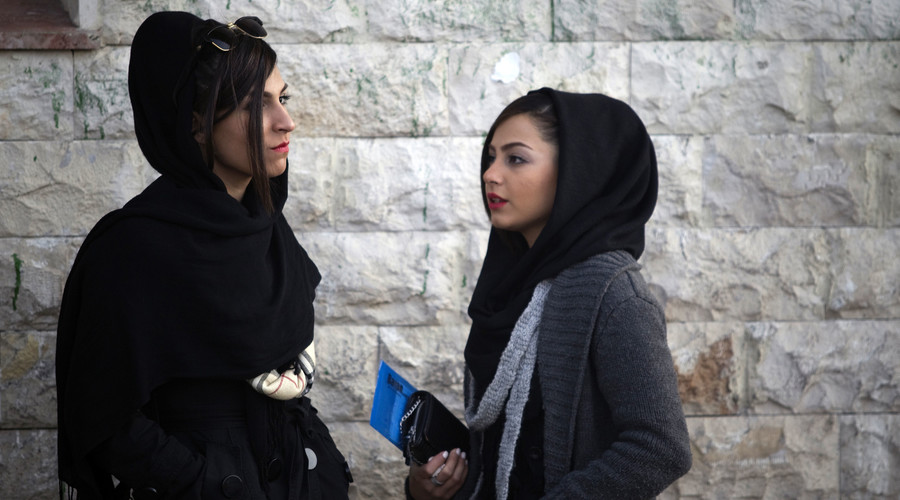
The state-run daily, Seday-e Edalat, reported yesterday that 13 women were flogged in the city of Qom. Among them were three pairs of sisters. They were each sentenced to 180 lashes.

Flogging women for “prostitution” and “drinking alcohol” and issuing these kinds of barbaric sentences against women come from mullahs who themselves run prostitution and drug trafficking rings and are involved in smuggling women and girls to neighboring countries. The Iranian Resistance has revealed the names of some of these mullahs.

The Women’s Committee of the National Council of Resistance of Iran calls on international human rights and women’s rights organizations to urge the United Nations High Commissioner for Human Rights and the coming session of the General Assembly of the United Nations and other relevant international forums and organizations to take  effective measures and adopt resolutions condemning evil crimes of the mullahs against Iranian women.

Women’s Committee of the National Council of Resistance of Iran.

Legal boost for Dutch abortion ship

The Dutch Government has given the go-ahead to the Women on Waves group to offer the abortion pill to pregnant women on board their boat, Aurora. The Aurora is due to set sail again for countries where abortion is forbidden.

It will dock in international waters and members of Women on Waves will offer advice and treatment to women who come on board.

The group sparked a storm of protest from pro-life activists last year when they docked off the coast of Ireland, where the practice of abortion is illegal. The first stop for the Aurora – sometimes known as the Sea of Change – will probably be back to Ireland, from where 6,000 women travel to England for abortions each year. The Dutch Health Minister, Els Borst, said the decision to allow Women on Waves to give out the abortion pill was in line with government policy regarding the sexual independence of women. Women on Waves are allowed to offer the drug to terminate pregnancies of up to six weeks, provided a gynaecologist is present. However the group say they will appeal against the decision in the hope of being able to offer clinical abortions to women who are up to three months pregnant. The World Health Organization estimates that 100,000 women die each year from illegal back-street abortions.

UPMRC International Voluntary Work Camp in Palestine

UPMRC International Voluntary Work Camp in Palestine

During the current Intifada, the Israeli government’s policies have led to devastation and destruction in all areas of Palestinian life. From September 29, 2000- June 12, 2002, 1,588 Palestinians have been killed, and more than 20,000 injured. In conjunction with its excessive use of force against civilians, the Israeli government has imposed various collective punishment measures that have served to choke the physical, economic, social and political life of Palestinians. These measures include invasions, curfews, strict internal and external closure and the destruction of houses, agriculture and industry. The current crisis emphasizes the need for international support of and solidarity with the Palestinian people. There is much that international volunteers can do to help Palestine. Thus, the Union of Palestinian Medical Relief Committees is sponsoring a weeklong summer work camp for international and local volunteers.

The purpose of the camp is to improve community resources in Palestine and provide an opportunity for internationals to show solidarity with the Palestinian people, while learning about and experiencing life in Palestine under occupation. UPMRC is a grassroots, community-based Palestinian health organization. It is non-profit, voluntary, and one of the largest health NGOs in Palestine. UPMRC’s national health programs emphasize prevention, education, community participation, and empowerment of the Palestinian people.
We are seeking 200 internationals interested in:

a.. Showing solidarity with Palestinians

b.. Participating in voluntary projects that support public institutions in different Palestinian cities, villages and refugee camps

c.. Supporting the Palestinian cause and participating in advocacy for Palestinian rights


The work camp will also have 300 local Palestinian youth volunteers,
as well as 150 Palestinian youth living in Israel.
Through this camp, you will:
a.. Work in solidarity with the Palestinian People
b.. Participate in the restoration of public institutions, schools
and other buildings destroyed during recent Israeli military incursions
c.. Participate in voluntary work in refugee camps such as clearing
rubble and aiding in reconstruction
d.. Help provide access to villages and cities isolated by the
Israeli closure
e.. Meet and work closely with Palestinian youth
f.. At the end of your visit, we hope that you will be able to
educate people in your communities about Palestine and promote international solidarity for the Palestinian people

Location
The camp will primarily be based in El Bireh, which is a suburb of
Ramallah, and volunteers will work both in Ramallah and El Bireh. There will also be options to volunteer for short periods in Nablus and Jenin, as well as in rural areas isolated by Israeli closure.

Duration: August 3-10, 2002

Activities:
Voluntary work
a.. Reconstruction, repair and maintenance in public schools and
public parks, including mural painting, gardening and light construction
b.. Voluntary days in Jenin Refugee camp and Nablus Old City (two
of the areas hit the hardest during the latest Israeli invasion) clearing
rubble and helping to rebuild
Cultural and informative activities
a.. Documentaries
b.. Lectures on political situation
c.. Field visits
d.. Social activities

Entertainment
a.. Musical evenings
b.. Films
c.. Sports
d.. Photo/art exhibit
Transportation:
Participants should fly into Ben Gurion Airport in Tel Aviv.
Expenses:
Work camp fees: $50
Approximate Airfare: US: $800-$1,200
Europe: $500-$800
Requirements:
Participants must be at least 18 years old.

Please fill out the Registration form “Summer Work Camp” and submit it by July 20.

If you have any questions, please contact Ghadeer

More information on UPMRC

For more information on Palestine, please visit

Defending freedom of health services research

Defending independence and freedom of health services research

The work of Prof Allyson Pollock and her team is well known internationally. Her scientifically sound and politically sharp work especially analysing and unmasking the privatisation tactics used by the british government (Private Finance Initiative & Public Private Partnership) produced an unbelievable assault against her by the Commons Health Select Committee.

A debate is ongoing these days with written reactions against the Commons Health Select Committee’s assault on Prof Allyson Pollock’s credibility and on the integrity of her research and findings.

Baleares Declaration for the Defense of Health Care (english / spanish)

THE BALEARES DECLARATION FOR THE DEFENSE OF HEALTH CARE

The participants of XIV Meeting on Health Care Delivery Systems held in Palma de Mallorca (Spain) from the 21 to 24 of May 2002 declare:

Health is a fundamental human right.

  1. Health care is a right that must be established in the constitutions and laws of every country. Necessary preconditions for health are peace and health promoting socioeconomic and environmental conditions. Health care should be organized to guarantee democratic, universal access, quality, equity and efficiency.
  2. Health care systems around the world are threatened pro-market and pro-corporate policies that reduce public accountability and increase the private delivery of public services. The process of globalization spreads the view that health care is a commodity to be organized and controlled by market forces, a view encouraged at an international level by the World Trade Organization, the World Bank and the International Monetary Fund. Their policy is to reduce or eliminate the role of government as a provider of basic health and social services. Their aim is to increase the profits of multinational corporations, such as insurance companies, HMOs, pharmaceutical firms, health care management businesses, and biotechnology corporations, at the expense of patient care. Commercialization of health care reduces equity and access to care, especially for the poor, the sick and the aged.
  3. The model of health care as a business paradoxically increases the costs of health care as money is shifted from the care of patients to the business of medicine, which requires increasing funds for administration, marketing, and profits.
  4. All countries must guarantee health care with sufficient public funding to provide care to all residents without discrimination by race, class, income, employment, gender, age, ethnicity, geography, disease, or costs of illness.
  5. Public health, disease prevention, medical treatment, rehabilitation and relief of suffering are essential health services, and must be distributed equitably in relation to the health and medical needs of the population. Public funding safeguards equitable distribution and enhances solidarity.
  6. Aging populations, work and traffic accidents, violence and wars, environmental pollution, poor nutritition, societally-induced ills, the deterioration of living conditions, infectious diseases, hunger, and poverty are producing increases in the numbers of patients with chronic illnesses and long term care needs. Equitable, compassionate and ethical health systems must include the care of vulnerable individuals, communities and populations.
  7. Globalization and corporatization punish developing countries through destruction of natural resources and exploitation of human labor. The levels of poverty and malnutrition, among the majority persons in the world, are unacceptable when there are enough resources to feed and care for the entire world. The weakest members of these global communities � women and children � are the most vulnerable targets of discrimination in market-based and male-dominated health systems. Vulnerable individuals suffer infectious diseases, chronic illnesses and other medical conditions that could be prevented by vaccination and by universal access to a free health care system. Instead of assisting women, children and other individuals with medical care, these countries face the paradox of losing any of their economic gains to support the rising costs of health care needs that are often induced by the very countries which should support them.
  8. The dismantling and privatization of national health systems is promoted through hidden and undemocratic strategies, such as �neutral� policies like separation of the financing and provision of health care. Such strategies transform health care into a private business, whose goal is to give private control over public needs. This strategy, promoted as a �public-private partnership,� results inherently in inequality in health care services. This is particularly evident in Latin America, where governments weakened by structural adjustment policies are unable to even minimally regulate the corporate involvement and control of health care.
  9. The strategy of the World Health Organization to achieve �health for all based on primary health care, health promotion and the participation of the population� is being obstructed by the interests of the health care-industrial complex, which includes the multinational pharmaceutical and biotechnology industries, large financial groups, banks and insurance companies. These groups promote treatment-centered systems, as opposed to preventive care, with intensive use of high technology, producing a situation in which, to the extent that health care is provided, individuals only receive care that is profitable to provide.
  10. The World Trade Organization, by enforcing patent policies designed to maximize the profits of the pharmaceutical industry, deprives millions of people of affordable drugs and the means to meet rising and unconscionable drug costs. Limits on the production of generics have been expanded at the expense of the health of largely abandoned patients, including patients in both poor and wealthy countries.

IN ORDER TO ADDRESS THE ABOVE SITUATIONS, WE PROPOSE:

1. The end to all war of all types, and the production and sale of weapons of destruction.
2. Ongoing research and policy development to:
a. Investigation, analysis and disclosure of practices and policies that undercut the achievement of the above principles.
b. Adoption of reforms in national health and social services that reaffirm the need for public accountability and public control of health and social services, such as health care, education, housing, food, jobs, etc
c. Organization and coordination of the struggle of unions and citizen groups against the privatization and destruction of national health systems.
d. Promotion, as proposed in Porto Alegre, of the development of a massive public-political campaign and outreach to grassroots organizations, NGOs, governments, and national and international organizations, such as the World Health Organization.
3. Creation of a Coordinating Committee for the Defense of National Health Care that is open to all grassroots and professional organizations, the goals of which are the development, coordination and support for an international movement against market-based health care.

***

Los asistentes a las XIV Jornadas de debate sobre Sanidad pública llevadas a cabo en Palma de Mallorca durante los días 21 a 24 de mayo de 2002 quieren poner de manifiesto los siguientes puntos:

  1. La Salud es un derecho fundamental de la persona que debe estar contemplado en las constituciones y leyes de todos los Estados y naciones. Hacerlo efectivo exige, en primer lugar, que impere la paz, pero también necesita de unas condiciones socioeconómicas y medioambientales saludables y dignas y de unos sistemas sanitarios públicos capaces de garantizar la asistencia universal, equitativa, solidaria, constante, eficaz y participativa.
  2. La sanidad pública se encuentra amenazada en todo el mundo por las políticas neoliberales que promueven el desmantelamiento y privatización de los servicios públicos. El proceso de globalización y mundialización de la economía capitalista pretende convertir la salud en una mercancía más sometida a las leyes de la oferta y demanda. Esta política, impulsada internacionalmente por la Organización Mundial del Comercio, el Banco Mundial y el Fondo Monetario Internacional, pretende acabar con el papel del Estado como garante de los servicios sociales básicos. La finalidad de ese intento de retirar la responsabilidad de la asistencia sanitaria de los sistemas de salud públicos no es otra que la de conseguir que los grandes grupos financieros, las compañías aseguradoras, las empresas multinacionales de servicios, los laboratorios farmacéuticos y la industria de electromedicina incrementen sus enormes beneficios. Como consecuencia directa, la mercantilización de la sanidad incrementa las desigualdades sanitarias, deja sin asistencia a los sectores que más la precisan y aumenta, paradójicamente, los gastos sanitarios.
  3. Los Estados deben garantizar la atención de la salud a todas sus ciudadanos, mujeres y hombres, con unos presupuestos publicos suficientes, en condiciones de igualdad y sin discriminaciones por razones de etnia, género, edad, situación económica o social, residencia o procedencia.
  4. La promoción, prevención y recuperación de la salud precisan de un Sistema Sanitario Público, universal y gratuito, dotado de recursos propios que estén distribuidos equitativamente en función de las necesidades de salud de la población. Un sistema sanitario público así debe contar con gestión pública directa, control social y financiación mediante fondos públicos como forma mejor, si no única, de garantizar su carácter redistributivo y solidario a escala nacional e internacional.
  5. En los países desarrollados el envejecimiento de la población, los accidentes laborales y de tráfico, la contaminación ambiental, el aumento del paro y la precariedad laboral están produciendo un incremento en las enfermedades crónicas, en las discapacidades y en las minusvalías. En consecuencia, las personas afectadas precisan de asistencia continuada en sus domicilios particulares o en los centros sanitarios. La atención a estas personas debe realizarse desde los sistemas sanitarios públicos con el apoyo de los sistemas sociales públicos.
  6. La globalización neoliberal ha castigado en mayor medida a los países en desarrollo que se tienen que enfrentar a unos recursos naturales sumamente deteriorados por el efecto de las guerras y la violencia. Los niveles de pobreza y malnutrición de esos países son inaceptables cuando el mundo desarrollado produce bienes más que suficientes para alimentar a toda la humanidad. Por añadidura, los miembros más débiles de los países en vías de desarrollo, las mujeres y los niños de uno u otro sexo, son a menudo víctimas de las discriminaciones debidas a los sistemas de patriarcado y, así, sufren en gran medida enfermedades infecciosas y crónicas que serían muchas de ellas prevenibles por medio de la vacunación y la atención sanitaria si se contase con servicios adecuados de salud universales, gratuitos y accesibles. Pero con gran frecuencia las inversiones en estos países no han ido en la dirección de instaurar Sistemas Sanitarios Públicos, por lo que se da la paradoja de que son los más pobres los que tienen que contribuir con sus recursos propios cuando necesitan de la atención sanitaria.
  7. El desmantelamiento y privatización de los sistemas sanitarios públicos están siendo aplicados mediante una estrategia que se disfraza de propuestas aparentemente neutrales, como son, entre otras, las de separar la financiación de la provisión de la asistencia, transformar los centros sanitarios en empresas, diversificar el aseguramiento o aumentar la participación del sector privado. La finalidad de todas ellas es el fragmentar y privatizar las partes más rentables de los sistemas sanitarios públicos. Esta estrategia, conocida como Mix Público/ Privado, ha demostrado en todos los países en que ha tenido lugar un aumento de la desigualdad, pero más aún en los de Latinoamérica, continente en el que los Estados Nacionales, muy debilitados por el modelo neoliberal, son incapaces de regular mínimamente el Mix Público/ Privado.
  8. La estrategia de la Organización Mundial de la Salud de alcanzar la salud para todos, basada en la potenciación de la Atención Primaria, la Promoción de Salud y la Participación de la Población, está siendo arrinconada por los intereses de la multinacionales farmacéuticas y de la tecnología médica, de los grupos financieros y de las compañías aseguradoras cuyos intereses requieren que se opere en sistemas basados en el hospitalocentrismo y en el uso intensivo de la tecnología sanitaria. Por añadidura, en América Latina la sanidad pública cubre sólo un mínimo de los costos de las acciones médicas de todo tipo, cargando a los pacientes con unas deudas que no pueden pagar.
  9. La Organización Mundial del Comercio pretende con su política de patentes multiplicar sus enormes beneficios, dejando desatendidos a millones de personas de países pobres que no pueden pagar los altos precios de los cada vez más costosos productos farmacéuticos. Se prolongan los períodos de prohibición de la producción y comercialización de los medicamentos genéricos a costa de la salud de poblaciones cada vez más marginadas.

Para hacer frente a esta situación, consideramos necesario:

En primer lugar, poner fin a las guerras que asolan el Planeta. Seguir el proceso de debate y de actuaciones a escala internacional para:

  • Desenmascarar las políticas neoliberales, y su repercusión sobre la salud y la calidad de vida de las poblaciones.
  • Realizar propuestas de reforma de los sistema sanitarios y sociales públicos que mejoren su nivel de eficacia, eficiencia y calidad en lugar de su destrucción
  • Organizar y coordinar los esfuerzos y la lucha de profesionales y ciudadanos contra las políticas privatizadoras y de destrucción de los sistemas sanitarios públicos

En segundo lugar, creemos necesario seguir en la línea de las propuestas del Foro Social Mundial de Porto Alegre en Defensa de la salud de los Pueblos para promover de manera democrática, colectiva y participativa:

  • Una Agenda Política en Defensa de la Salud Pública que sea presentada las organizaciones sociales, las Organizaciones no gubernamentales, los gobiernos, los parlamentos y las organizaciones internacionales como la Organización Mundial de la Salud y la Organización Panamericana de la Salud.
  • Un Observatorio Internacional destinado a estudiar, vigilar y combatir las políticas y actuaciones contra los sistemas sanitarios públicos.

En tercer lugar, sugerimos constituir un Organismo Coordinador en Defensa de la Sanidad Pública de naturaleza estable, democrática, abierta y participativa. Un organismo así estaría abierto a todas las organizaciones sociales y profesionales y destinado a coordinar esfuerzos logrando alianzas a nivel mundial en contra de la versión neoliberal de la globalización que pretende convertir la salud en una mercancía.

Palma de Mallorca, Mayo de 2002

Health care under globalisation, by H.U.Deppe

H.U. Deppe

Re-thinking the basic conditions of health care under the impact of globalisation
addressed to the 12th IAHP and XIV FADSP Conference, Palma de MAllorca 23 May 2002

1. Globalisation is an amorphus concept. The process of capital accumulation got a relevant push by the collapse of the socialist states and the development of the productive forces, triggered off by the micro-electronic technology. Public property becomes more and more privatised, market and competition shall self-regulate more social relations and the thinking in categories of business management penetrates and subsumes all social niches. That concerns too health care, a social sector which is controled by the state in the European welfare states. In this context we speek from a process of economisation.

Health care systems are not isolated social constructions. They are rooted deeply in the structure, culture and history of their societies. They are the result of social and political struggles. And they are a pre-condition for social peace in contradictionary societies. In opposite to the increasing globalisation of the capital health care systems are strongly connected with the national states.

On the backgrund of such developments it makes sense to re-think the fundamental principles of the social dealing with sickness and health.

2. Health or sickness as a whole cannot get the character of a commodity. Worldwide we cannot see a health care system which is regulated only by the market. That depends on serveral special items:

  • Health is an existential good. It is a use value, which is in our societies collective and public � similar like the air we breath, drinking water, education or trafic and juridical security.
  • It is not possible to decide being without sickness � like with commodities for consumtion.
  • The patient do not know when and why he will become sick, by which sickness he will suffer in the future. Sickness is an event which cannot be regulated individually. It is a general life risk.
  • The demand of a patient for medical aid is primarily not specific. At first the competence of an expert defines and specifies it. There is a relevant difference between the competence and information of a physician and a patient. And the physician has a big discretionary power for diagnostic and therapeutical decisions.
  • Over this the patient is in a position of unsecurity, weakness, dependency, need in combination with anxiety and shame.

This short description of the relation between market and patient shows that social protection is necessary. The rules of supply and demand are in this field inadequat. Therefore the health care system is an exemple for the theory of market failure. The distributing forces of the market are insufficient here. The market is a blind power without orientation. And the social aims must be formulated by the state, the democratic community.

3. Over this we have to differentiate inside the economy between a rationality of the business management and a rationality which is orientated to the national economy. Problems and questions which are interesting for a single enterprise must not support the economy for the whole. Not seldom these two dimensions contradict each other. We know this especially from environmental protection or more obviously from the atomic industry. The expansion of the business rationality is not seldom an enormous wasting of social ressources. The social costs can be neglected until the society or the state intervenes under national economic and social aspects. This phenomenon we have too in health care. The transfere of costs from the outpatient to the hospital sector or vice versa can be a financial advantage for the prevailing institution. But under a general perspective it is more expensive. And under a microeconomic view � under the rationality of business management – ineffective or even dangerous health services can make the same profit like effective and useful one.

4. The patient-physician- relationship (or better: patient-healthworker-relationship), the basic relationship of medical care, is not in the public sphere of the bourgeois society. To speek about sickness � its causes, its special symptoms or its unusual care � sometimes is even not possible in the family or a partnership. There are the phenomenons of shame and fault. Speeking about sickness and looking for help is in the intimacy, the protected part of the private sphere. And the characteristics of the intimate sphere contradict the conditions of the market constitutively.

The patient-physician-relationship is structural asymmetric. The unequal division of knowledge and instrumental abilities, the one dimensional professional and social competence until the application of sanctions provide the social position of a physician with power. And how this professional power is used, depends considerably on external impacts. In this relation it is important to know how the professional power can influence the personal income of physicians, what are the criterions for the transfers from one to another medical institution, what are the criterions for applications or prescriptions and what are the spoken and unspoken guidelines for indications.

5. The question is: Why physicians are able to be so fexible? A relevant cause therefore seems to be obviously the scientific character of the applied or practical medicine and their necessary orientation to the so-called �single case� of a patient. And the single or special cases of the same sickness can be very different. Another cause is the obligation for practice. Often we have in medical practice a demand for immediate help. Therefore we have a big space of decision, a discretionary power, in medical practice. It follows sometimes the parole �anything goes�. This favours a different � occasionally contradicitionary � behaviour: It can be done to much � or it can be done not enough. We speek about overuse and underuse. We know exemples where we have both in one situation. It determinates not only the clinical indication but also different diagnostic methods of medical interventions.

This person-orientated, unsecure, sensitive and complex field is susceptible to external impacts. Money, competition, juridical security, professional carreers or deep rooted anxiety to loose the workingplace have a light game to influence clinical decisions � consciously or unconsciously. The neoliberal economic pressure with its instruments of market, competition and profit increased the struggle for market shares. The market produces winners and loosers. And the loosers are the economically weakest. At this time in our countries many physicians and health workers see in the relation between the pressure of the market and individual health care a constitutive contradiction. In general until now the utilitarist modell of cost-benefit thinking has a low acceptance. The power of definiton – what means “medical necessary” – is assigned to the medical profession. But we can registrate slow and calm changes. External impacts are penetrating medical decisions and selections. In a research study made in Germany we can read: �In the background of clinical decisions more and more indicators like age, privat or public insured, the profession, education and social status of a patient become a criterion. But with the words of an interviewt physician: Nobody would say this publicly. None of these criterions is legitimised by a moral codex, by law or by medical norms.� I think this is not a new knowledge � but the situation is increasing. All of us, who are working in medical institutions, can confirm this from their own experience.

The discretionary power of the medical profession, its space of decision, and that what we call �medical necessity� build the core of the discussion about unnecessary operations, unnecessary cardiac catheterization and PTCAs, the prescription of ineffective drugs or avoidable stays in hospitals. Meanwhile the problem is recognised: Guidelines, proofed standards and evidence based medicine shall replace or complete the pragmatical medical experience by scientific controled research results, which can be generalised.

6. On the background of these soft character of the medical science the medical institutions are confronted with the hard consequences of neoliberal economic modell. The expansion of market, competition and profit in health care will change the patient-physician-relationship fundamentally. The relation which is actually still based on confidence will change to a commercial relationship which is based on a contract. And to make an official contract is not even the result of good confidence, but more the result of misstrust. A contract shall controle a risky relation between more or less strange people with common interests. Confidence implicates a close relation which makes the patient possible to give intimate informations, which are essential for medical care. Therefore this relation is protected by the medical secrecy. The patient-physician-relationship is based on an asymmetric relation. From the expert is expected that he cares and cures a layman to the best of his (the experts) knowledge and belief. The layman can count on the competence of the expert, he can expect his good intentions, he can believe his statements and he can trust him. Confidence assumes responsible acting. Benefits which are offered on the basis of confidence are going in the direction of a credible promis. It is based on reliability and well-meaning.

On the orther hand let´s look at the meaning of contracts. They are a part of the system of laws. Contracts confirm common intentions with fixed mutual obligations of more or less strange persons. Especially the development of the market and the privat property determined the character of contracts. At the market equal propriators exchange their commodities for a negotiated price. � Of course the buyers and sellers are interested in their personal advantage!

The increasing commercialisation of the patient-physician-relationship demands from the physician more and more a special measurable service for a fixed price. This service becomes more and more the charakter of a commodity, which will be produced and distributed under the conditions of economic competition. The patient comes increasingly into the role of a customer or purchaser, with whom a seller of a commodity will earn money. And the best customer is normally one, with whom can be made the most money. Under such conditions patients perhaps will get the good service of a customer but not the necessary medical care of a sick human being. As much as the economic competition will increase, as much the demand for good purchasing power of the patient is asked. This provoces a merkantil incentive that more benefits will be done, which patients want instead of such, which they need. Patients as medical laymen define more and more what is to understand by medical quality. In the most cases it reduces the question of medical quality on the niveau of a short-term satisfaction. And satisfaction shall tie customers.

By the increasing commercialisation of health care even well informed patients will come into a difficult and confused situation. What mean medical recommendations and informations during the treatment � like:
This is medically not necessary. The risk of this intervention is in your case to high. Or: This therapeutical intervention is in your case not effective. Means this � it is not compatible with the knowledge and experience of medicine, or means it only, it is too expensive. How do the patient know, why the doctor gives him this recommmendation? Is it indeed the best therapy, which is necessary for his sickness? Will alternative treatments not be told to him? Do from such recommendations or prescriptions depend the carreer and the workingplace of the physician or even the creditworthyness of a private hospital, which determin the share price and the dividend. Or: Did the physician just got the information that he is beyond his budget? Here we can suspect the limits of the rationality of business management in health care. In such a case the rationality of business mangement is perhaps profitable but it contradicts deeply the social contract of our civilisation. The pressure of economic competition and capital accumulation in health care leads to a cultural change in medicine.

The increasing commercialisation seems to be not only a problem of practical health care but also a problem of medical researches and experiments with men. Many researchers are loosing the necessary care and responsiblitiy in their researches. The patients´ rights are not enough protected. The cause therefore is to see in the advanced commercialisation of medical researches. Results of researches must be achieved in short times. But exact and fair enlightment of the people or patients need time. Over this many scientists take part commercially at the products of their researches in clinical studies. And a German pharmacologist formulated: The quality of health care is threatened by an increasing uncritical submissivness of researchers under the interests of industrial sponsors. This is the consequence of the retreat of the state from the promotion of clinical researches.

7. What is my message? I am deeply convinced that we have relevant sectors in our societies which should not be privatised and commercialised, because it will counteract and destroy the humane and social values of our societies. We have to respect and to keep on areas in our societies, in which the communication and co-operation is de-commodified, where services have not the character of a commodity. Such sectors must be socially defined and protected. Such sectors are dealing with vulnerable social groups, vulnerable social aims like solidarity and equity or vulnerable structures of communication like the physician-patient-relationship. They build the core of our European welfare model. And I think, it is worthful and necessary to struggle for its efficient public and non-profit structure.

Of course this is not easy! But I think there is hope. The popular masses in Europe with their traditional experience of welfare resisted the naked neoliberalism and elected some years ago parties of the so-called “third way”. But meanwhile they had to recognice that the parties of the third way are following too the mainstream of neoliberalism in different clothes – and that they can take influence only by pressure. On this background we have to see the worldwide emergence of new social mass-movements from Goeteborg over Genova to Porto Allegre. In Germany we have in September federal elections. The election campagne has started already. One point – beside the main point of unemployment – is the health reform. Especially the main trade unions resist its neoliberal change. And they are since some weeks in a direct alliance with the new mass-movement of ATTAC coming from France- which is very popular among young German people. And the main political parole of ATTAC in Germany is at this time : Health is no commodity! That let´s hope!

Hans-Ulrich Deppe, M.D.
Professor for Medical Sociology and Social Medicine
Univeristätsklinikum der J.W. Goethe-University
Theodor-Stern-Kai 7
60590 Frankfurt

The NHS from Thatcher to Blair, by Peter Fisher

Peter Fisher, NHS Consultants Association

The NHS from Thatcher to Blair

Addressed to the 12th IAHP and XIV FADSP Conference, Palma de MAllorca 23 May 2002

In looking at how the NHS has changed over this period it is possible to see a pattern.
Sometimes quickly, sometimes more slowly and with occasional steps in the opposite direction, we have been moving away from the concept of a publicly owned, publicly accountable service.

No two countries have identical health care systems and the terminology, not to mention language difficulties, can make comparisons difficult but it appears to us that many other countries are facing similar problems and having the same sort of debates about how to tackle them.

Our experience in the UK may therefore have some useful lessons and warnings for others as well as indicating ways in which we can work together to promote the things we believe in.

Gradually, after its formation in 1948, the NHS ran into difficulties as the funding did not keep pace with the rising costs and public expectations. The proportion of our GDP spent on health fell below that of other developed countries. In the past 25 years successive governments, instead of tackling the basic problem, have tried to solve it by increasingly frequent organisational change.

In the pre-Thatcher era these changes, although disruptive, mainly involved alterations in the levels of management and in the style of decision making.
The basic structure was maintained. In brief, most elements were the responsibility of Health Authorities, whose job it to provide services.

· The main functional unit was the District, covering up to 500.000 people, with at least one large general hospital.
· District Health Authorities provided hospitals and other services, employed their staff and most of those working in the community apart from doctors.
· The medical part of Primary Care was separate, general medical practitioners (GPs) were independent contractors rather than employees. They contracted their services to a separate Authority and employed their own staff.
· The Health Authorities although not directly elected had staff representatives and locally elected councillors so there was some limited degree of democracy.

Margaret Thatcher became Prime Minister in 1979.

One of the first acts of her government was to agree with the BMA a change in the contracts for consultants allowing all to do some private practice. Before this, consultants had the right to choose a contract to work only for the NHS. About 50% did this and so had no interest in the private sector. The others were paid about 18% less but could do private work, with no real limit. Although this change in 1980 caused little interest outside the profession, it had a profound effect in encouraging the development of the private sector and ensuring that it mattered to most consultants, whereas previously to half of them it was irrelevant.

Her government showed recurrent interest in health insurance but this was played down for electoral reasons. Tax concessions for private insurance were introduced, there were frequent rises in prescription charge and the contracting out of support services to the private sector was enforced.

The major change didn�t come until after her 3rd election victory in 1987, possibly because she was heavily involved in other activities like the Falklands War and anti Trades Union legislation.

In 1988 there was a serious problem of capacity in the hospital service, involving a lack of paediatric intensive care beds. This was politically embarrassing. The government response was to appoint a small group of people, without consulting the health professions (or anybody else) to produce a radical solution. The result � in early 1989 – was a report entitled �Working for Patients� which proposed what became known as the Internal Market.

Its big idea was the creation of a market within the NHS so that some parts of the organisation would become providers selling their services to the others, the purchasers.
This separation of purchaser from provider – the Purchaser Provider split – was the key feature

· Providers were to be the hospitals, who were encouraged to become independent Trusts.
· Purchasers were to be the Health Authorities but also increasingly those general practitioners who wished could become fundholders and have their own budgets for purchasing from the hospitals, for non emergency care.

Despite widespread opposition from the other political parties, professional associations, trade unions and the general public, it was pushed through Parliament in 1990 by the large Conservative majority and became law.

Hospitals becoming Trusts or GPs taking up fundholding were meant to be entirely voluntary decisions but particularly in relation to the hospitals the system for making the decision was very undemocratic � no official ballots of staff or of the public were allowed and the many unofficial ones were ignored. Public money was made available to campaign for trust status, those wishing to campaign against had to find funds from their own pockets.

Opposition continued both nationally against the whole concept and locally against the local hospital becoming a Trust.

Some GPs were enthusiastic about fundholding �as independent contractors they were more used to seeing their work as a business. Government plans also relied upon the perception, not without justification. that the hospital sector and those working in it were too powerful and that fundholding gave the opportunity to redress the balance.

This unfortunately did little to encourage a feeling of working together.

· The whole NHS became fragmented, with each hospital in competition with the others.
· Primary and Secondary Care were put in an adversarial position.
· The ambulance services were no longer provided by the health authorities and each became a separate Trust
· Like all systems which employ market forces in health care it proved, because of its complexity, to be very expensive, doubling the administrative costs from the traditionally low level of 6% to 12%.
· The modest element of democracy in the Health Authorities was removed by taking away members representing staff and local councils and replacing them with government appointees, mainly with a business background
· Each Trust had its own Board of Directors, not elected by or accountable to its local population and so resembled a private sector company.

Those who continued to campaign against the market system were optimistic that the Conservatives would be defeated in the General Election of 1992 and had some success in delaying decisions on Trust status until after then, the Labour Party having pledged to abolish the market.

However, although Mrs Thatcher herself had been forced out of office by her colleagues, the Conservatives held on and were elected for another 5 years.

This was a devastating blow and meant that the market would inevitably develop further.
By the time of the next election in 1997 almost all hospitals had become Trusts and about 50% of GPs were fundholders.

But neither health service workers nor the general public had accepted the market system and its unpopularity played a significant part in the final defeat of the Conservatives.

In 1997 a Labour government elected with Tony Blair as Prime Minister

There was great relief at this result with the expectation that the market system would be abolished as soon as possible but it did not turn out quite like that.

Towards the end of 1997 the government published �The New NHS� setting out its plans.

  • Although it was claimed that the market was being abolished the key element � the purchaser/provider split – was retained.
  • The hospital Trusts were allowed to continue.
  • The more aggressively commercial language was changed so that purchasing became commissioning. Contracts became service agreements and were for longer periods so that there was greater stability
  • No further applications for GP fundholding were accepted. Fundholding itself was then abolished ending the distinction between two groups of GPs but in its place all were to be formed into Primary Care Groups � around 50 GPs in each. These would move, at whatever pace they wished, through 4 stages of increasing independence and financial powers until in the 4th stage they became fully independent Primary Care Trusts with Boards of Directors like the hospital Trusts.
  • Health Authorities were to lose much of their role and be reduced in number.
  • There were some good things, including a commission to monitor standards of care and another to assess the cost effectiveness of new drugs and procedures before they were authorised for general use.

Why was so much of the market allowed to continue?

Possible reasons

  • By 1997 it had become too entrenched.
  • To avoid another major upheaval – staff had made it clear that they were fed up with administrative changes.
  • To avoid trouble from fundholders
  • A genuine belief in commercial methods by �New Labour�, particularly Tony Blair. This has become more apparent since then.

There were nevertheless high expectations from public and staff that things were going to get better quickly, which was gradually replaced by disappointment, anger and finally despair when they didn�t.

This was to a large extent due to the government being bound by its pre-election pledge to stick with the Conservative spending plans and not raise income tax levels.

Things started to improve in 2000 with the publication of the NHS Plan

Large increases in spending were promised for the next 4 years but the money was conditional on health service staff accepting �change�, not at that stage defined but usually referred to as �modernisation�. This is a clever word because it allows any one who raises doubts about any aspect to be dismissed as a dinosaur.

Together with the extra money, significant increases in hospital and primary care staff were promised, although it is generally agreed that the figure for primary care was inadequate.

Just before the 2001 election Tony Blair went further and announced an intention to increase health spending until it reached the European average but still fenced himself in by making the pledge not to raise basic or higher rate income tax.

Where are we now?

I have omitted many things. There has been a plethora of new initiatives, many overtaken by the next one. One of the problems of this government is its hyperactivity and inability to allow one new scheme to settle down and produce some results before the next, sometimes contradictory, one is introduced.

But we have at last

  • recognition of the degree of underfunding
  • recognition – only since April last year – of under capacity
  • recognition of understaffing ( doctors /1000population UK 1.6 EU average 3.1 )

It was a big political mistake not to have acknowledged these deficits when first elected in 1997, because denying them until recently has led to a severe fall in morale and difficulty in the recruitment and retention of staff, even when there is money to pay them.

It is obvious that with the length of time to train additional staff there will be a gap of several years before we can expect to see the full benefits of proper funding

Our great problem now is how to bridge the gap
As you will have seen we are trying to import trained staff, nurses, doctors etc from anywhere we can get them and exporting patients not only to Europe but to as far away as South Africa. Thus we are globalising our health care.

The importance of bridging this gap for the next few years is being used as a justification for the privatisation agenda,

Accusations of privatisation are common in the politics of health and there is much argument about its precise definition. In rejecting such accusations, politicians and others are sometimes able to argue on a technicality that any particular move does not fulfil the definition because, for instance, the service is still free at the point of use.

It is perhaps more useful therefore to ask whether any particular change, either by design or by accident, makes eventual undoubted privatisation nearer, easier or more likely.

The answer then would usually have to be YES

There are 3 main components of the privatisation agenda

1. The Concordat – an agreement signed between the Secretary of State for Health and the private health sector to promote joint working and in particular the use of spare private capacity for the treatment of NHS patients. At present, this is largely for elective surgery.
It is not a system of which we in NHSCA approve, as it uses public money to boost the private sector but there are also practical objections and questions which need to be asked.

  • If NHS staff are doing the work on what basis will they be paid?
  • Who does the after care as there are no junior doctors in the private sector?
  • If we transfer more elective work to the private sector, leaving the more difficult emergency work to the NHS, how will we stop nursing and other staff from transferring?
  • Will the private sector increase in size, providing an excuse for not increasing the capacity of the NHS?

None of these points has been satisfactorily answered.

Nevertheless, we in NHSCA acknowledge that something has to be done about the long waiting times for today�s patients and are prepared to accept the Concordat in the short term providing it is properly supervised and that it is only a temporary measure until the NHS has been built up and adequately staffed.
However although it was introduced as a means of filling the gap it is now clear that the government intends it to be permanent.

2. Private Management – Private management (or even ownership ) is being proposed for new elective surgery units and also for some existing NHS hospitals which are judged to be failing.

3. The Private Finance Initiative (PFI) The government is persisting with this method of financing building in the NHS and other public services despite repeated demonstrations of its costliness and other disadvantages in the long term.

Our concern is shared by many others, including the health unions and members of parliament. An all party parliamentary committee has just finished a detailed investigation of the role of the private sector in the NHS and published its report last week.

It takes the view, as we do, that we should concentrate on building up the NHS rather than relying long term on the private sector.

It takes a fairly neutral position on PFI but states that there is too little accurate information to judge whether it is cost effective or not.

The situation is further complicated by major changes taking place in Primary Care

When fundholding was replaced by the much larger Primary Care Groups it was stated that they could evolve into Trusts but at their own pace and by their own decisions. This has now been speeded up, so that on 1st April this year all became independent Trusts similar to those in the hospital service. They will have much more financial power than the former fundholders, being responsible for spending 50% of the health budget, rising later to 75%, by commissioning services from hospitals and elsewhere, either in the NHS or private sector.

Many in Primary Care feel that they are not ready for, or equipped for, this additional responsibility and quite a lot don’t want it anyway.

As an organisation of mainly hospital and public health doctors we need to tread carefully when discussing Primary Care. We are in favour of a more influential role for Primary Care but would prefer that it was through joint planning and negotiation rather than through this potentially expensive remnant of the market system.

Our strategy as an organisation now is

  • To maintain public confidence in our system until it has clearly improved.
  • To argue for more democratic control and accountability
  • To persuade the politicians to reduce the constant flow of government targets and initiatives. which are counterproductive.
  • To make the case for cost effective long term measures rather than expensive �quick fixes� aimed at producing results for the next election.

There are some positive signs

Following devolution to Scotland and Wales those countries have started to take more progressive decisions in some areas than has England. For example, Scotland has decided on more generous treatment for people needing long term care.
This puts pressure on the Westminster parliament to do the same

Chancellor Gordon Brown has firmly rejected alternatives to tax based funding for the NHS.

He had earlier commissioned an investigation by Derek Wanless, a banker, into the long term resource requirements of the NHS. A report has been produced stating that after examining various other options it was concluded that a tax based system remains the fairest and most efficient way of financing health care. This has infuriated the Conservatives.

They are now openly stating that they believe the NHS is finished. This is positive because it signals the re emergence of a clear Left Right divide in health policy which supporters of the public sector can rally round and an argument which we can win.

I wrote this last month anticipating I might need to update it.

A lot has happened, including two very significant events.

First the good news
The Budget was presented to Parliament on 17th April and was even more generous to the NHS than had been expected amounting to an annual rise of 7.4% above the rate of inflation for the next 5 years.
This would take us to 9.4% of GDP spent on health ie around EU average

This was a tremendous encouragement for all who support the NHS, its staff and the government�s own MPs who at last have something looking like socialism to cheer about.

But after the euphoria of budget day, some worries are emerging.

Firstly, the time factor is important � even if all goes according to plan it will be 2008 before we reach the EU average so we must resist any attempts to make premature judgements on success or failure. That does not fit easily with the political cycle which will necessitate a General Election no later than 2006, probably 2005.

Obviously it will all depend on Britain maintaining a successful economy but –
If these spendings levels are achieved, critics of tax based funding will no longer be able to argue as they do now that it is a system which will always be underfunded

On the other hand, if they are reached but have not produced results in terms of waiting times and other outcomes which are comparable with other European countries, it will be difficult to resist arguments that it is the system itself which is at fault.

We have hitherto been able to claim that it is unscientific to compare our outcomes because of the underfunding.

It is essential therefore that money is used effectively and not wasted in short term schemes to meet political deadlines.

Now the very much less good (or frankly bad) news.

The day after the budget Alan Milburn, Secretary of State for Health presented in Parliament his plans for using the extra resources called �Delivering the NHS Plan�

This starts off quite well with the setting up of an independent audit of the use of the money and this new body will take over the role of other organisations which is good because we tend to have a confusing number. But the fact that one which is to be taken over has only been in existence for a month does not promote confidence that we are seeing a well thought out plan.

After that it goes rapidly down downhill, making clear that there is to be much more use of PFI, and more reliance on the private sector

Patients will be given information on waiting times etc so that they can choose, instead of their local hospital another NHS hospital, one in the private sector or even one overseas � at public expense.

Although this may be of benefit to some individuals it damages the valuable concept of a hospital serving a defined community and being part of it.

Hospitals will be paid by case rather than through block contracts, favouring volume over quality.

Additional payments for elective surgery will risk concentrating attention on elective and episodic care, making same mistake as the market.

On downloading this document my first thought was that it was so close to the Thatcher market as to be indistinguishable. In one aspect it goes even further than Mrs T in inviting overseas for profit health care companies to establish themselves in UK �because our private sector is too small�

The more I consider all this the more concerned I get
This is not just my paranoia.

I was delighted to see that Charles Webster, official historian of the NHS, has just produced a second edition of his book �The National Health Service – a Political History� in which he states that Tony Blair�s engagement with the private sector has far exceeded that of the Thatcher administration.

Other independent commentators are also concerned that PFI and other privatisation measures risk using up much of the additional money.

Whereas the NHS survived the failure of Mrs Thatcher�s market, for the reasons stated earlier, if it is not adjudged a success in a few years time it could be finished.

That then is our dilemma, it has to succeed this time, but if it does so using the current policies it will be in a form unrecognisable to its founders.

We have to support the additional funding ( which is already being criticised by leaders of industry) whilst persuading the government that it risks not succeeding unless it changes its privatisation policies. It will require very careful planning.

We are holding a strategy meeting next month to start to address this.- it will not be easy.

It is a strange paradox that at a time when we are promised resources greater than ever before the future of the NHS is probably at greatest risk.

Mallorca Conference Programme 21-24 May 2002

“Globalising health in a global world. Defending health in a polarised world”

The XIIth Congress of the International Association of Health Policy and the XIV meeting on Public Health Care Delivery Systems

MAY 21-24 2002

Palma de Mallorca,
Aula Magna Pueblo Español, Spain

PROGRAMME

21 May 2002
16-19 hs : Inscriptions
19 hs.- Opening Ceremony

OPENING CEREMONY

President of Baleares
Cancellor of Health
President of IAHP
President of the Scientific Committee
President of ABDSP
President of ALAMES
President of FADSP

20 hs.- Reception at the Castillo de Bellver

22 May 2002
9 hs.- Openning Lecture :
Implications of the globalising treaties to the health care systems.

Lecturer : Dr Allyson Pollock, Prof University College London, UK

Coordinator : Hixinio Beiras (Spain)
Raporteur: Alicia Stolckiner (Argentina)

10,30 hs.- First theme: Alternatives for the globalisation of Health

Plenary: The development of the global economy and its impact on Health policies: the actual situation in the world.
H.U. Deppe (Germany)
David Sanders (South Africa)
Vicente Navarro (USA, Spain)
Francisco Rojas Ochoa (Cuba)
Coordinator: Alexis Benos (Greece)
Raporteur: Diego Reverte

12,30 hs.- Coffe-Break
13 hs.-
Ethics, technology and health policies:
Giovanni Berlinguer ( Italy)
Coordinator: Adolfo Marques
Raporteur: Arturo Varela Freijanes
14,30 hs.- Lunch
16,30 hs Plenary: The experience of popular movements in favor of Public Health Care
Hixinio Beiras FADSP
Linda Peeno
Chan Chee Khoom ( Malaysia)
Debora Tajer (ALAMES)
Moderador:Tudort Hart
Relatora:Celina Pereda

18 hs.- Lecture: Women´s movements in favor of Public Health Care

Lecturer: Carmen Martinez Aguayo
Coordinator: Francisca Mas, Head of the Institute of the Woman. Baleares
Relatora: Marta Carreras

20- 21 hs.-Poster session

23 May 2002

9 hs. Second Theme: Population displacements. Repercussions on health. Migration and Health

Plenary: Health Care of the immigrants
Josep Coll, Responsable Semfyc Area Inmigración (Spain)
Jochen Zenker (Germany)
Penda Mbow (Senegal)
Francisco Ramos Cabaleiro
Olveen Carrasquillo (USA-PNHP)
Coordiantorr:Alejandro Miguel Navajra Profesor UIB
Raporteur: Eva Cerdeiriña Outurai

12 hs.- Coffe- Break
12,30 hs.- Plenary:
Health in a polarised world
Carolina Tetelboin
Taisirj Jadalae
Catalina Eibenschutz/Eugenia Vilar (Mexico)Lidia Simbirtseva
Coordinator: Luis Carlos Silva ( Cuba)
Raporteur: Manuel Martin

14,30 hs.Lunch
16,30 hs. Gender and Health.
Plenary: Gender and health policies: a pathway towards equity
Carme Orte
Leticia Artiles, (Cuba)
Me Angeles Rodriguez
Coordinator:Mar Martin

18 hs. Experiences of Social medicine as part of govermental responsibilities
Maria Urbaneja, Minister of Health, Venezuela
Marisa Castro
Harmut Reiner, Land Brandenburg (Alemania)Ramon Socias
Coordinator: Ramon Espasa (España)
Raporteur: Roser Perez

19,30 hs.- Assemblies FADSP-IAHP

24 May 2002
09.00. Poster communications
Raporteur: Jaime Ochogavia Canoves

Second Theme:
The right to health of the european citizens. The necessicity of a common health policy

10,30 hs. Plenary: Perspectives ofthe right in Health in the European Union

Trude Arnesen (Norway)
Carlos Pagan
Pedro Marset (member of the European Parlement,Spain)
Matilde Valentin
Manuel Martin
Coordinator: Steve Iliffe (UK)
Raporteurr: Jose Joaquin O´Shanahan

12,30 hs.- Coffe-Break
13 hs. Lecture: NHS evolution in UK: from Thacher to Blair
Lecturer: Peter Fisher (GB)
Coordinator: Mª Angeles Leciñena, Consell de Eivissa – Formentera
Raporteur: Carlos Hernandez Lahoz

14,30 hs. Lunch

16,30 hs. Plenary: Womens’ Health in Europe
Lucia Mazarrasa
Diana Sojo
Immaculada Zambrano
Wendy Savage (NHSCA)
Coordinator:Marisa Fernández
Raporteur:Rosa Me Alberdi Castell

18,15 hs
Closing Lecture:Social and Health Care. Needs, Problems and Alternatives
Lecturer: Vicente Navarro
Coordinator:Ricard Terre
Raporteur: Antonio Vergara

19,15 Closing plenary
General Report of the Conference
Coordinators: Oscar Garcia Aboin & Juan Luis Ruiz-Gimenez, raporteurs of the Conference
Declaration of Baleares: Globalising Health. Action perspectives
Coordinator :Camilo Jose Cela Conde

Closing Ceremony
Hble Sra Joanna Barcelo, President of the Menorca Council
Hble Sra Pilar Costa, President of the Eivissa & Formentera Council
Hble Sra Josefina Sintes, Consejera de Bienestar Social, Mallorca Council
ll-lma Sra Margarita Najera, Alcaldesa de Calvia
IAHP new president
Sr Don Manuel Martin FADSP
Sra. |Dna Sara Codina, Presidente ABDSP

21,30 hs Closing dinner

Saluco – Boletín Especial: Red Cubana de Género y Salud Colectiva

SaluCo – Boletín Especial

Red Cubana de Género de Género y Salud Colectiva
Ateneo Juan César García, Sociedad Cubana de Salud Pública
Capítulo Cubano de la Red de Género y Salud Colectiva
de la Asociación Latinoamericana de Medicina Social (ALAMES)

Coordinadora: Leticia Artiles
Vicecoordinadoras: Ada Alfonso
Celia Sarduy

Contenido
1. Anotaciones del XII Congreso de la Internacional Association of Health Policy y la XIV Jornadas de Debate de la Federación de Asociaciones para la Defensa de la Sanidad Pública celebrada en Palmas de Mallorca, 21-24 de Mayo de 2002.
La información de la relatoría completa puede encontrarse en: FADSP www.fadsp.org.

2. Declaración de Baleares en Defensa de la Sanidad Pública

Estimad@s amig@s:

Ante todo Bienvenid@s a Saluco a tod@s l@s compañer@s que se han incorporado a la Red.
Debo pedir excusas por la tardanza en la salida de Saluco, el motivo era emitir un Boletín especial que reflejara algunas pinceladas de los planteamientos realizados durante la celebración del XII Congreso de la Internacional Association of Health Policy y la XIV Jornadas de Debate de la Federación de Asociaciones para la Defensa de la Sanidad Pública celebrada en Palmas de Mallorca, 21-24 de Mayo de 2002.
Participaron más de 250 asistentes de decenas de países y 100 científicos de la Salud Pública y de la Medicina Social

La Conferencia Inaugural � Impacto de la Economía Globalizada� estuvo a cargo de Allyson Pollok Prof. University Collage London. Allyson señaló:

«Reconocemos que somos pocos y fragmentados, que nuestra lucha es “Quijotesca” y que los gigantes contra los que luchamos son la pobreza y la enfermedad. Las políticas privatizadoras responden a estrategias globales y la oposición a ellas debe ser también global».

«Hay que someter a discusión el uso del financiamiento por endeudamiento de los Public Private Partnerships, BOOT y financiamiento privado, los cuales son usados para transferir la propiedad y la administración de la infraestructura sanitaria desde el sector público al sector privado con fines de lucro. Los mercados son creados mediante estrategias tanto domésticas como internacionales. En los países en desarrollo las instituciones financieras como el Banco Mundial y el Fondo Monetario Internacional vinculan las reformas privatizadoras a los préstamos y a los programas de ajuste estructural. Estos programas exigen a los gobiernos la introducción de mecanismos de mercado en los servicios públicos y la reducción del gasto público�».

Conferencia: “Etica, tecnología y políticas de salud” Giovanni Berlinguer (Italia)

«Reflexionando sobre el conservadurismo compasivo y la globalización armada podemos decir que, las políticas para la salud que han prevalecido en los últimos 20 años (y las premisas que han guiado el mundo), han asumido como base principios antiéticos, siendo los resultados evidentes. Crece la inseguridad individual y colectiva, crecen las injusticias y las rebeliones violentas a estas injusticias (como el terrorismo) que golpean a personas inocentes. El “pensamiento único” neoliberal está en crisis incluso en los propios centros que lo han impuesto al mundo (como el F.M.I. y el Banco Mundial), pero su dominio, en la práctica persiste y provoca nuevos desastres, como por ejemplo en Argentina».

«Sin embargo “Algo se mueve” y la novedad más importante, en el ámbito mundial, es que en los últimos años han surgido fuerzas como contestación a estas políticas. La contribución más importante ha venido de los movimientos no-nueva globalización a favor de una nueva globalización, proclamando que “un mundo mejor es posible” y exigiendo una globalización de los derechos, una mejor salud para todos, el respeto del medio ambiente y un reparto distinto de la riqueza y del poder».

Conferencia: “Las movilizaciones de las mujeres por la salud”. Carmen Martinez Aguayo (Sevilla-España)

«Las conclusiones del 1º Foro de Mujeres del Mediterráneo celebrado en Sevilla en noviembre del 2001, sobre la situación de la mujer en los países del área, pone de manifiesto la relación de los aspectos básicos de la salud de las mujeres con el PIB».
«Reclamar políticas públicas que tengan en cuenta la situación social de las mujeres, necesidad de un nuevo contrato social entre los sexos en el que se tenga en cuenta entre otros aspectos:

1. el uso no competitivo del tiempo laboral y
2. la incorporación de los hombres al trabajo doméstico

Los servicios sociales no pueden sustituir el papel que los hombres deben asumir en el cuidado de la familia
La situación de la mujer en los países pobres de América coincide con la de los países pobres del Mediterráneo.

«Dado que el Desarrollo Sostenible pasa por la salud de las mujeres, luchemos juntos por los Derechos Humanos, en general, del derecho a la salud en particular y de la salud de las mujeres en concreto y avancemos juntos reclamando políticas públicas y un nuevo contrato social entre sexos. Vayamos empezando por: “Servir a la salud de las mujeres en vez de servirse de la salud de las mujeres”».

Del Mundo

El Representante de la Autoridad Nacional Palestina Taisirj Jadalae afirma que la Autoridad Palestina considera la sanidad Pública como uno de los pilares para construir su Estado.

«Actualmente el 55% de los palestinos viven por debajo del umbral de la pobreza. Estamos sometidos al terrorismo de estado y mientras Palestina no sea libre e independiente, que ese es nuestro objetivo, no habrá paz en la región y no podremos implantar el sistema de salud que necesitamos. La ocupación israelí impidió a los palestinos el desarrollo de un sistema sanitario y actualmente está destruyendo sistemáticamente lo poco construido.
Lidia Simbirtseva de San Petersburgo (Rusia). En Rusia la reforma económica capitalista a incrementado exponencialmente la pobreza la enfermedad, cada vez son mas pobres pero emerge un grupo de nuevos ricos, y la mortalidad y por primera vez en la historia se ha reducido la esperanza de vida.

En 1993 se establece el nuevo modelo sanitario, basado en la privatización y los seguros privados ha destruido el sistema público lo que ha profundizado la desigualdades de salud y provocado un desastre sanitario como consecuencia del aumento de las enfermedades de la pobreza, el SIDA, el alcoholismo y otras drogodependencias. La morbilidad aumenta en las mujeres en las enfermedades cardiovasculares, las anemias y las enfermedades genitourinarias. En San Petersburgo la morbimortalidad de las mujeres es muy alta.

Mesa Redonda: “Género y políticas de salud: Un camino hacia la equidad”

Ponentes: Carme Orte (España). Mª Angeles Rodriguez (Médicos del Mundo). Leticia Artiles (Cuba).

Las ideas clave que se plantearon fueron:

La feminización de la pobreza como factor determinante de la salud de las mujeres en un mundo globalizado.

La reducción biologicista del concepto de salud que conlleva a la medicalización y a considerar patológico los procesos fisiológicos de las mujeres (embarazo, menopausia, etc..).

La invisibilidad de los problemas de salud de las mujeres, que están determinados por razones sociales: violencia, prostitución, etc, y por no incluirse en los estudios el enfoque de género.

El acceso a puesto de poder de algunas mujeres no ha determinado un cambio de las políticas de salud con enfoque de género. El acceso real se limita a espacios de acción y gestión.

– La necesidad de revalorizar el concepto de salud como condición de vida y bienestar, tal conceptualización va más allá del sector salud, involucra otros sectores sociales, formales e informales, y a la ciudadanía como actora. Tal desafío requiere la formación de profesionales implicados en esta tarea.

Introducir el enfoque de género en el tratamiento de la información sobre salud y en la formulación de políticas públicas.

Introducir el concepto de �calidad� y �calidez� en la atención de las mujeres

Las políticas de salud dirigidas a colectivos como el de la prostitución, deben tener en cuenta las nuevas características del fenómeno, y proponer actuaciones que aborden las condiciones de marginalidad y vulnerabilidad que agravan la problemática de este colectivo.

2. Declaración de Baleares en Defensa de la Sanidad Pública

Los asistentes a las XIV Jornadas de debate sobre Sanidad Pública llevadas a cabo en Palma de Mallorca durante los días 21 a 24 de mayo de 2002 quieren poner de manifiesto los siguientes puntos:

1º.- La Salud es un derecho fundamental de la persona que debe estar contemplado en las constituciones y leyes de todos los Estados y naciones. Hacerlo efectivo exige, en primer lugar, que impere la paz, pero también necesita de unas condiciones socioeconómicas y medioambientales saludables y dignas y de unos sistemas sanitarios públicos capaces de garantizar la asistencia universal, equitativa, solidaria, constante, eficaz y participativa.

2º.- La sanidad pública se encuentra amenazada en todo el mundo por las políticas neoliberales que promueven el desmantelamiento y privatización de los servicios públicos. El proceso de globalización y mundialización de la economía capitalista pretende convertir la salud en una mercancía más sometida a las leyes de la oferta y demanda. Esta política, impulsada internacionalmente por la Organización Mundial del Comercio, el Banco Mundial y el Fondo Monetario Internacional, pretende acabar con el papel del Estado como garante de los servicios sociales básicos. La finalidad de ese intento de retirar la responsabilidad de la asistencia sanitaria de los sistemas de salud públicos no es otra que la de conseguir que los grandes grupos financieros, las compañías aseguradoras, las empresas multinacionales de servicios, los laboratorios farmacéuticos y la industria de electromedicina incrementen sus enormes beneficios. Como consecuencia directa, la mercantilización de la sanidad incrementa las desigualdades sanitarias, deja sin asistencia a los sectores que más la precisan y aumenta, paradójicamente, los gastos sanitarios.

3º.- Los Estados deben garantizar la atención de la salud a todas sus ciudadanos, mujeres y hombres, con unos presupuestos públicos suficientes, en condiciones de igualdad y sin discriminaciones por razones de etnia, género, edad, situación económica o social, residencia o procedencia.

4º.- La promoción, prevención y recuperación de la salud precisan de un Sistema Sanitario Público, universal y gratuito, dotado de recursos propios que estén distribuidos equitativamente en función de las necesidades de salud de la población. Un sistema sanitario público así debe contar con gestión pública directa, control social y financiación mediante fondos públicos como forma mejor, si no única, de garantizar su carácter redistributivo y solidario a escala nacional e internacional.

5º.- En los países desarrollados el envejecimiento de la población, los accidentes laborales y de tráfico, la contaminación ambiental, el aumento del paro y la precariedad laboral están produciendo un incremento en las enfermedades crónicas, en las discapacidades y en las minusvalías. En consecuencia, las personas afectadas precisan de asistencia continuada en sus domicilios particulares o en los centros sanitarios. La atención a estas personas debe realizarse desde los sistemas sanitarios públicos con el apoyo de los sistemas sociales públicos.

6º.-La globalización neoliberal ha castigado en mayor medida a los países en desarrollo que se tienen que enfrentar a unos recursos naturales sumamente deteriorados por el efecto de las guerras y la violencia. Los niveles de pobreza y malnutrición de esos países son inaceptables cuando el mundo desarrollado produce bienes más que suficientes para alimentar a toda la humanidad. Por añadidura, los miembros más débiles de los países en vías de desarrollo, las mujeres y los niños de uno u otro sexo, son a menudo víctimas de las discriminaciones debidas a los sistemas de patriarcado y, así, sufren en gran medida enfermedades infecciosas y crónicas que serían muchas de ellas prevenibles por medio de la vacunación y la atención sanitaria si se contase con servicios adecuados de salud universales, gratuitos y accesibles. Pero con gran frecuencia las inversiones en estos países no han ido en la dirección de instaurar Sistemas Sanitarios Públicos, por lo que se da la paradoja de que son los más pobres los que tienen que contribuir con sus recursos propios cuando necesitan de la atención sanitaria.

7º.- El desmantelamiento y privatización de los sistemas sanitarios públicos están siendo aplicados mediante una estrategia que se disfraza de propuestas aparentemente neutrales, como son, entre otras, las de separar la financiación de la provisión de la asistencia, transformar los centros sanitarios en empresas, diversificar el aseguramiento o aumentar la participación del sector privado. La finalidad de todas ellas es el fragmentar y privatizar las partes más rentables de los sistemas sanitarios públicos. Esta estrategia, conocida como Mix Público/ Privado, ha demostrado en todos los países en que ha tenido lugar un aumento de la desigualdad, pero más aún en los de Latinoamérica, continente en el que los Estados Nacionales, muy debilitados por el modelo neoliberal, son incapaces de regular mínimamente el Mix Público/ Privado.

8º.- La estrategia de la Organización Mundial de la Salud de alcanzar la salud para todos, basada en la potenciación de la Atención Primaria, la Promoción de Salud y la Participación de la Población, está siendo arrinconada por los intereses de la multinacionales farmacéuticas y de la tecnología médica, de los grupos financieros y de las compañías aseguradoras cuyos intereses requieren que se opere en sistemas basados en el hospitalocentrismo y en el uso intensivo de la tecnología sanitaria. Por añadidura, en América Latina la sanidad pública cubre sólo un mínimo de los costos de las acciones médicas de todo tipo, cargando a los pacientes con unas deudas que no pueden pagar.

9º.- La Organización Mundial del Comercio pretende con su política de patentes multiplicar sus enormes beneficios, dejando desatendidos a millones de personas de países pobres que no pueden pagar los altos precios de los cada vez más costosos productos farmacéuticos. Se prolongan los períodos de prohibición de la producción y comercialización de los medicamentos genéricos a costa de la salud de poblaciones cada vez más marginadas.
Para hacer frente a esta situación, consideramos necesario:
En primer lugar, poner fin a las guerras que asolan el Planeta

A) Seguir el proceso de debate y de actuaciones a escala internacional para:

– Desenmascarar las políticas neoliberales, y su repercusión sobre la salud y la calidad de vida de las poblaciones.

– Realizar propuestas de reforma de los sistema sanitarios y sociales públicos que mejoren su nivel de eficacia, eficiencia y calidad en lugar de su destrucción

– Organizar y coordinar los esfuerzos y la lucha de profesionales y ciudadanos contra las políticas privatizadoras y de destrucción de los sistemas sanitarios públicos

B) En segundo lugar, creemos necesario seguir en la línea de las propuestas del Foro Social Mundial de Porto Alegre en Defensa de la salud de los Pueblos para promover de manera democrática, colectiva y participativa:

– Una Agenda Política en Defensa de la Salud Pública que sea presentada las organizaciones sociales, las Organizaciones no gubernamentales, los gobiernos, los parlamentos y las organizaciones internacionales como la Organización Mundial de la Salud y la Organización Panamericana de la Salud.

– Un Observatorio Internacional destinado a estudiar, vigilar y combatir las políticas y actuaciones contra los sistemas sanitarios públicos.

C) En tercer lugar, sugerimos constituir un Organismo Coordinador en Defensa de la Sanidad Pública de naturaleza estable, democrática, abierta y participativa. Un organismo así estaría abierto a todas las organizaciones sociales y profesionales y destinado a coordinar esfuerzos logrando alianzas a nivel mundial en contra de la versión neoliberal de la globalización que pretende convertir la salud en una mercancía.

Palma de Mallorca, Mayo de 2002

PHA global campaign: Revive the vision of Alma Ata!

People’s Health Assembly
PHA Secretariat, Gonoshasthaya Kendra, Nayarhat, Dhaka ‘ 1344, Bangladesh

PHA website
Email

Global campaign to be launched: Revive the vision of Alma Ata!

Geneva: 15th May, 2002: With the 25th anniversary of the Alma Ata declaration on Health for All approaching in 2003, the People’s Health Movement will launch a year long global campaign to revive its vision of a holistic approach to healthcare which addresses the social, economic and political determinants of health.

The campaign will be undertaken in over 92 countries around the world ‘ from where delegates came to attend the first ever People’s Health Assembly in Dhaka, Bangladesh two years ago. A focus of the campaign will be to promote the worldwide adoption of the People’s Charter for Health (PCH), forged at the Dhaka gathering and which constitutes the largest consensus document on health since the Alma Ata declaration of 1978.

A key part of the global campaign will be to get the World Health Organisation (WHO) to rediscover its own mandate for health, its own commitment to primary health care and Health for All. Though the WHO, along with UNICEF, were among the main facilitators of the Alma Ata conference 24 years ago they have since done little to realise the goals of Health for All and indeed repudiated their original commitment to the Alma Ata objectives and process.

The PHM’s campaign will also take the People’s Charter for Health to other civil society groups such as the environmental movement, trade unions, student unions and global justice movements for their endorsement. Since the PHM’s critique of global health policies goes beyond looking at the narrow confines of the health sector alone efforts will be made to build up a truly comprehensive movement that mobilises a wide range of social forces to radically transform the current perspective of health policy makers and institutions.

At the 55th session of the World Health Assembly the People’s Health Movement comes with five crucial messages for the WHO:

  • Work for the health of the poor, marginalized and indigent who are becoming the victims of neo-liberal economic policies
  • Tackle poverty, injustice, exploitation and conflicts that are becoming the key determinants of health
  • Bring real inter-sectorality into the discussions and initiatives for health instead of using `charity funds’ for marketing `magic bullets’ for diseases. Avoid vertical top-down approaches to tackling health problems
  • Be transparent and accountable in the interaction with the corporate sector- who is not mandated to work for people’s health but primarily for profits. Ensure WHO initiatives are free of corporate interest
  • Be more participatory in the approach on health issues by engaging in continuous dialogue with the grass roots and people’s health movements.

Dr. Qasem Choudhury Dr. Ravi Narayan
Co-ordinator, People’s Health Assembly Convenor, PHA- WHA circle

For details, call PHA media team : Mobile: +41 78 876 5437 (Dr. Unnikrishnan PV / Satya Sivaraman)

PHA Coordinating Group : Asian Community Health Action Network (ACHAN) * Consumers International Regional Office for Asia and the Pacific (CI ROAP ) * Dag Hammarskjold Foundation (DHF) * Gonoshasthaya Kendra (GK) * Health Action International (HAI) * International People’s Health Council (IPHC) * Third World Network (TWN) * Women’s Global Network for Reproductive Rights (WGNRR)