DrC. Miguel Márquez (1934-2014)

OBITUARY (following in spanish)

Last February 3, 2014, Professor of Merit and Dr C . Miguel Marquez died, just a month before his 80th birthday . He was born in Cuenca, Ecuador, on March 23, 1934.  He was a recognized  Latin American public health expert, a dear friend of Cuba, and  a man of extraordinary qualities.

He studied Medicine at the University of Cuenca, Ecuador  where he graduated. He had a Master’s Degree in Pathology at the University ofAntioquia, Colombia  and completed graduate studies in Molecular Biology and Electron Microscopy at the Universidad del Valle, Colombia in 1964. He worked in Human Resource Planning at the Pan American Health Organization (PAHO ) in 1972, 1973 and 1974.

He Participated in advanced study courses in Planning and Management of External Cooperation at the World Health Organization (WHO ), Geneva, 1984 and in the CENDES, Venezuela in 1987.

He was professor and Dean of the Faculty of Medical Sciences, University of Cuenca, Ecuador from 1967 to 1968 and Executive Secretary of the Association of Faculties of Medicine of Ecuador from 1967 to 1970.

In 1970, he joined to the International Civil Service at the Pan American Health Organization and worked in the area of Human Resource Development until 1979. In this period he worked in Panama, Mexico, Dominican Republic, Ecuador, Brazil and Venezuela . In 1979 he was appointed Representative of PAHO / WHO in Nicaragua until 1989. Since then fulfilled the same functions in Cuba until 1996.

He participated in 30 international meetings in the field of health, economics, planning and social policy. He developed 80 technical papers and documents related to the field of human resources , public health and foreign cooperation.

Some of his last publications are  the boocks Human Development in Cuba 1996, 1999 and 2002, Health For All is Possible, and The Cooperation of the PAHO/WHO in Cuba 1989/1996.

He received several appointments from Scientific Societies in Latin America. He also received thirty merit awards and recognitions for his work , among which are: Carlos J Finlay Order of the State Council of the Republic of Cuba, in 1996, the Order of merit in Public Health of the Government of Ecuador, in 1998, site of the Academy of Sciences of Cuba in 1997 and in 2000, special Consultant to the UNDP since 1997 Hero Award of Public Health in Ecuador 200; Decoration Santa Ana Four Rivers in 2004; Academic Honorary Member of the Academy of Sciences of Cuba, 2005, Honorary Dean of the University of Nicaragua , Emeritus Professor of Higher Institute of Medical Sciences of Havana, Honorary Professor at the University of Cuenca, Ecuador; Title Paul Harris Fellow Rotary International / Rotary Foundation 2006 Centennial Coin and the Ministry of Public Health of Cuba, issued 2009.

During his 28 years of service at PAHO / WHO in Cuba he received the Medal of Honor PAHO in 1985  and in 1992 in conjunction with the staff of the PAHO / WHO in Cuba.

We had the agreement of  celebrate  the 80th birthday of Dr. Marquez in recognition of his life and work and his solidarity with Cuba in the first meeting of The Cuban Society of History of Medicine. Our aim in this celebration was to express our respect, admiration and affection for him.

The Public Health of our America has lost a great public health expert , teacher and man. A man passionately dedicated to the welfare of their peoples. Cuba has lost a great supportive friend.

We want to send our deepest condolences to his wife, Lic. Victoria Libya Cerezo, to his son and daughter, Camilo Ernesto and Daniela Alejandra, and to his grandchildren Magdalena, Patricio, Esteban, Fernando, Giovanni y Ximena.

Consultant Professor Maria del Carmen Cano Amaro

Vice – President

Cuban Society of History of Medicine . 

OBITUARIO

En la tarde de ayer, 3 de febrero del año 2014, ha fallecido un gran salubrista latinoamericano, entrañable amigo de Cuba, hombre de extraordinarias cualidades, apenas un mes antes de cumplir 80 años, el Profesor de Mérito y DrC. Miguel Márquez, quien naciera en Cuenca, Ecuador, el 23 de marzo de 1934.

Realizó sus estudios en Medicina en la Universidad de Cuenca, Ecuador. Se graduó de Médico en dicha Universidad. Obtuvo el grado de Maestría en Anatomía Patológica en la Universidad de Antioquia, Colombia. Realizó estudios de post grado en Biología Molecular y Microscopía Electrónica en la Universidad del Valle, Colombia, 1964. Planificación de Recursos Humanos en la sede de la Organización Panamericana de la Salud (OPS) en 1972, 1973 y 1974.

Participó en cursos de estudios avanzados en Planificación y Administración de la Cooperación Externa en la Organización Mundial de la Salud (OMS), Ginebra, 1984 y; en el CENDES, Venezuela en 1987.

Fue profesor y luego Decano de la Facultad de Ciencias Médicas de la Universidad de Cuenca, Ecuador de 1967 al 1968 y Secretario Ejecutivo de la Asociación de Facultades de Medicina del Ecuador de 1967 a 1970.

En 1970, ingresó al Servicio Civil Internacional en la Organización Panamericana de la Salud y trabajó en el área de Desarrollo de Recursos Humanos hasta 1979, colaborando en Panamá, México, Rep. Dominicana, Ecuador, Brasil y Venezuela. En 1979 fue designado Representante de OPS/OMS en Nicaragua hasta 1989. Desde ese año cumplió iguales funciones en Cuba hasta 1996.

Participó en 30 reuniones internacionales en el campo de la salud, economía, planificación y políticas sociales, elaboró 80 trabajos y documentos técnicos relacionados con el campo de recursos humanos, salud pública y cooperación externa.

Entre las últimas publicaciones, como autor o coautor se registran los libros de Desarrollo Humano en Cuba 1996, 1999 y 2002; la salud para todos, sí es posible; y la Cooperación de OPS/OMS en Cuba 1989/1996.

Tiene nombramientos de varias Sociedades Científicas en América Latina y, por sus méritos recibió treinta condecoraciones y treinta reconocimientos a su trabajo, entre los cuales destacan: la Orden Carlos J Finlay del Consejo de Estado de la República de Cuba, en 1996; la Orden de Mérito en Salud Pública del Gobierno del Ecuador, en 1998; Premios de la Academia de Ciencias de Cuba en 1997 y en el 2000; Consultor especial del PNUD desde 1997; Condecoración de Héroe de la Salud Pública del Ecuador en el 200; Condecoración Santa Ana de los Cuatro Ríos en el 2004; Miembro Académico de Honor de la Academia de Ciencias de Cuba, 2005; Decano Honorario de la Universidad de Nicaragua; Profesor de Mérito del Instituto Superior de Ciencias Médicas de La Habana; Profesor Honorario de la Universidad de Cuenca, Ecuador; Título Socio Paul Harris Rotary Internacional/ Fundación Rotaria 2006 y la Moneda del Centenario del Ministerio de Salud Pública de Cuba, otorgada el año 2009.

En 28 años de Servicio en la OPS/OMS en Cuba fue acreedor de las Medallas de Honor de OPS, 1985, y en unión del personal de la Representación de la OPS/OMS en Cuba en 1992.

La Sociedad Cubana de Historia de la Medicina había tomado el acuerdo en su primera reunión de este año 2014, de celebrar el 80 cumpleaños del doctor Márquez, para expresarle nuestro respeto, admiración y afecto, en reconocimiento a su vida y obra y su ayuda solidaria a Cuba.

La salud pública de nuestra América ha perdido a un gran salubrista, profesor y hombre dedicado con pasión al bienestar de sus pueblos. Cuba ha perdido a un gran amigo solidario.

A su esposa, Licenciada Libia Victoria Cerezo, sus hijos Camilo Ernesto y Daniela Alejandra y sus nietos, Magdalena, Patricio, Esteban, Fernando, Giovanni y Ximena llegue nuestro más sentido pésame.

Profesora Consultante María del Carmen Amaro Cano

Vice-Presidenta

Sociedad Cubana de Historia de la Medicina.

http://www.alames.org/

Turkey Passes Bill that Criminalizes Emergency Medical Care

PHR Calls on President Not to Sign the Bill

The Turkish parliament passed a bill today that will criminalize emergency medical care and punish doctors with heavy fines and imprisonment for assisting those in need. Physicians for Human Rights (PHR) is urging the president of the Turkish Republic, Abdullah Gul, not to sign the bill, which would have a chilling effect on access to medical care.

Leading medical groups, including the World Medical Association, the British Medical Association, and the German Medical Association, have cautioned about the dire consequences the bill would have on medical care. The UN Special Rapporteur on the right to health has warned about the chilling effect such a law would have on accessing care.

“There is a reason the medical community is speaking out so strongly against the bill,” said Dr. Vincent Iacopino, PHR’s senior medical advisor. “The Turkish government’s intolerance of opposition is so great that it is willing to compromise its citizens’ access to care in emergencies and incarcerate physicians for simply following their ethical duty of caring for those in need. The international medical community is calling upon President Abdullah Gul to refuse to sign this bill into law because it undermines the health of Turkish citizens and their trust in the medical community.”

Article 46, which would restrict medical professionals’ ability to provide care in emergencies, is part of a larger package of bills by the Ministry of Health. Legislators have inserted language in the bill that states emergency services by authorized personnel would only be allowed “until the arrival of formal health services and health service becomes continuous.” These vague and unnecessary conditions about who could provide medical care and when will result in the arbitrary arrest and punishment of emergency medical responders.

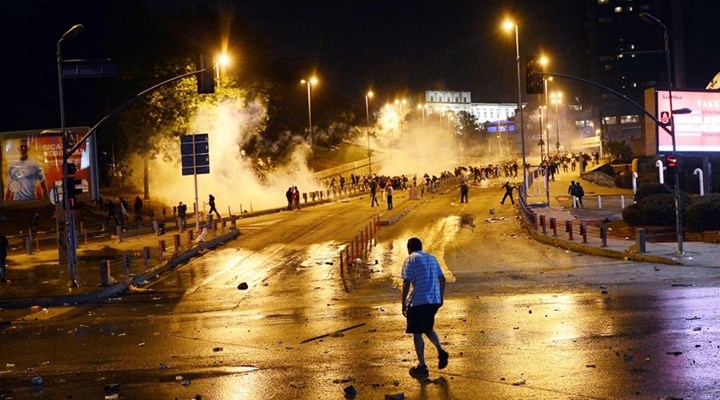
The provision puts doctors in direct conflict with their ethical and professional responsibilities to care for the sick and wounded. It is part of the Turkish government’s continuing effort to punish doctors and other medical professionals for treating everyone in need, including demonstrators during last summer’s anti-government protests.

PHR has documented the Turkish government’s unlawful use of force and tear gas, as well as deliberate attacks on the medical community. PHR’s recent report on the protests in Turkey last summer discussed not only the authorities’ detention of medical staff who treated those injured by the police, but also the government’s efforts to collect the names of injured demonstrators and those treating them.

Humanity and Medicine!, by Turkish Medical Association

PRESS RELEASE
21 June 2013

Humanity and Medicine!

We waited and expected from those at the top

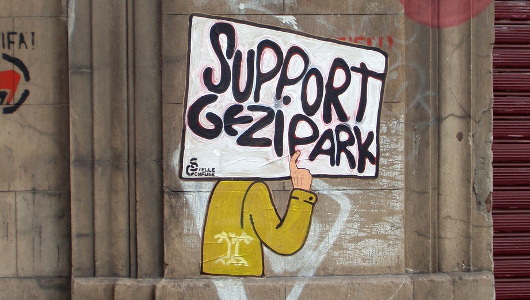
To be sensitive to a peaceful action taking place in Gezi Park…

To have respect to those who firmly adopted a peaceful attitude in spite of all violent acts against them…

Not to harm our citizens who rushed to streets peacefully to react to violent acts and attacks targeting even most fundamental humanistic demands…

Yes, we waited and expected

The Minister of Health to ban the use of chemical gases against our people raising their legitimate demands, to the wounded; in hospitals and other places where medical care is given, in hotels where people sought shelter, in rooms where small children were sleeping, to the sick and elderly …

We waited and expected them

To express their grief for the loss of Mehmet Ayvalıtaş, Abdullah Cömert, Mustafa Sarı and Ethem Sarısülük,

To convey their wishes of recovery to 59 citizens seriously wounded, 11 others who lost their eyes and thousands of citizens injured in various ways…

We waited them

To say it is under our guarantee to deliver medical care to all without any distinction who have suffered violence and exposed to gas while out in streets just for the fact that they are human beings; without enlisting them and without keeping their records in distinct forms…

And we waited and expected them

To recall human ethics and say “health workers have their immunity even in wartime†seeing physicians and students of medicine who were running around to help citizens falling breathless by teas gas, losing an eye or having skull fracture…

But we didn’t expect the following:

Engagement in such a disproportionate violence day after day against millions of people demanding freedom, equality and respect,

Collective and violent detention of lawyers, who opposed unlawfulness in the court house,

Accusing physicians, students of medicine and health workers giving urgent care to people for committing a crime,

Sending official writings to the Turkish Medical Association and Medical Chambers of İstanbul, İzmir and Ankara asking why they didn’t ask the permission of the Ministry before helping in urgent cases, Â

Asking the names of physicians, students of medicine and health workers involved in medical help and people who received medical care,

Detention of physicians and health workers,

Prime Minister’s attempt to divide the society into two and using one as a threat to the other,

Putting the Turkish Medical Association and physicians on the target and insulting them,

Categorizing as crime those acts which are deemed as rights in universal law and international conventions.

But we also didn’t know that

There were too many of peace-loving, mischievous, determined, stubborn and dignified young people ready to rise for freedom and equality as well as so many rejuvenating adults,

We didn’t know that

There were too many physicians, students of medicine and health workers who would so quickly rush to the help of our citizens who suffered violence in return for their just and peaceful demands,

We didn’t know that

After having been exposed for long years to such discourses as “physicians are just selfish, they pursue their interests only†our people would embrace us warmly saying “no interest of theirs is above the well-being of their patients, didn’t you know that?â€

We didn’t know that

Physicians worldwide would so quickly take sides with us in solidarity and making the same call to the Prime Ministry as we did by reminding the ethics and values of the profession of medicine.

Now we know…

We recalled

that humanity is conscience, solidarity and fraternity after all, that nothing can compromise the rightfulness of those rising against oppression and violence in the name of equality, freedom and human dignity,

that values of medicine derive from human values and cannot be separated from them…

After all our experience for the last 20-25 days, Prime Minister’s statements targeting the Turkish Medical Association among others annoy us no more. We also regard as normal those unscientific statements by the Prime Minister concerning abortion and caesarian section that also target physicians. We understand his furiousness and perplexity. Our only concern is possible delay in reaching the bright, peaceful, free and equal future that awaits us.

Here we declare once more: As the Turkish Medical Association we shall always be among, backing, leading and siding with both physicians and all who are involved in this process.

And we add:  The Prime Minister should excuse us; physicians in Turkey will never accept to be “Prime Minister’s physicians†as he is fond of speaking possessively like “my police†. As physicians in Turkey we shall be ready to help all who need us (including the Prime Minister himself).

If those resorting to tear gas, pressure water and violence have their Prime Minister, the TMA has humanity to be in solidarity with.

Turkish Medical Association

Central Council

URGENT CALL FROM TURKISH MEDICAL ASSOCIATION

Since May 31st 2013 the peaceful and legitimate demonstrations are tried to be suppressed by the police. The police forces are using chemical gases savagely on the unprotected civil masses.

Before complete blockage of health assistance to the injured people and the preclusion of the functioning of health services by the police attacks, that took place once more again on the night of  June 15th , Turkish Medical Association was started a web based survey in order to disclose the dangerous health effects of these gases targeted at defenseless people and in one week period, over 11 thousand of people declared that they have been effected by the gas.

65% of the repliers were between 20-29 years of age and professional protecting mask usage was only 13%. The total duration of exposure was evaluated among 11.164 replies. 53% declared that they have exposed to the chemical gases 1-8 hours where 11% exposed more than 20 hours.  Exposing the chemical gases more than one day increases the prevalance of the systemic symptoms, especially cardiovasculer symptoms.  These data shows the dimensions of the problem.

Before the 15th of June disaster the total number of injuries were 788 (%7). These data shows that the gas bombs were targeted the people. Many of them were the injuries of head, face, eyes, thorax and abdomen which could be fatal. 20% of the injuries were open sores and fractures.

Only 5% of the people were admitted to hospitals. The tagging of the people who are admitting to the hospitals is preventing people from going to the hospitals in order to ask medical assistance. Ministry of Health opened an investigation about Istanbul Chamber of Medicine which is organizing the volunteer physicians’ work. In Istanbul one physician an done medical student handcuffed and detained.  There are many other informations about the detaining of health care staff. These data shows the witch-hunt in Turkey.

Turkish Medical Association making calls to the government to act responsibly and stop the barbaric violence immediately.  As Turkish Medical Association it is our responsibility to inform the international community. We urgently call the international community to act against brutal suppression of democratic demands.

 Turkish Medical Association

Urgent Call from Turkish Medical Association

Since May 31st 2013 the peaceful and legitimate demonstrations are tried to be suppressed by the police. The police forces are using chemical gases savagely on the unprotected civil masses.

Before complete blockage of health assistance to the injured people and the preclusion of the functioning of health services by the police attacks, that took place once more again on the night of  June 15th, Turkish Medical Association was started a web based survey in order to disclose the dangerous health effects of these gases targeted at defenseless people and in one week period, over 11 thousand of people declared that they have been effected by the gas.

65% of the repliers were between 20-29 years of age and professional protecting mask usage was only 13%. The total duration of exposure was evaluated among 11.164 replies. 53% declared that they have exposed to the chemical gases 1-8 hours where 11% exposed more than 20 hours.  Exposing the chemical gases more than one day increases the prevalance of the systemic symptoms, especially cardiovasculer symptoms. These data shows the dimensions of the problem.

Before the 15th of June disaster the total number of injuries were 788 (%7). These data shows that the gas bombs were targeted the people. Many of them were the injuries of head, face, eyes, thorax and abdomen which could be fatal. 20% of the injuries were open sores and fractures.

Only 5% of the people were admitted to hospitals. The tagging of the people who are admitting to the hospitals is preventing people from going to the hospitals in order to ask medical assistance. Ministry of Health opened an investigation about Istanbul Chamber of Medicine which is organizing the volunteer physicians’ work. In Istanbul one physician an done medical student handcuffed and detained.  There are many other informations about the detaining of health care staff. These data shows the witch-hunt in Turkey.

Turkish Medical Association making calls to the government to act responsibly and stop the barbaric violence immediately.  As Turkish Medical Association it is our responsibility to inform the international community. We urgently call the international community to act against brutal suppression of democratic demands.

 Turkish Medical Association

Solidarity to the struggling turkish people

Dear friends,

Right now, police forces in Turkey are using excessive violence against peaceful protesters, injuring scores of people. Only a massive public outcry will pressure PM Erdoğan to stop the crackdown. Sign the urgent petition now and share with everyone:

Sign the petition

I am writing this e-mail from Taksim Square in Istanbul where peaceful protesters are being attacked with gas canisters and pressurized water cannons. Hundreds of us are still here despite the police violence, protesting the destruction of Gezi park which the government wants to turn into a shopping mall. This started simply as a peaceful sit-in to save a park, but it’s become one of the worst state attacks on protesters in recent memory — and a frightening example of the Turkish government’s growing eagerness to crack down on its own citizens. The security forces have been individually targeting protesters to terrify, wound and kill us. 12 people have already suffered trauma injuries from gas canisters — one man died of heart attack, and hundreds are suffering from excessive gas inhalation. Now more than ever, we need massive public pressure to urge the government to stop using excessive force against protesters immediately, to stop demolishing one of the few green spaces left in Istanbul, and to stop cracking down on citizens who are peacefully assembling or expressing their opinions. Sign the urgent petition now then share this widely. Only a giant outcry will pressure Erdogan to act immediately:http://www.avaaz.org/en/petition/Erdogan_End_the_crackdown_now/?bUFQOdb&v=25353

With hope and determination, Ozlem Dalkiran Activist, Istanbul PS

– I started this campaign on the Avaaz Community Petition site. It’s easy to get started – click to start yours now and win on any issue – local, national or global.

More Information: Turkey arrests anti-government protesters 

Dozens injured as police clash with protesters in Istanbul 

Turkey protesters in violent clashes with police over park demolition 

Turkish police tear gas anti-government protesters 

Istanbul In Chaos As Turkish Police Attack Protesters With Tear Gas, Water Cannons

Study reveals austerity’s harmful impact on health in Greece

Findings are ‘much worse than we imagined,’ researcher says

In one of the most detailed studies of its kind, a team of Greek and U.S. researchers have vividly chronicled the harmful public health impacts of the economic austerity measures imposed on Greece’s population in the wake of the global economic crisis.

Writing in today’s American Journal of Public Health, the researchers cite data showing the economic recession and subsequent austerity policies in Greece have led to a sharp deterioration of health services and health outcomes.

Researchers at the Aristotle University of Thessaloniki in Greece and the University of New Mexico in the United States studied current data on economic and social conditions, utilization of health services, and health outcomes.

They found that key public health indicators declined in tandem with the recession and austerity policies that reduced public services.

For example, between 2007 and 2009, suicide and homicide mortality rates among men increased by 22.7 percent and 27.6 percent, respectively. Mental disorders, substance abuse, and infectious diseases showed worsening trends.

Despite deteriorating health conditions, cutbacks occurred in government financing of public services, as the Ministry of Health’s total expenditures fell by 23.7 percent between 2009 and 2011.

Meanwhile, due to unemployment and loss of personal income, patients decreased their use of private medical facilities, and utilization of already-stressed public inpatient and primary care services rose by 6.2 percent and 21.9 percent, respectively, over a two-year period.

Dr. Elias Kondilis, lead author of the study and a researcher at Aristotle University, commented from London, “We were expecting that these austerity policies would negatively affect health services and health outcomes, but the results were much worse than we imagined.”

Based on their findings, the authors criticize austerity policies that are likely to cause deteriorating health conditions in other European countries and in the United States.

The U.S.-based researcher on the team, Dr. Howard Waitzkin, distinguished professor emeritus of sociology and medicine at the University of New Mexico, said: “The policies of cutbacks currently proposed in the United States for Medicare and Social Security will lead to similar devastating effects on health services and outcomes. Instead of austerity policies, we need increased public sector spending to stimulate our failing economy and to protect the health of our people.”

In contrast to the Greek experience, the authors point to several Latin American countries that have resisted demands to reduce public investments in health services. Such policies, they argue, have led to improved economic and health indicators.

The senior researchers of the study were Dr. Howard Waitzkin on the U.S. side and Dr. Alexis Benos in Greece. Both are readily available for comment.

*****

“Economic crisis, restrictive policies, and the population’s health and health care: The Greek case,” Elias Kondilis, M.D., Ph.D., Stathis Giannakopoulos, M.D., Ph.D., Magda Gavana, M.D., Ph.D., Ioanna Ierodiakonou, M.D., Ph.D., Howard Waitzkin, M.D., Ph.D., and Alexis Benos, M.D., Ph.D., American Journal of Public Health, April 18, 2013 (online ahead of print). For AJPH reprint and subscription information, visit www.ajph.org.

A copy of the study is available at www.pnhp.org/kondilis.

*****

Physicians for a National Health Program (www.pnhp.org) is a nonprofit research and education organization of more than 18,000 doctors who advocate for single-payer national health insurance, an improved Medicare for all. Dr. Howard Waitzkin is a founding member of PNHP; Dr. Alexis Benos spoke to PNHP’s Annual Meeting in San Francisco in October. PNHP had no role in funding or otherwise supporting the study described above. To speak with a physician/spokesperson in your area, visitwww.pnhp.org/stateactions or call (312) 782-6006.

from the PNHP website:

http://www.pnhp.org/news/2013/april/study-reveals-austerity%E2%80%99s-harmful-impact-on-health-in-greece 

Un estudio revela los efectos nocivos de la austeridad en la salud en Grecia
Los resultados son “mucho peor de lo que imaginábamos”, afirman los investigadores
 
En uno de los estudios más detallados de este tipo, un equipo de investigadores estadounidenses y griegos han descripto  vívidamente los impactos  nocivos en la salud pública de las medidas económicas de austeridad impuestas a la población de Grecia a raíz de la crisis económica global.
En una publicación actual del Jueves, 18 de abril del American Journal of Public Health, los investigadores citan datos que muestran de qué manera  la política de austeridad en Grecia y la cnsecuente recesión económica  han provocado un fuerte deterioro de los servicios de salud e impactado en los resultados sanitarios.
Los investigadores de la Universidad Aristóteles de Tesalonia ,Grecia y de la Universidad de Nuevo México de los Estados Unidos estudiaron los datos actuales sobre las condiciones económicas y sociales, la utilización de los servicios sanitarios y resultados en salud.
They found that key public health indicators declined in tandem with the recession and austerity policies that reduced public services.
Encontraron  indicadores clave de  delinación de las condiciones de  salud concomitantes con las políticas de recesión y austeridad que han reducido los servicios públicos.
Por ejemplo, entre 2007 y 2009, el suicidio y las tasas de mortalidad por homicidio entre los hombres aumentó en un 22,7 por ciento y 27,6 por ciento, respectivamente. Los trastornos mentales, abuso de sustancias, y las enfermedades infecciosas mostraron empeoramiento de las tendencias.
A pesar de deterioro de las condiciones de salud, se produjeron  recortes en el financiamiento gubernamental de los servicios públicos en salud, los gastos totales de Ministerio de Salud se redujeron  en un 23,7 por ciento entre 2009 y 2011.
Mientras tanto, debido al desempleo y la pérdida de los ingresos personales, los pacientes redujeron su uso de los servicios médicos privados, incrementando la utilización de los servicios públicos sobrecargados. La hospitalización pública y la utilización de servicios de atención primaria se elevaron un 6,2 por ciento y 21,9 por ciento, respectivamente, durante un período de dos años.
El Dr. Elias Kondilis, autor principal del estudio e investigador en la Universidad de Aristóteles, comentó desde Londres: “Nosotros suponíamos que estas políticas de austeridad podrían afectar negativamente a los servicios de salud y los resultados sanitarios, pero los resultados  del estudio fueron mucho peor de lo que imaginábamos”.
Con base en sus hallazgos, los autores critican las políticas de austeridad que pueden provocar el deterioro de las condiciones de salud de otros países europeos y en Estados Unidos.
Otro investigador del  equipo, el Dr. Howard Waitzkin, distinguido profesor emérito de sociología y medicina en la Universidad de Nuevo México, dijo: “Las políticas de recortes que se proponen actualmente en los Estados Unidos para el Medicare y la Seguridad Social darán lugar a similares efectos devastadores sobre los servicios de salud y los resultados. En lugar de las políticas de austeridad, necesitamos aumentar el gasto público para estimular nuestra economía en crisis y para proteger la salud de nuestro pueblo “.
A diferencia de la experiencia griega, los autores señalan varios países de América Latina que han resistido la exigencia de  reducir las inversiones públicas en servicios de salud. Estas políticas, dicen, han dado lugar a la mejora de los indicadores económicos y la salud.

Los investigadores principales del estudio fueron el Dr. Howard Waitzkin en el lado de EE.UU. y el Dr. Alexis Benos en Grecia. Ambos están disponibles para hacer comentarios.

The Correa ‘phenomenon’ in Ecuador: between ‘buen vivir’ and neo-developmentalism, by Mauricio Torres & Pol de Vos

One of the initial decisions of Correa was the convening of a Constituent National Assembly. The new constitution was officially launched in July 2008 and ratified through a popular referendum in September of that year.
The new Constitution defines Ecuador as a sovereign, independent, intercultural, multi-national and secular country, committed to a development model based on the (indigenous people) idea of “buen vivir”. In ancient Quechua, the term “Sumak Kawsay” means “good living” in harmony with our communities, ourselves, and most importantly, our living, breathing environment. According to Ariruma Kowii, an Ecuadorian (indigenous) writer and poet and also a leader of the indigenous movement,  Sumak Kawsay is “an ancient Andean conception of life that has remained in force in many indigenous communities until now. Sumak means the ideal, the beautiful, the good, the realization, while Kawsay represents the life, in reference to a decent life, in harmony and balance with the universe and human beings. In sum, Sumak Kawsay means to live the fullness of life”.


Read more here

Asa Cristina Laurell Conference on Universal Health Coverage 21 February 2013

INVITACION
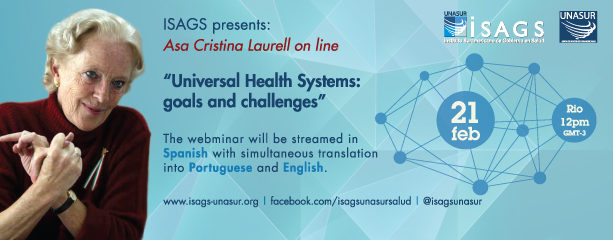
ALAMES se une a la invitación del Instituto Suramericano de Gobierno en Salud (ISAGS) para la conferencia de Cristina Laurell
sobre los Retos y Desafíos de los Sistemas Universales de Salud, que será transmitida en tiempo real por internet,
el jueves 21 de febrero a las 12 del mediodía hora Río de Janeiro, Brasil.

La exposición presentará los dos modelos de reformas que se vienen proponiendo para alcanzar la “cobertura universal de salud”: el sistema público universal de salud (SUS), basado en el Estado Social y redistributivo; y el modelo de aseguramiento universal de inspiración neoclásico-neoliberal. Se presentará una revisión comparativa entre los dos  modelos, y se revisaran los logros y los problemas de cada uno de ellos.  La participación por internet permitirá hacer comentarios y preguntas.

Postgrado en Prevención Cardiovascular

Postgrado Transdisciplinario en Prevención Cardiovascular
Grupo de Estudio en Cardiologia Transdisciplinaria
Sociedad de Cardiología del Oeste Bonaerense
Federación Argentina de Cardiología

SOLICITAMOS AUSPICIOS, APOYOS, RECOMENDACIONES

Amigos: estamos trabajando en la creación del primer Postgrado Transdisciplinario en Prevención Cardiovascular y nos gustaría contar con opiniones, críticas, sugerencias de aquellas personas cuya opinión nos resulta significativa para enriquecer el proyecto. Ojalá tengan ganas de dedicarnos unos pocos minutos, nos enriqueceremos mucho con ello.

Se trata de una actividad académica común a Médicos, Psicólogos, Bioquímos, Nutricionistas, Antropologos, Sociólogos, Trabajadores Sociales, Licenciados en Enfermería, etc.

Su propuesta se basa en la evidencia epidemiológica contundente acerca de la epidemia contemporánea de este tipo de enfermedades y en algunos documentos recientes que recomiendan la formación de especialistas en prevención CV:

33° Conferencia de Bethesda, Informe OMS Dinamarca, Informe Canadiense, AHA, ACC, etc.

Hemos diseñado los objetivos, fundamentos, perfiles del aspirante y del egresado y una currícula preliminar. Se propone el abordaje de la problemática cardiovascular desde múltiples perspectivas, con una mirada crítica y creativa.

¿Qué opinan?
¿Existe la necesidad de una actividad como esta?
¿Les parece viable, de interés profesional, social, comunitario?
¿Les interesa participar como alumno, docente, colaborador, asesor, etc?

Esperamos tus propuestas.

Gracias por estar allí.
Daniel Flichtentrei.

Síntesis Curricular:
Concepto de Prevención, teorías preventivistas.
Bases de Epidemiología teórica.
Epidemiología de las enfermedades CV.
Bases del conocimiento científico y epistemología médica.
Fundamentos de Teoría de la Complejidad y Transdisciplina.
Fundamentos de Metodología de la Investigación Científica.
Investigación Cualitativa y Cuantitativa en Salud.
Aspectos Sociales de las enfermedades CV.
Aspectos Antropológicos de las enfermedades CV.
Aspectos Psicológicos de las enfermedades CV.
Aspectos Médicos de las enfermedades CV.
Aspectos Bioquímicos de las enfermedades CV.
Aspectos Nutricionales de las enfermedades CV.
Aspectos Económicos de las enfermedades CV.
Concepto de Factores de Riesgo.
La perspectiva de género ens alud CV.
Reemplazo hormonal: perspectiva antropológica y de género.
Lo genético y lo cultural en las enfermedades CV.
Herencia cromosómica, herencia cultural.
Análisis de proyectos comunitarios internacionales:
Estudio Framingham, EEUU.
Proyecto North Karelia, Finlandia.
Proyecto Cienfuegos, Cuba.
Proyecto Gap 10/90
Aterogénesis, dislipidemias, Diabetes, HTA, Factores emergentes.
Lipidología actual. Smes. Metabólicos.
Abordaje transdisciplinario de la Obesidad.
Diabetes y enfermedades CV.
Abordaje transdisciplinario del Tabaquismo.
Abordaje transdisciplinario del climaterio femenino.
La ATC como enfermedad sistémica.
Aspectos nutricionales y farmacológicos del tratamiento.
Rehabilitación Cardiovascular.
La formación del Equipo de Prevención CV.
Disciplinas, roles, articulación: obstáculos y perspectivas para la
integración.
Concepto de equidad en salud.
Modelo Médico Hegemónico.
Modelos asistenciales: curativos y preventivos.
Análisis y discusión de los documentos más importantes desde distintas
perspectivas teóricas.

Seminarios:
Investigación Transdisciplinaria en Salud.
Laboratorio Bioquímico en Prevención CV.
Los enfermeros y técnicos en Prevención CV.
Formación de divulgadores comunitarios en Prevención CV.
Rol del Psicólogo en el equipo de Prevención CV.
Rol del Nutricionista en el equipo de Prevención CV.
Seminario Taller común a profesionales y pacientes: “Las enfermedades CV desde ambas orillas.”
“Pensar distinto: las otras miradas”. Las perspectivas de las Ciencias
Sociales sobre el trabajo médico.
“Ser médico hoy”: Crisis y transformaciones del rol profesional.

Requisitos para la aprobación del Curso de Postgrado:
Asistencia no menor al 75% de las horas cátedra previstas.
Aprobación de las evaluaciones parciales y finales previstas.
Aprobación de un Seminario Optativo.
Producción de un trabajo Monográfico o de Investigación original y que
represente un aporte concreto al tema en nuestro país.
Realización de una actividad comunitaria preventiva como trabajo de campo por cada grupo de cuatro alumnos.